What’s influencing membrane technology development in the dairy industry?
Dairy processors can harness the potential of membrane technology to optimize operations.
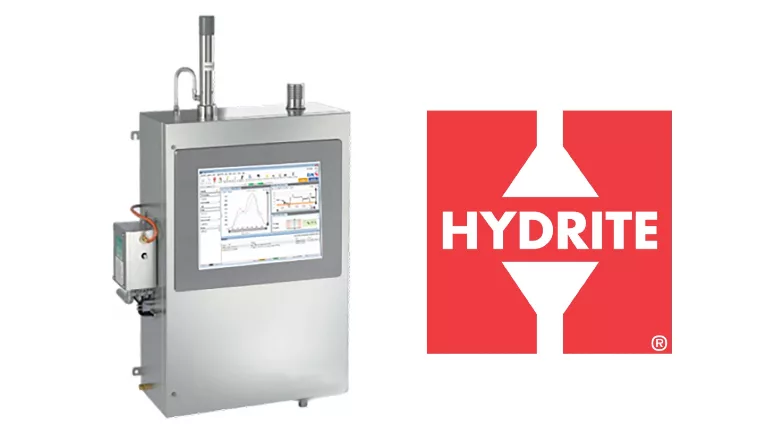
Hydri-SLM RT in-line solution
Photo courtesy of Hydrite Chemical Co.
Membrane technology offers multiple benefits in the dairy production process, including higher efficiency, reduced costs and more sustainable processes. When first looking to implement membrane technology at the dairy plant, processors should consider their current needs, but prioritize flexibility, ease of integration and adaptability.
We recently sat down with family-owned chemical manufacturing and distribution company Hydrite Chemical Co. to explore emerging trends and best practices for membrane technology implementation at the dairy plant. Hydrite Chemical offers various membrane solutions for dairy processors, including ultrafiltration, microfiltration and reverse osmosis systems, as well as a range of products and services focused on chemical membrane cleaning, sanitation and processing aids.
Dairy Foods: What emerging trends are influencing membrane filtration and separation equipment development?
Jamison Vanden Einde, Hydrite director of commercial technology: Emerging trends in membrane filtration and separation equipment development highlight significant advancements and evolving industry demands. One notable trend is the growing use of membrane systems for constituent separation, particularly in processes like separating milk and whey proteins. This capability is transforming production methods and driving the adoption of membrane systems in plants. Flexibility in equipment design is also gaining importance, as manufacturers face market demands requiring the ability to produce a diverse range of products. Adaptable systems are becoming essential to meet these evolving needs.
Automation plays a critical role in addressing both operational efficiency and workforce challenges. Fully automated systems reduce manual intervention in processes like chemical dispensing, improving employee safety while mitigating the effects of labor shortages. Additionally, real-time monitoring tools, such as automated soil load mapping, MAG meters, and density meters, enhance process control by minimizing manual oversight and improving data-driven decision-making.
Another emerging advancement is the use of high concentration nanofiltration units, which support downstream processes like dryers. These units improve the bulk density of final products, enabling more efficient packaging while preserving protein integrity. Overall, membrane filtration and separation equipment is becoming increasingly technical, with a strong focus on automation, flexibility, and efficiency to address modern industry demands.
Dairy Foods: How is AI influencing membrane filtration and separation equipment development?
Carl Garcia, Hydrite membrane technical manager: AI is significantly influencing the development of membrane filtration and separation equipment by driving advancements in data integration, automation, and predictive maintenance. AI integration enables controlled systems to pull better and more reliable data, providing real-time insights that enhance operational efficiency. This shift requires careful selection of operating software to ensure compatibility with AI technologies and long-term scalability. Predictive logic and data analytics powered by AI are being incorporated into plant operations, allowing for predictive maintenance and improved decision-making. Additionally, interfaces are being designed to integrate seamlessly with customers' networks, aligning with innovative and forward-looking technological trends. A proof of concept currently underway with an AI company further explores how these technologies can transform plant operations. This approach underscores the industry's commitment to moving away from legacy systems toward integrated and innovative solutions. By harnessing AI, the development of membrane filtration and separation equipment is poised to deliver smarter, more efficient, and future-ready systems.
Dairy Foods: What should dairy processors consider when looking to implement membrane filtration and separation equipment at the plant?
Carl Garcia, Hydrite membrane technical manager: When implementing membrane filtration and separation equipment, dairy processors should carefully consider market demands, flexibility, and technical automation. Understanding the specific markets, they wish to target is crucial, as this will influence the design and capabilities of the equipment. Processors should ensure their systems are versatile enough to produce a variety of products, allowing them to adapt to changing market needs and avoid being confined to a single market. Additionally, incorporating high-level technical automation is essential for improving operational efficiency and reducing manual intervention. Advanced automation can streamline processes and ensure consistency in production. Future-proofing the equipment is another key consideration, as systems should be designed with the flexibility to integrate emerging technologies, such as AI and predictive analytics, to avoid obsolescence. By prioritizing these factors, dairy processors can implement filtration and separation equipment that meets current needs while remaining adaptable to future innovations.
Dairy Foods: How is membrane filtration and separation equipment helping your dairy customers break into new markets and product categories?
Carl Garcia, Hydrite membrane technical manager: Membrane filtration and separation equipment are enabling dairy customers to break into new markets and product categories by providing the flexibility and efficiency needed to adapt to evolving market demands. This technology supports the shift from producing commodity products to creating value-added products, such as concentrated milk, which opens opportunities for higher profitability and access to specialized markets. The global nature of the dairy market further emphasizes the importance of product versatility, as membrane systems allow producers to meet diverse international demands and compete on a broader scale. Additionally, the flexibility of membrane systems compared to traditional evaporators enables the production of a wider range of products, reducing capital and operating costs while improving energy efficiency. With competition driving the need for increased capacity, processors who adopt membrane filtration are better positioned to capture missed opportunities and gain a competitive advantage in emerging and established markets.
Dairy Foods: How is this equipment helping your customers with product innovation and development?
Jamison Vanden Einde, Hydrite director of commercial technology: Membrane filtration and separation equipment are driving product innovation and development by offering unparalleled flexibility, efficiency, and support. The adaptable design of these systems provides customers with numerous variables to tailor equipment to their specific needs, allowing them to explore and compete in different product categories. Membrane systems also enable the production of high-protein products without denaturing the protein, unlike evaporators, further expanding possibilities for product development.
In terms of energy efficiency, membrane systems consume less energy and incur lower capital and operating costs compared to traditional evaporators, making them a cost-effective solution for customers looking to innovate. The flexibility to switch between different products quickly and efficiently gives customers a competitive edge by enabling rapid responses to market demands.
Moreover, the integration of real-time data tools, such as Hydrite Hydri-Vision and Hydri-SLM RT, enhances decision-making by providing actionable insights during the production process. Collaboration with reliable equipment suppliers further supports innovation, as these partnerships offer valuable expertise and shared development opportunities. This combination of flexibility, efficiency, and support makes membrane filtration equipment a cornerstone for product innovation and development in the dairy industry.
Looking for a reprint of this article?
From high-res PDFs to custom plaques, order your copy today!


-and-Xianghong-Qian.webp?height=200&t=1738851446&width=200 "Ranil Wickramasinghe (left) and Xianghong Qian")