Dairy Foods logo
search
cart
facebook twitter linkedin youtube
  • Sign In
  • Create Account
  • Sign Out
  • My Account
Dairy Foods logo
  • NEWS
    • DAIRY REGULATIONS
  • PRODUCTS
    • New Products
    • Butter
    • Cheese
    • Cultured Dairy
    • Frozen Desserts
    • Ice Cream/Novelties
    • Milk
    • Non-Dairy Beverages
    • Sales Data
    • Whey, Milk Powder
    • Dairy Alternatives
  • INGREDIENTS
    • Cocoa
    • Colors/Flavors
    • Cultures/Enzymes
    • Fiber
    • Gums, Stabilizers, and Texturants
    • Inclusions
    • Omegas/Lipids
    • Prebiotics
    • Probiotics
    • Sweeteners
    • Other
  • OPERATIONS
    • SUSTAINABILITY
    • Equipment
    • Processing
    • Packaging
    • Food Safety & Sanitation
    • Membrane Technology
  • MEDIA
    • Dairy Foods TV
    • Podcasts
    • Webinars
  • DIRECTORIES
    • Buyers Guide
    • Dairy Plants USA
  • MEMBRANE FORUM
  • MORE
    • Associations
    • Dairy Foods' News & Views Newsletter
    • Blogs
    • Case Studies
    • Classifieds
    • Custom Content & Marketing Services
    • Dairy Foods Store
    • Market Research
    • Supplier Spotlights
    • Tradeshows and Events
    • Strategy Guides
  • AWARDS
    • Dairy Plant of the Year Award
    • Breakthrough Award
    • Dairy Processor of the Year
  • EMAGAZINE
    • eMagazines
    • Archive Issues
    • Contact
    • Advertise
    • SIGN UP!
    • Columnists
    • Dairy 100
    • State of the Industry Report
    Dairy Foods & BeveragesCultured DairyWhey, Milk Powder

    The latest research on yogurt

    Taking a look at popular high-protein protein products, plus much more.

    By K.J. Burrington
    yogurt, blueberries and granola

    Photo courtesy of fcafotodigital / iStock / Getty Images Plus

    February 19, 2025
    Kimberlee Burrington
    Kimberlee (K.J.) Burrington is VP of Technical Development for the American Dairy Products Institute.

    Why do we do research on yogurt or any other dairy product? Certainly, the yogurt companies have everything figured out when it comes to making good yogurt… 

    The reality is that yogurt manufacturers are always troubleshooting because making consistent yogurt on a daily basis is challenging. Sometimes, when you can’t solve a problem through product or process development, you need to do some research. Academic research allows us to do a deeper dive scientifically into a product that can help us to find out the “why” for complex dairy products like yogurt when we are optimizing a process or product and/or creating new products.   

    Dairy product research leads to innovation, but it also trains students who are seeking graduate degrees to learn the latest technologies. These M.S. and Ph.D. students will do research, graduate, and hopefully work for dairy companies or stay in academia to teach and do more research.  

    Not only will the dairy company gain the knowledge that the person has learned doing academic research, but they will also help the company innovate and stay competitive. If a Ph.D. candidate decides to stay in academia and starts their own research program, then the dairy research cycle can continue. Looking over the past five to 10 years of academic research on yogurt, there are a few areas of focus that provide great scientific support for the yogurt market today and in the future.

    High-protein yogurts

    Greek-style yogurts have been popular with consumers since they arrived in the U.S. market about 2007. Processes to achieve the high-protein content have included the use of Quark type separators and ultrafiltration membranes. High-protein dairy ingredients like milk and whey proteins have also been used to achieve the 8% and higher protein content that consumers are looking for. Research done at Cornell (2014) on spoonable Greek yogurt and UW-Madison (2022) on drinkable high protein yogurt evaluated the use of micellar casein in high protein yogurts.  

    It is much more difficult to make high-protein drinkable yogurts because many casein-containing ingredients contribute more structure and firmness. It was hypothesized that using a micellar casein, which has a low level of whey protein (~5-10% of the total protein), would provide a weaker gel structure to help make the product drinkable at 8% protein. Parameters evaluated for the drinkable yogurt included rheology, ionic strength, gel formation and strength, pectin addition, and process modifications. The researchers found that the ionic strength of the milk protein base had a major impact on the gel strength at pH 4.6 and gelation pH value.

    Gelation and texture

    Yogurt is an intricate gel made of caseins and whey proteins. Yogurt mixes are typically heat treated at high temperatures (85-95°C) to help create the desired gel structure and firmness after fermentation. Research to evaluate the impact of milk heat treatment and its impact on acid gelation was also done at the University of Wisconsin-Madison, Center for Dairy Research (2022) and funded by Dairy Farmers of Wisconsin and the National Dairy Council.  

    This research concluded that the formation of acid gels is the result of different types of weak intra and intermolecular casein interactions. Soluble denatured whey protein complexes associate with denatured whey proteins during the acidification of heated milk on the casein micelle surface, resulting in a single gelation phase that begins at a higher pH value compared with the unheated milk. 

    Another study conducted at Massey University in New Zealand (2021) looked at seasonal variations in milk composition and its impact on the gel structure of Greek yogurt, stirred, and set yogurts. A review paper published by Université Laval (2021) studied stirred yogurt microstructure and its correlation to physical properties. 

    There are other publications that evaluate added ingredients such as modified starches, whey proteins, milk proteins, and hydrocolloids and their impact on texture. This research is key to understanding the science of how yogurt gels form and change throughout their shelf life.

    Culture evaluations

    Bacterial cultures help to create different flavors and textures in yogurt. The cultures required in yogurt made in the U.S. are Streptococcus thermophilus and Lactobacillus bulgaricus. Different strain combinations of these cultures will produce different acidification rates, types of acids and flavor compounds, and even textural attributes, if they are exopolysaccharide (EPS) producing strains. 

    There are many types of lactic acid-producing strains that can produce EPS and there has been a lot of research published about them over the last 20-plus years. Probiotic strains of bacteria are often added for benefits to the microbiome, but some probiotics also contribute to the textural attributes of yogurt through production of EPS. 

    One collaborative study between three universities, UW-Madison, Instituto de Lactología Industrial (Argentina), and Istanbul Technical University (Turkey) researched the role of the probiotic strains Limosilactobacillus fermentum Lf2 (Lf2) and Bifidobacterium animalis INL1 (INL1) that produce EPS on the rheology and the release of bioactive peptides in yogurt. Their results showed that both probiotic strains increased the release of bioactive metabolites and impacted the levels of organic acids, carbohydrates, rheological properties and microstructure.

    All of this research can be used to help product developers understand the complexity of the yogurt system and help them solve some of their development roadblocks. Innovation is critical to the success of our dairy product manufacturers and academic research is key to that success. 

    KEYWORDS: high-protein foods National Dairy Council yogurt

    Share This Story

    Looking for a reprint of this article?
    From high-res PDFs to custom plaques, order your copy today!

    Kj burrington
    Kimberlee (K.J.) Burrington is VP of Technical Development for the American Dairy Products Institute.

    Recommended Content

    JOIN TODAY
    to unlock your recommendations.

    Already have an account? Sign In

    • Lifeway Organic Kefir in different flavors inside a refrigerated grocery shelf.

      Dairy Foods names Lifeway Foods 2025 Processor of the Year

      Lifeway Foods donates $10,000 to wildfire victims,...
      Innovation
      By: Brian Berk
    • Two female farmers are standing in a field, holding a large milk canister, looking at several cows at dairy farm.

      Honoring Women Leaders Shaping the Dairy Industry

      For the fourth consecutive year, Dairy Foods is proud to...
      Dairy Foods & Beverages
      By: Barbara Harfmann
    • Main feature for State of the Industry with dairy products album cover with a gradient circular--patterned backgorund.

      2025 State of the Dairy Industry

      Welcome to the 2025 State of the Industry report. For...
      Cheese
    Manage My Account
    • eMagazine Subscription
    • Dairy Foods News & Views Newsletter
    • Online Registration
    • Manage My Preferences
    • Subscription Customer Service
    • Connect with Dairy Foods

    More Videos

    Popular Stories

    An overhead and close-up view of a bowl of cottage cheese topped with fresh blueberries.

    Cottage cheese sales top $2 Billion

    Kemps debuts new milk products

    Kemps debuts Protein+ Milk

    A young Asian mother holding her son and a sippy cup, an older woman is in the blurred background.

    Finding the right infant formula is crucial to a baby’s growth and development

    Outlook Report: Women in Dairy

    Products

    Probiotic Ice Cream: Science and Technology

    Probiotic Ice Cream: Science and Technology

    See More Products
    Let's Talk Dairy podcast promo

    Related Articles

    • sneakers and sports drink

      The latest in dairy research and physical performance

      See More
    • milk

      Research on milk’s full nutritional potential

      See More
    • PepsiCo’s million-dollar bet on yogurt

      See More

    Related Products

    See More Products
    • Manufacturing Yogurt and Fermented Milks, 2nd Edition

    • two world.jpg

      The Potential Effect Of Two New Biotechnologies On The World Dairy Industry

    • yogert and other.jpg

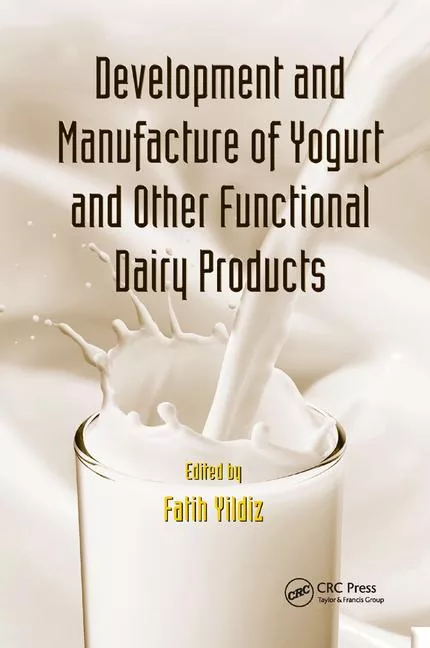
      Development and Manufacture of Yogurt and Other Functional Dairy Products

    See More Products

    Events

    View AllSubmit An Event
    • September 17, 2025

      Sweet Success: The Latest Trends in Sugar Reduction

      On-Demand Join us for expert-led presentations from Rosa Espinoza, Research Chef at CuliNEX, and John Crawford, Senior Vice President of Client Insights, Dairy at Circana, as they share data-driven trends and real-world strategies for success in this fast-growing category.
    • July 9, 2025

      The Latest in Food Safety for Dairy Processors

      On-Demand Whether you're looking to sharpen your knowledge or enhance your facility's practices, this session offers valuable insights for professionals at every level of the dairy industry.
    View AllSubmit An Event

    Related Directories

    • Parmalat Canada Inc. (Niagara-On-The- Lake, ON)

    • Pavel's Yogurt

    ×

    Stay ahead of the curve. Unlock a dose of cutting-edge insights.

    Receive our premium content directly to your inbox.

    SIGN-UP TODAY
    • RESOURCES
      • Advertise
      • Contact Us
      • Directories
      • Store
      • Want More
    • SIGN UP TODAY
      • Create Account
      • eMagazine
      • Newsletter
      • Customer Service
      • Manage Preferences
    • SERVICES
      • Marketing Services
      • Reprints
      • Market Research
      • List Rental
      • Survey/Respondent Access
    • STAY CONNECTED
      • LinkedIn
      • Facebook
      • YouTube
      • X (Twitter)
    • PRIVACY
      • PRIVACY POLICY
      • TERMS & CONDITIONS
      • DO NOT SELL MY INFORMATION
      • PRIVACY REQUEST
      • ACCESSIBILITY

    Copyright ©2026. All Rights Reserved BNP Media, Inc. and BNP Media II, LLC.

    Design, CMS, Hosting & Web Development :: ePublishing