The future is bright for heat exchangers
Technology developers are launching designs that are enabling dairy processors to cut expenses while enhancing food quality.

cheangchai4575 / iStock / Getty Images Plus
The heat exchanger market is becoming increasingly fluid.
Technology developers are launching and upgrading designs that are enabling dairy processors to cut expenses while enhancing food quality. Yet, for optimal benefits, users must first assess their short- and long-term production plans to ensure the equipment can efficiently support the scope of operations, analysts say.
Processors use exchangers to transfer heat between two or more fluids during the cooling and heating processes without mixing the fluids together. Vital in dairy plants, the equipment supports a wide range of dairy functions, including pasteurization, sterilization, separation, packaging, formulation, and heat treating and cooling.
A superior heat exchanger can enhance the efficiency of heat transfer, resulting in faster temperature control, reduced processing times, increased production capacity, and energy conservation, explains Ryan Perrin, sales engineer for Enerquip Thermal Solutions, a Medford, Wis.-based heat exchanger developer.
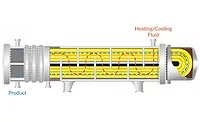
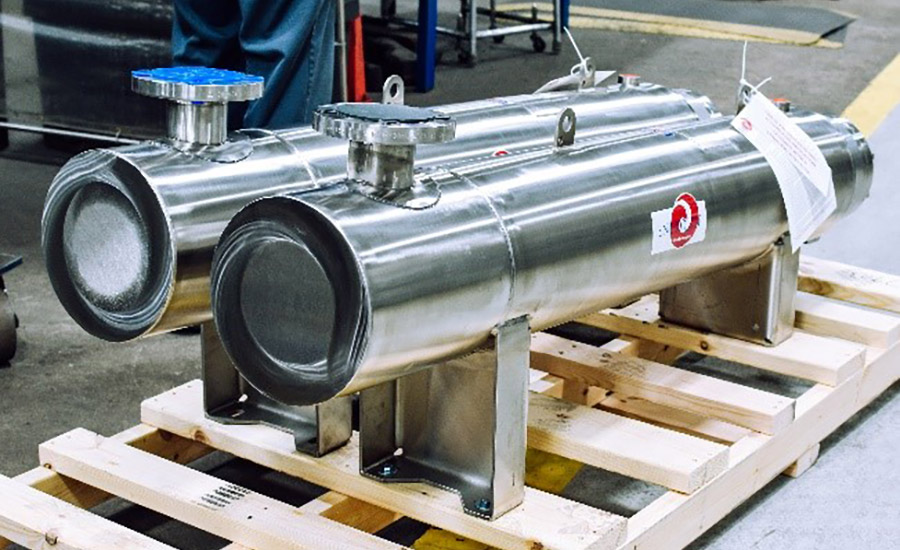
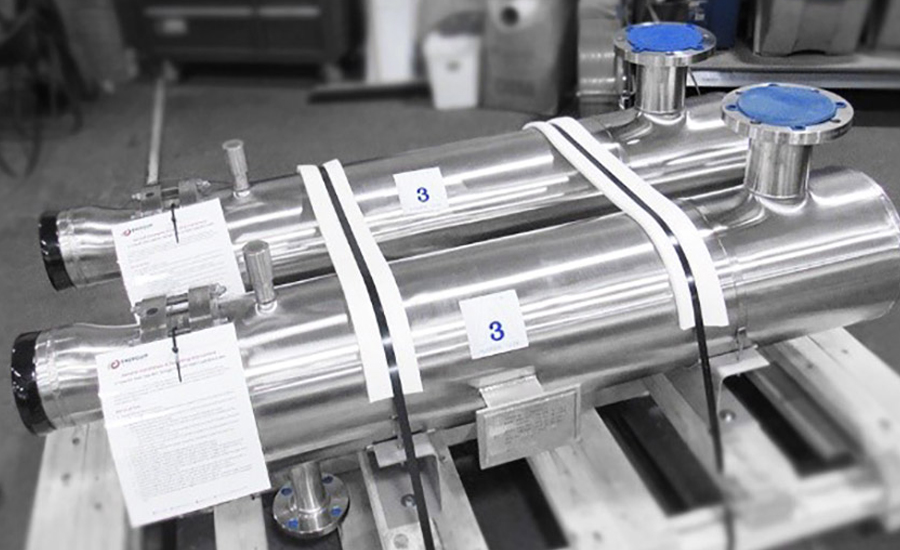
The popular shell and tube exchangers, which feature a large cylindrical enclosure containing bundles of spaced tubing with liquid or steam flowing into the shell to heat the tubes, can support an array of dairy products, viscosities, and flow rates, allowing processors to diversify their product offerings and promptly respond to evolving market demands, Perrin states.
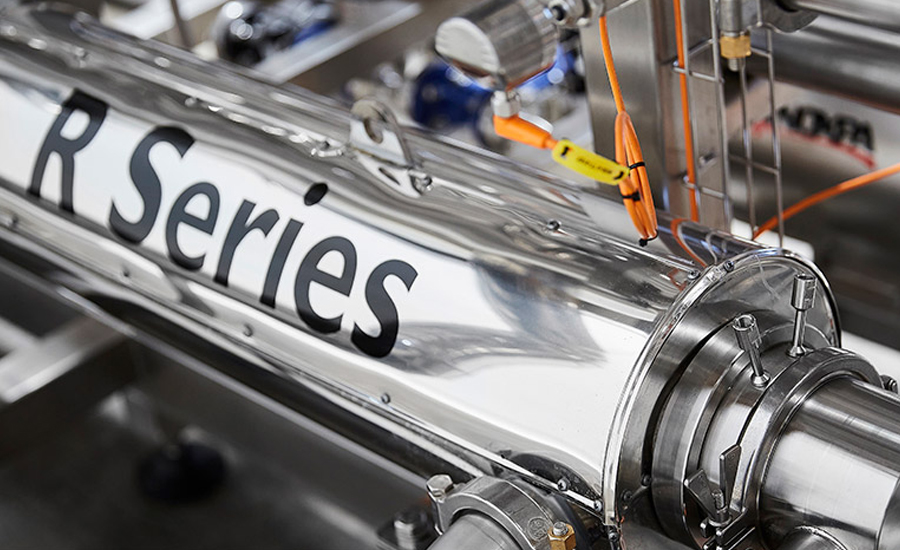
“By facilitating precise temperature control, these heat exchangers ensure consistent product quality and texture, mitigating the risks of overheating or underheating,” he says. “Consequently, the nutritional value and flavor of dairy products are preserved, yielding higher quality and more consistent outputs.”
Processors with effective technologies also can improve regeneration, control pressure drops, maintain products’ desired properties and mouthfeel, and reduce media consumption, such as water, states Kevin Kennedy, an application engineer in the food and water division of Alfa Laval Inc., a Kenosha, Wis.-based heat exchanger supplier.
“Heat exchangers can be designed to handle a wide variety of products, from thin to viscous, hot to cold, and everything in between,” he notes.
Indeed, requirements often vary. Pasteurizing homogenized liquid milk, for instance, is much simpler than cooling a viscous product like yogurt or curds, in which maintaining the physical properties is a key quality parameter, says Matt Hale, international sales and marketing director for Marietta, Ga.-based HRS Heat Exchangers.
“In most cases, products will require gentle handling, although there are instances where agitation is required, particularly when making certain specialist products,” he states.
It is vital that processors provide extensive information on plant operations to equipment manufacturers, including temperature regimes, throughput, and product considerations to ensure designs can function with maximal effectiveness, Hale notes.
Controlling temperature and time is crucial. A process that is too hot can cause product scalding and flavor change, while not enough temperature can impact pasteurization, states Cheryl Shoemaker, Eastern regional and Canadian sales manager for Kelvion Thermal Solutions, a Bochum, Germany-based heat exchange supplier, and member of the plate heat exchanger technical committee for the Cleveland-based Heat Exchange Institute.
Navigating the cost conundrum
Incorporating newer and more efficient heat exchangers, instead of reusing existing equipment to reduce upfront capital investment costs, can often save processors substantially more dollars over time from decreased operating expenses and product losses, Kennedy says.
“The difference in 90% to 94% regeneration on a standard high-temperature, short-term milk pasteurization system could save the end user $14,000 or more annually,” he states. “Increasing regeneration also is a great way to reduce carbon footprints and the total cost of ownership of the entire system. Improving efficiencies also can result in savings on utility bills, which can add up to big savings quickly.”
Hale explains that regeneration is a process in which systems utilize existing energy sources, such as waste heat, from other thermal processing applications. Recovering surplus heat or cooling capacity after the primary function of the heat exchanger is performed can improve the efficiency of the heat exchange process as well, he adds.
“Energy efficiency is a crucial aspect of profitable dairy processing and also has an important impact on a company’s environmental footprint,” he notes. “A well-designed heat exchanger will operate at higher levels of efficiency with less fouling, meaning that they can operate for longer periods without cleaning or other interventions.”
Fouling results from the accumulation of such elements as milk proteins, fats and mineral deposits on exchanger surfaces, which leads to reduced heat efficiency and greater energy use.
Analyze the options
When considering heat exchanger systems, processors should review the equipment’s ability to support different viscosities and temperature profiles for various recipes. Then, evaluate the potential payback from investing in specific technologies, says Adam Koss, mechanical engineer for Koss Industrial Inc., a Green Bay, Wis.-based processing equipment provider.
This can include deciding if a smaller unit is sufficient for current needs or if it is better to leverage a larger unit that will support increased production requirements over time, he states.
“It is best to reach out to manufacturers and vendors directly for sizing the optimal exchanger, which may not always be the lowest price option upfront but can generate net cost savings,” Koss says.
Indeed, he notes that processors “can best meet the challenge of initial sticker shock on some units by understanding the full return on investment of not only the exchanger itself but the equipment tied to it.”
Dairy processors also should evaluate heat transfer efficiency to ensure there is effective heat exchange between the dairy product and the heating or cooling medium, which can lead to faster processing times and reduced energy consumption, Perrin notes.
“Addressing these challenges requires a combination of careful engineering design, appropriate material selection, effective cleaning protocols, and regular maintenance practices,” he says. “Collaboration with heat exchanger manufacturers, process engineers, and industry experts can help dairy processors identify and implement solutions tailored to their specific needs.”
In addition, exchangers should have a sanitary design with smooth surfaces to help prevent the harboring of bacteria, along with easy-to-clean features and corrosion-resistant materials, such as stainless steel, Perrin says.
“Heat exchangers must be efficient and, more importantly, cleanable,” Shoemaker adds. “Run time between cleanings also is very important as downtime costs processors money.”
Concentrate on energy use
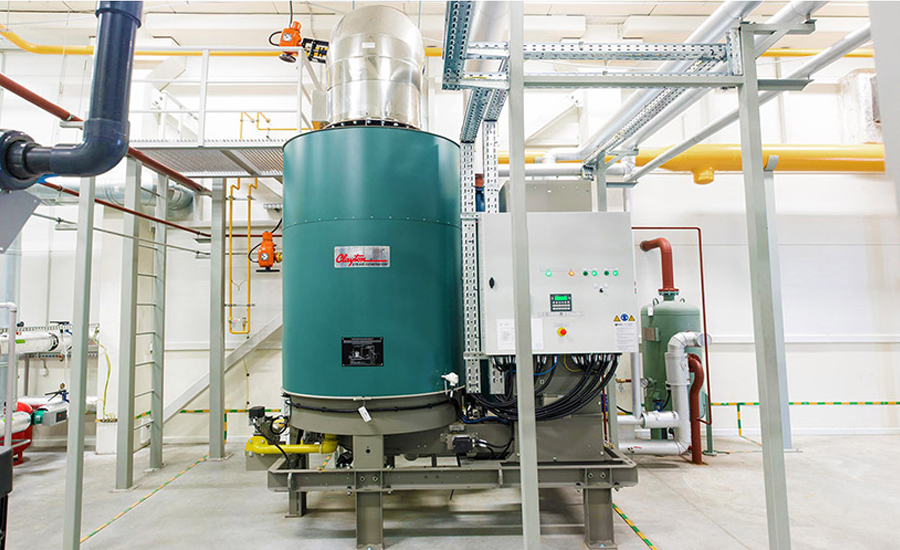
A potent heat exchanger also is crucial for applying the necessary energy to turn water into steam for boiler use, notes James Adgey, thermal sales for Clayton Industries, a City of Industry, Calif.-based steam boiler manufacturer.
Measuring a boiler’s energy efficiency is the best way to judge a heat exchanger’s effectiveness, he says, which includes analyzing a system’s BTUs (British thermal units), which indicates the amount of steam a boiler produces versus the amount of fuel in use.
“Poor heat transfer leads to a massive drop in efficiency,” Adgey states. “Even a single percentage of lost efficiency can result in thousands of dollars of excess fuel costs over the course of a year.” Obtaining efficiency ratings from suppliers will enable operators to accurately compare equipment options, he adds.
Because heat exchangers in boilers also can be subject to fouling from scale and soot buildups — resulting in efficiency reductions — it is important that processors follow manufacturers’ recommendations for proper operational practices and maintenance, Adgey notes. “Doing so will ensure the exchanger, and entire boiler, are operating at peak effectiveness,” he suggests.
The future is bright
Moving forward, newer materials that offer enhanced thermal conductivity and corrosion resistance will enable heat exchangers to become increasingly resilient, Perrin says, How the exchangers are made, including stainless steel, titanium and specialized alloys, are improving heat transfer rates and ensuring long-term durability.
The use of computational fluid dynamics simulations and advanced modeling techniques to analyze fluid flow patterns, pressure drops, and heat transfer characteristics also are enabling engineers to optimize designs, he states.
In addition, developers are integrating exchangers with heat recovery systems that capture waste heat from industrial processes or exhaust gases and repurpose it for other applications, Perrin says. “By implementing heat recovery, heat exchangers not only contribute to overall energy efficiency but help reduce environmental impact by minimizing waste and emissions,” he notes.
Among the enhancements driving design of plate heat exchangers are units that open and close with the push of a button and those that incorporate new flow distribution areas. These changes allow dairy products to be evenly spread out across the plate’s surface after entry through a port, Kennedy explains.
Plate exchangers have a series of parallel plates with one placed above another to create channels for fluids to flow and are designed for specific products or functions, he states.
“You can take 100 plates and arrange them in countless different ways, but they need to be in a proper order to achieve the optimal output,” Kennedy notes. “Knowing the worst-case scenario that needs to be accomplished drives [decisions on] how the unit is put together.”
Key information to guide the development of a plate exchanger system includes flow rate, product properties, temperature profile, and media type, he relays.
Upgrades also are enabling thinner plates to operate under higher pressures, Kennedy suggests.
“The thinner the plate, the greater the heat transfer efficiency,” he states. “Utilizing a 0.5-millimeter plate versus a 0.7-millimeter plate also decreases the weight of the plate pack by almost 30 percent. Not only is this a step forward in sustainability, but there are large upfront cost savings on steel and shipping.”
In the quest to improve the heat-exchanging process, developers are incorporating such elements as vortex generators, turbulators, and surface coatings into system designs. Perrin concludes, “These methods disrupt laminar flow, promote better mixing, and ultimately improve heat transfer efficiency.”
Looking for a reprint of this article?
From high-res PDFs to custom plaques, order your copy today!