Dairy Foods logo
search
cart
facebook twitter linkedin youtube
  • Sign In
  • Create Account
  • Sign Out
  • My Account
Dairy Foods logo
  • NEWS
    • DAIRY REGULATIONS
  • PRODUCTS
    • New Products
    • Butter
    • Cheese
    • Cultured Dairy
    • Frozen Desserts
    • Ice Cream/Novelties
    • Milk
    • Non-Dairy Beverages
    • Sales Data
    • Whey, Milk Powder
    • Dairy Alternatives
  • INGREDIENTS
    • Cocoa
    • Colors/Flavors
    • Cultures/Enzymes
    • Fiber
    • Gums, Stabilizers, and Texturants
    • Inclusions
    • Omegas/Lipids
    • Prebiotics
    • Probiotics
    • Sweeteners
    • Other
  • OPERATIONS
    • SUSTAINABILITY
    • Equipment
    • Processing
    • Packaging
    • Food Safety & Sanitation
    • Membrane Technology
  • MEDIA
    • Dairy Foods TV
    • Podcasts
    • Webinars
  • DIRECTORIES
    • Buyers Guide
    • Dairy Plants USA
  • MEMBRANE FORUM
  • MORE
    • Associations
    • Dairy Foods' News & Views Newsletter
    • Blogs
    • Case Studies
    • Classifieds
    • Custom Content & Marketing Services
    • Dairy Foods Store
    • Market Research
    • Supplier Spotlights
    • Tradeshows and Events
    • Strategy Guides
  • AWARDS
    • Dairy Plant of the Year Award
    • Breakthrough Award
    • Dairy Processor of the Year
  • EMAGAZINE
    • eMagazines
    • Archive Issues
    • Contact
    • Advertise
    • SIGN UP!
    • Columnists
    • Dairy 100
    • State of the Industry Report
    Dairy Foods & BeveragesOperationsDairy Foods ColumnistsCheeseSustainability

    Sustainable Innovations in cheese packaging

    Innovations in bioplastics using dairy waste can make packaging that is biodegradable.
    By John A. Lucey Ph.D., Director, Center for Dairy Research
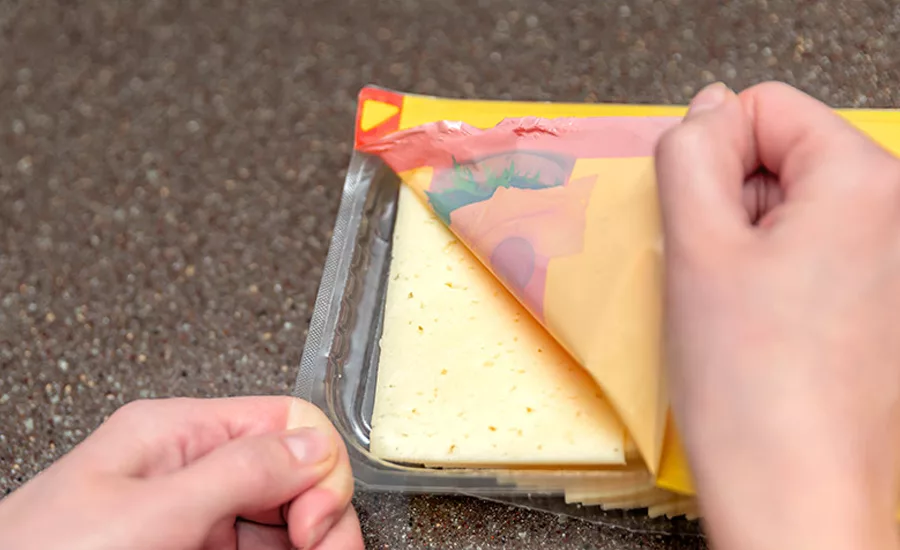
    cheese slices

    Photo courtesy of SERSOL via gettyimages.com

    April 21, 2023
    John Lucey

    John A. Lucey is a professor of food science at the University of Wisconsin, Madison, and the director of the Center for Dairy Research.

    Packaging is essential to maintaining and protecting the quality of the cheese product as well as attracting the eye of consumers. There are some interesting innovations in the food packaging industry. We are also facing challenges and questions like how can we produce packaging that is recyclable and/or biodegradable?

    In general, there’s a big push in the food industry to make more plastic packaging materials recycle-ready. This process may be gradual and start with in-store drop-off with the eventual goal of consumers putting those packaging materials right into their home recycle bins (if they have one in their location). A challenge is that food packaging often comes into direct contact with the food product and can be difficult to properly clean. Because of this, sorting facilities have to divert some recyclable material into landfills or other disposal methods. Overall, the capacity and effectiveness of recycling in municipalities across the U.S. is a big challenge.

    Currently, most of our plastics and packaging are made from fossil fuels, which, of course, are not renewable. In addition, many traditional fossil fuel-based plastics do not easily break down. It is possible to make biodegradable plastics utilizing fossil fuel-derived chemicals, but a much better option would be to produce more bio-based plastics or bioplastics, which are made using substances like corn starch, vegetable fats, and oils, etc. Currently, only about 1% of our plastics are bio-based, which, in addition to being produced with sustainable resources, can also be biodegradable and/or compostable.

    The dairy industry, in particular, is in a position to contribute to the innovation in bioplastics. Here at the Center for Dairy Research (CDR), we are supporting research investigating methods to produce bioplastics from dairy waste. Dr. Erica Majumder, a bacteriology professor at the University of Wisconsin-Madison, is engineering microorganisms to ferment low-value acid whey into PHB (polyhydroxbutrate), which is a polymer that can be used to make a wide range of biodegradable plastics.

    Another exciting project is being led by Dr. Tim Donohue, a bacteriology professor at the University of Wisconsin-Madison. He is investigating the production of pure lactic acid from the biofermentation of cheese whey. Pure lactic acid can be used to make polylactic acid, which is a renewable and biodegradable bioplastic.

    One of the challenges with these innovations is scaling up these technologies from the benchtop research stage to industrial production. This is something that CDR wants to help with. The Dairy Business Innovation Alliance (administered by CDR and the Wisconsin Cheese Makers Association) received supplemental funding from the USDA, which is being used to purchase larger bioreactors to evaluate the commercial viability of these new biofermentation processes. The CDR will also get specialized pilot-scale equipment that can purify the new green chemicals produced from these biofermentations. These are exciting projects that CDR and DBIA are proud to support.

    The cheese packaging industry is also working hard to reduce the amount of plastics it uses. One strategy to use less plastic has been to develop thinner packaging film, which reduces the carbon footprint of the packaging. Of course, the packaging film still needs to protect and maintain the product while also appealing to consumers.

    While sustainability and reducing the carbon footprint has been the main focus of this article there are other interesting innovations in packaging. For instance, some packaging may utilize QR codes to provide more information to consumers. People can scan the QR code and learn more about the story of the manufacturer who produced the product or the farm where the milk came from. This could be especially impactful for smaller producers who want to tell the story behind their product.

    One other issue I want to briefly mention is food waste, which is a significant global problem, as huge volumes end up in landfills. In general, better packaging materials and shelf-life extension processes can help reduce food waste by preserving the quality of the product (less spoilage).

    In summary, I think that it is possible that we can move from traditional fossil-based plastics to biodegradable bioplastics, some of which could be made with renewable dairy wheys. This will take a big effort and lots of innovations, including the need to engineer microorganisms to produce these green chemicals, as well as developing cost-effective methods to isolate the target chemicals produced in the bioreactor. I think the investment is well worth it. This would represent a big step forward in packaging and greatly appeal to consumers concerned about sustainability.

    KEYWORDS: Center for Dairy Research cheesemaking operations columnists dairy packaging technology recyclability sustainability in the dairy industry

    Share This Story

    Looking for a reprint of this article?
    From high-res PDFs to custom plaques, order your copy today!

    John lucey phd

    John Lucey, Ph.D., is the Owen R. Fennema Professor in Food Chemistry at the University of Wisconsin-Madison’s Center for Dairy Research.

    Recommended Content

    JOIN TODAY
    to unlock your recommendations.

    Already have an account? Sign In

    • Lifeway Organic Kefir in different flavors inside a refrigerated grocery shelf.

      Dairy Foods names Lifeway Foods 2025 Processor of the Year

      Lifeway Foods donates $10,000 to wildfire victims,...
      Innovation
      By: Brian Berk
    • Two female farmers are standing in a field, holding a large milk canister, looking at several cows at dairy farm.

      Honoring Women Leaders Shaping the Dairy Industry

      For the fourth consecutive year, Dairy Foods is proud to...
      Innovation
      By: Barbara Harfmann
    • Main feature for State of the Industry with dairy products album cover with a gradient circular--patterned backgorund.

      2025 State of the Dairy Industry

      Welcome to the 2025 State of the Industry report. For...
      Sales Data
    Manage My Account
    • eMagazine Subscription
    • Dairy Foods News & Views Newsletter
    • Online Registration
    • Manage My Preferences
    • Subscription Customer Service
    • Connect with Dairy Foods

    More Videos

    Popular Stories

    Close up of a whipped frozen dessert with a light green color.

    The keys to high-protein dairy formulations

    A young Asian mother holding her son and a sippy cup, an older woman is in the blurred background.

    Finding the right infant formula is crucial to a baby’s growth and development

    A row of Frios Gourmet Pops with a tie dye pattern as a background.

    How Frios Gourmet Pops delivers happiness

    Outlook Report: Women in Dairy

    Products

    Probiotic Ice Cream: Science and Technology

    Probiotic Ice Cream: Science and Technology

    See More Products
    Let's Talk Dairy podcast promo

    Related Articles

    • Innovations in Cheese Keep Coming

      See More
    • Innovations in Cheese Are Plentiful

      See More
    • Packaging Points: New Opportunities in Cheese Packaging

      See More

    Related Products

    See More Products
    • 0470655844.jpg

      Sustainable Dairy Production

    • 9781771887656.jpg

      Nanotechnology Applications in Dairy Science Packaging, Processing, and Preservation

    • GlobalData_Consumer.jpg

      Cheese (Dairy & Soy Food) Market in North America - Outlook to 2022: Market Size, Growth and Forecast Analytics

    See More Products

    Related Directories

    • North Country Packaging Inc.

      We specialize in cheese conversion and production of cheese spreads. Our capabilities include Cut and wrap for 8 oz, 1 lb blocks,half moon shape,5 lb,Curd, String Cheese and Meat Packaging with gas flush available. Making and packaging of Cheese and Cream Cheese Spreads.
    • Winpak Portion Packaging Inc.

      Winpak is a leading supplier in the North American Dairy Market in both the manufacture of sophisticated packaging materials for Soft and Cultured Dairy, as well as Cheese. Winpak employs the most technologically advanced production methods to produce innovative rigid and flexible packaging solutions that optimizes productivity, package performance with outstanding shelf presence.
    ×

    Stay ahead of the curve. Unlock a dose of cutting-edge insights.

    Receive our premium content directly to your inbox.

    SIGN-UP TODAY
    • RESOURCES
      • Advertise
      • Contact Us
      • Directories
      • Store
      • Want More
    • SIGN UP TODAY
      • Create Account
      • eMagazine
      • Newsletter
      • Customer Service
      • Manage Preferences
    • SERVICES
      • Marketing Services
      • Reprints
      • Market Research
      • List Rental
      • Survey/Respondent Access
    • STAY CONNECTED
      • LinkedIn
      • Facebook
      • YouTube
      • X (Twitter)
    • PRIVACY
      • PRIVACY POLICY
      • TERMS & CONDITIONS
      • DO NOT SELL MY INFORMATION
      • PRIVACY REQUEST
      • ACCESSIBILITY

    Copyright ©2026. All Rights Reserved BNP Media, Inc. and BNP Media II, LLC.

    Design, CMS, Hosting & Web Development :: ePublishing