Dairy Foods logo
search
cart
facebook twitter linkedin youtube
  • Sign In
  • Create Account
  • Sign Out
  • My Account
Dairy Foods logo
  • NEWS
    • DAIRY REGULATIONS
  • PRODUCTS
    • New Products
    • Butter
    • Cheese
    • Cultured Dairy
    • Frozen Desserts
    • Ice Cream/Novelties
    • Milk
    • Non-Dairy Beverages
    • Sales Data
    • Whey, Milk Powder
    • Dairy Alternatives
  • INGREDIENTS
    • Cocoa
    • Colors/Flavors
    • Cultures/Enzymes
    • Fiber
    • Gums, Stabilizers, and Texturants
    • Inclusions
    • Omegas/Lipids
    • Prebiotics
    • Probiotics
    • Sweeteners
    • Other
  • OPERATIONS
    • SUSTAINABILITY
    • Equipment
    • Processing
    • Packaging
    • Food Safety & Sanitation
    • Membrane Technology
  • MEDIA
    • Dairy Foods TV
    • Podcasts
    • Webinars
  • DIRECTORIES
    • Buyers Guide
    • Dairy Plants USA
  • MEMBRANE FORUM
  • MORE
    • Associations
    • Dairy Foods' News & Views Newsletter
    • Blogs
    • Case Studies
    • Classifieds
    • Custom Content & Marketing Services
    • Dairy Foods Store
    • Market Research
    • Supplier Spotlights
    • Tradeshows and Events
    • Strategy Guides
  • AWARDS
    • Dairy Plant of the Year Award
    • Breakthrough Award
    • Dairy Processor of the Year
  • EMAGAZINE
    • eMagazines
    • Archive Issues
    • Contact
    • Advertise
    • SIGN UP!
    • Columnists
    • Dairy 100
    • State of the Industry Report
    OperationsWhite Papers

    Instrumental

    3 tests a dairy processor should perform to make a better ice cream mix

    An overview of viscosity testing addresses the basic ways to characterize ice cream mix formulations.
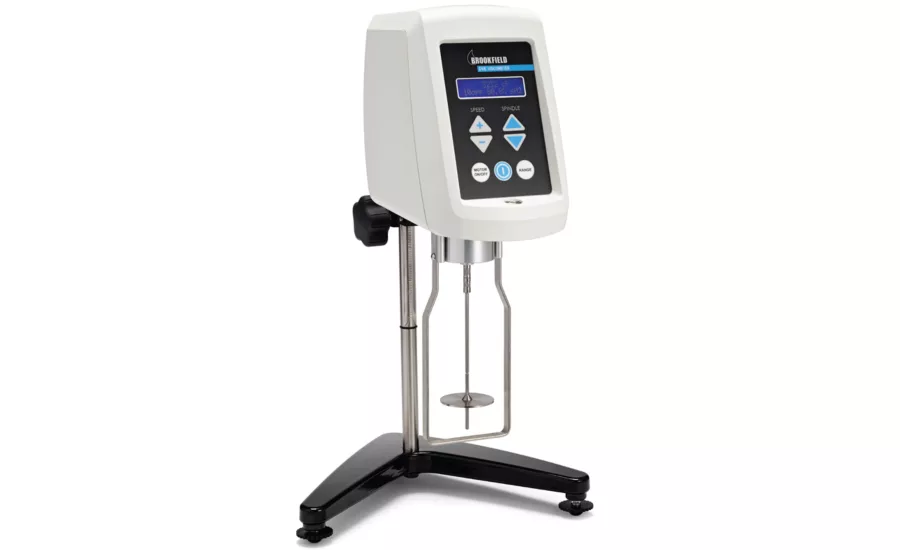
    Ametek Brookfield rotational viscometer Dairy Foods

    Ametek Broofield rotational viscometer with disc spindle
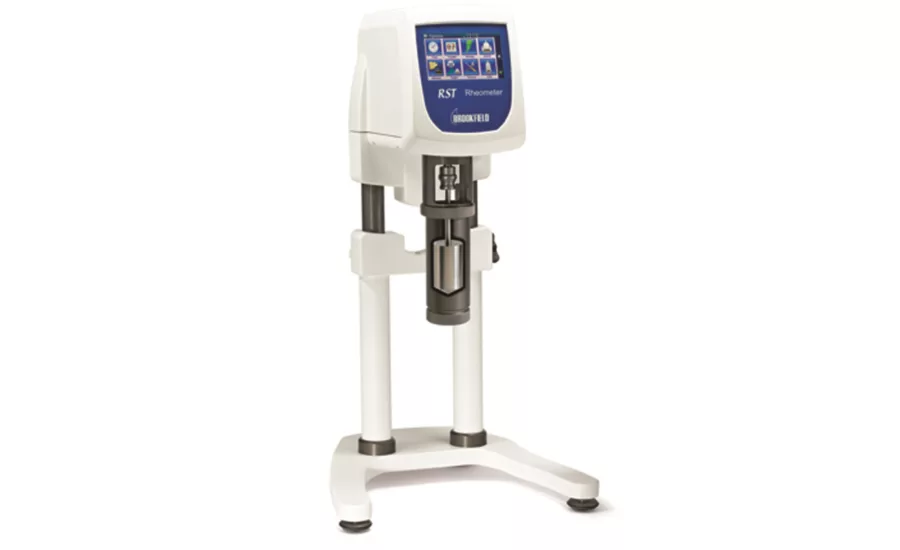
    Ametek Brookfield rheometer

    Ametek Broofield rheometer with coax cylinder measuring system.
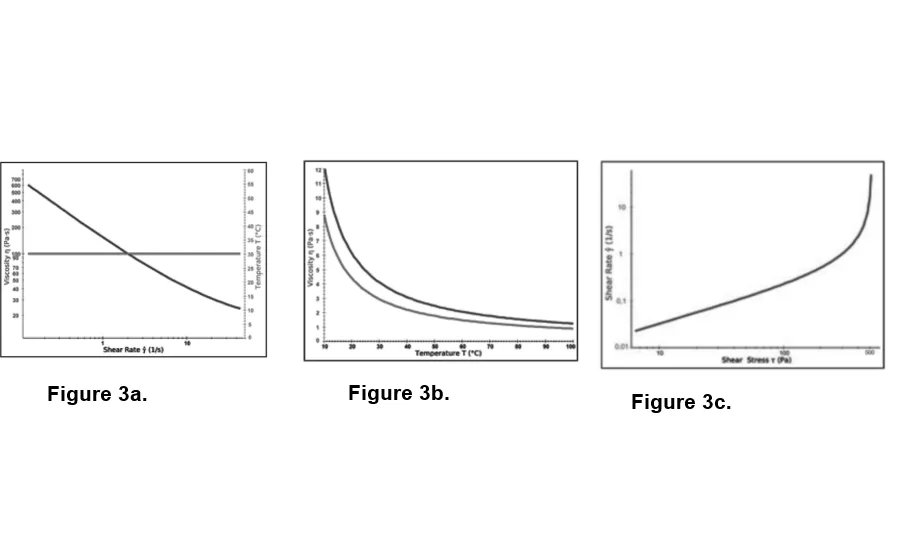
    Ametek Brookfield viscosity test results Dairy Foods

    Figure 3a.Viscosity Flow Curve. Figure 3b. Viscosity versus Temperature. Figure 3c. Yield Stress Determinatin.

    Ametek Brookfield rotational viscometer Dairy Foods
    Ametek Brookfield rheometer
    Ametek Brookfield viscosity test results Dairy Foods
    April 20, 2017

    By Robert G. McGregor, Ametek Brookfield

    Ice cream is everyone’s favorite dairy food.  Demand for ice cream has proliferated and manufacturing has responded with mechanized processes for volume production. 

    Formulations have evolved to encompass a variety of flavors, some of which include additives like chocolate chips, fruit, coconut, marshmallow, candy pieces and peanut butter.  Use of instrumentation to measure product consistency has become critical in manufacturing to ensure that high-quality standards are achieved.  This includes tests for viscosity during mix processing and possibly even yield stress determination of final ice cream product to simulate consumer experience.

    Ice cream mix is essentially a combination of dairy milk with sugar, salt, flavorings and other additives that stabilize and preserve the product.  Processors test the mix for viscosity prior to freezing.  Standard test equipment includes rotational bench top viscometer as shown above. 

    A sample is placed in a 500-milliter beaker or similar container.  A spindle with a protective bracket is immersed in the sample.  Spindle rotation at one or two defined speeds produces viscosity readings that must fall between defined minimum and maximum limits.  Viscosity for relatively “thin” formulations may show little change between the two speeds, whereas “thick” mixes are more likely to show decrease in viscosity vs. increasing spindle speed.

    Use a rheometer to characterize consistency

    Food scientists in R&D have become more sophisticated when creating a new ice cream mix. They measure viscosity with a rheometer to characterize consistency and possibly even yield stress of various formulations.  The second instrument shown above has a measuring system that consists of a cylindrical spindle which rotates in a mating coaxial chamber.  Sample size required for testing is relatively small, oftentimes less than 20 milliliters.  A water jacket attaches to the sample chamber and connects to a circulating water bath so that temperature control during viscosity testing becomes possible.  The objective is to simulate processing conditions which may involve a series of steps from cooking at elevated temperature to cool down at room or refrigeration temperature.  Small sample volume is easier to regulate for temperature control.

    What happens when you add fruit pieces to the mix?

    Addition of fruit pieces and other particulate items to the mix has led to use of vane spindle to measure viscosity of new formulations.  Vanes allow plenty of space for the pieces to migrate freely as the spindle rotates.  The vane spindle can rotate in a beaker for a quick quality control (QC) test or mating chamber for characterization of flow behavior by R&D.  Mix material inside the circumference of vane shears against material outside, providing a true viscosity measurement of the formulation loaded with particles.

    Typical tests in R&D will include viscosity flow curve, viscosity vs. temperature profile, and possibly yield stress determination. The most basic test involves rotating the spindle at increasing speed to observe how viscosity changes. Most formulations will show some decrease in viscosity which is referred to as “pseudoplastic” or “shear thinning” behavior. 

    As mentioned earlier, “thicker” formulations may exhibit greater change in viscosity.  This degree of change could be used as a control parameter in QC testing to determine whether the mix has reached its end condition prior to freezing.  Figure 3a shows a viscosity flow curve which illustrates how viscosity decreases as spindle speed increases, also referred to as “shear rate” when testing in a coax cylinder system.  Viscosity may approach an asymptotic minimum value at high rotational speed.

    Testing for temperature and yield stress

    Other tests that R&D may perform include temperature profiling (Figure 3b) and Yield Stress determination (Figure 3c).  The objective of the temperature test is to observe how viscosity behavior changes because of cooking and refrigerating.  Yield stress is a measure of how much force is needed to initiate flow.  This measurement is relevant to start up torque needed for pumps in processing the mix.  It can also correlate with consumer experience when spooning the frozen product and possibly even sensation in your mouth when eating ice cream. 

    R&D must determine whether a single viscosity measurement value taken from the flow curve in Figure 3a is sufficient to guarantee successful processing.  QC will implement this procedure as the control point for each batch.  Single point testing is preferred since it takes less time, an important consideration in a busy lab.  Other tests for temperature behavior or yield stress are less likely, but may be specified when processing premium brands.

    This brief overview of viscosity testing has addressed basic ways to characterize ice cream mix formulations.  Transfer of test method to QC is the important step needed to insure production meets quality standards which guarantee acceptable product to your customer.

    Robert G. McGregor is the director of global marketing & high end lab instrument sales for  Ametek Brookfield, Instrumentation & Specialty Controls Division, Middleboro, Mass. www.brookfieldengineering.com


    KEYWORDS: ice cream mix

    Share This Story

    Looking for a reprint of this article?
    From high-res PDFs to custom plaques, order your copy today!

    Recommended Content

    JOIN TODAY
    to unlock your recommendations.

    Already have an account? Sign In

    • Lifeway Organic Kefir in different flavors inside a refrigerated grocery shelf.

      Dairy Foods names Lifeway Foods 2025 Processor of the Year

      Lifeway Foods donates $10,000 to wildfire victims,...
      Dairy Processor News
      By: Brian Berk
    • Two female farmers are standing in a field, holding a large milk canister, looking at several cows at dairy farm.

      Honoring Women Leaders Shaping the Dairy Industry

      For the fourth consecutive year, Dairy Foods is proud to...
      Innovation
      By: Barbara Harfmann
    • Main feature for State of the Industry with dairy products album cover with a gradient circular--patterned backgorund.

      2025 State of the Dairy Industry

      Welcome to the 2025 State of the Industry report. For...
      Sales Data
    Manage My Account
    • eMagazine Subscription
    • Dairy Foods News & Views Newsletter
    • Online Registration
    • Manage My Preferences
    • Subscription Customer Service
    • Connect with Dairy Foods

    More Videos

    Popular Stories

    Close up of man adding Greek yogurt while preparing healthy smoothie in the kitchen.

    An expert guide to dairy and GLP-1 receptor agonists

    Splash of milk in form of arm muscle. 3D illustration.

    Protein: The Powerhouse of Health and Wellness

    Grilling foods

    Dairy’s Enduring Moment: Why Resilience and Renewal Define Today’s Dairy Story

    Nominate your product for the 2026 Dairy Foods Product of the Year!


    MTF webinar


    Food Safety webinar

    Events

    July 8, 2026

    Membrane Purification Enables Clean Beauty Actives

    The global cosmetics market is undergoing a major shift towards the use of natural bioactive ingredients as consumers grow more skeptical of traditional formulations and demand greater transparency and sustainability.

    July 8, 2026

    Advancements in RO for Dairy Processing

    Reverse osmosis (RO) membranes are well established in dairy processing but continue to evolve to improve performance, reduce energy use, and increase operational longevity. 

    View All Submit An Event

    Products

    Probiotic Ice Cream: Science and Technology

    Probiotic Ice Cream: Science and Technology

    See More Products
    health and wellness


    plant of the year

    Related Articles

    • Dairy science: why ice cream melts and how to make a great chocolate ice cream

      See More
    • To make a smooth ice cream, you need the proper stabilizers

      See More
    • Halo Top Mix Ins.png

      Halo Top to offer ice cream mix-ins for the first time

      See More

    Related Products

    See More Products
    • icecream.gif

      Tharp & Young on Ice Cream: An Encyclopedic Guide to Ice Cream Science and Technology

    • GlobalData_Consumer.jpg

      Impulse Ice Cream – Single Serve (Ice Cream) Market in the United States of America – Outlook to 2024...

    • download.jpg

      Probiotic Ice Cream: Science and Technology

    See More Products

    Related Directories

    • Perry's Ice Cream

    • Luke's Ice Cream

    • Wonder Ice Cream

    ×

    Stay ahead of the curve. Unlock a dose of cutting-edge insights.

    Receive our premium content directly to your inbox.

    SIGN-UP TODAY
    • RESOURCES
      • Advertise
      • Contact Us
      • Directories
      • Store
      • Want More
    • SIGN UP TODAY
      • Create Account
      • eMagazine
      • Newsletter
      • Customer Service
      • Manage Preferences
    • SERVICES
      • Marketing Services
      • Reprints
      • Market Research
      • List Rental
      • Survey/Respondent Access
    • STAY CONNECTED
      • LinkedIn
      • Facebook
      • YouTube
      • X (Twitter)
    • PRIVACY
      • PRIVACY POLICY
      • TERMS & CONDITIONS
      • DO NOT SELL MY INFORMATION
      • PRIVACY REQUEST
      • ACCESSIBILITY

    Copyright ©2026. All Rights Reserved BNP Media, Inc. and BNP Media II, LLC.

    Design, CMS, Hosting & Web Development :: ePublishing