How to avoid the ‘soda tax’
Seven U.S. jurisdictions have imposed a sugar tax on beverages sold within their boundaries. Here’s why dairy processors should think about cutting sugar in the coffee, tea and juice drinks they make.

Photo courtesy of Flavorchem Corp.
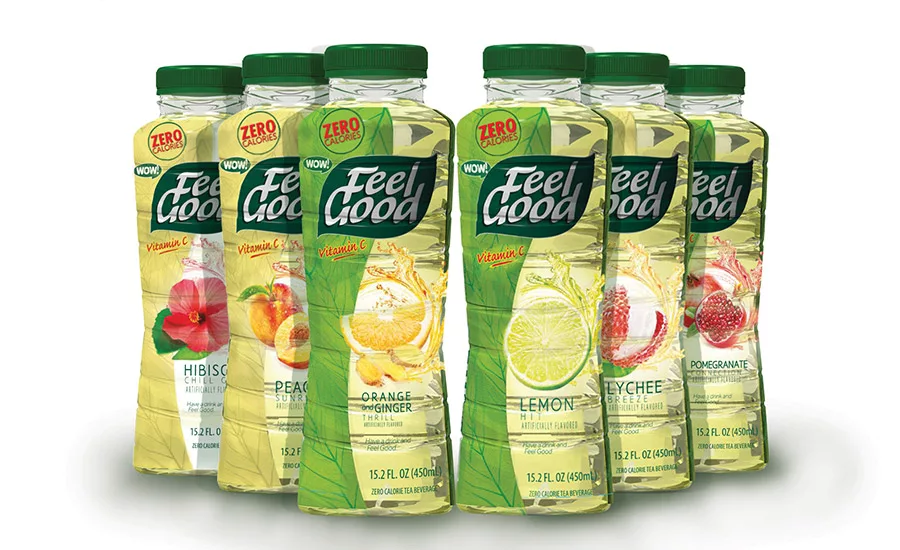
Ramsey, N.J.-based Wow! Nutrition’s Feel Good is zero-calorie iced tea that contains no added sugars. The ready-to-drink tea is available in six varieties, including peach, lemon, lychee and orange-ginger. The tea also contains no added carbohydrates and is made with water, green or white tea extract, sucralose and artificial flavors.
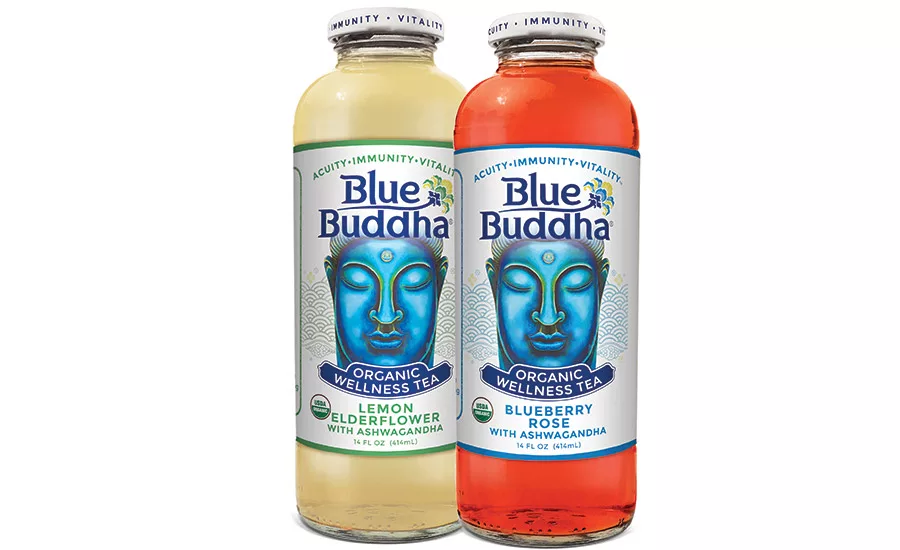
Blue Buddha combines herbs, organic tea, organic Fair Trade sugar, organic stevia, fruit and plant extracts. A 14-ounce serving of the blueberry-rose flavor contains 40 calories and 10 grams of sugar.
Election 2016 will go down in history for plenty of reasons. But somewhat overlooked amidst the more sensational results were the decisions in San Francisco, Oakland and Albany, Calif., Boulder, Colo., and Cook County, Ill., to begin levying what have become known broadly as “soda” taxes. In so doing, the voters in these locations joined their fellows in Berkeley, Calif., and Philadelphia to bring the total number of American communities with such taxes to a small, but notable, seven.
Yet lest anyone in the dairy sector breathe a sigh of relief, grateful that they’re not in the soda biz and can thus ignore the penny-per-ounce imposts: Not so fast. “Soda,” for the purposes of these taxes, includes the sweetened teas, creamy coffee drinks and sugary juice beverages that many dairies bottle in addition to milk. Indeed, it’s not so much fizzy water or dayglow colors that these soda taxes target, but sugar, pure and simple.
Which shouldn’t surprise any beverage bottler, seeing as how the sweetener’s long been in health activists’ sights. According to one 2011 study, half the U.S. population drinks sugary beverages, with fully 5% consuming at least 567 calories (equal to four cans of soda) from such beverages on any given day. With the consensus being that those excess sugar calories contribute significantly to the obesity epidemic, the logic behind the taxes may seem self-evident.
Or not. But regardless of where one’s own opinion settles out on the matter, sugary-beverage taxes are the new normal, at least in some jurisdictions. And with a Nutrition Facts “added sugars” line set to go live soon (unless President Trump’s FDA nixes it), dairy processors may be wondering, “What do all these changes mean for my teas, coffees and juices? And what should I do about it?” We sat down with the experts to find out.
Dairy Foods: To start, what effect has the spate of sugary-beverage taxes had on your operations?
Heidi McCormack: We’ve certainly seen a number of requests for naturally sweetened or less-sweet products as the trend shifts toward less sweet and more natural flavors.
John Harper Crandall: The industry in general has been moving toward lightly sweetened options for new beverage launches, as well as for line extensions. Products around 8° Brix seem to be requested more and more.
Dairy Foods: Which raises a good point. How much sugar is in the typical sweetened coffee, tea or juice beverage anyway?
Crandall: In restaurants, we notice that the sugar level is typically much higher than what you see in bottled tea, because foodservice operators typically add ice to ready-to-drink tea, and consumers tend to prefer it sweeter. However, this tendency may change in the future once menus start to include ingredient statements and calorie contents. We see sugar levels as high as 15° to 18° Brix in some chains, while typical sweetened tea in a bottle is around 8° to 10° Brix.
Lauren Lamoureaux: The average amount of sugar is 7% to 8% in common sweetened beverages on the market today. The level of sugar in beverages is starting to decrease more as the marketplace shifts from value tea beverages that are highly sweetened toward premium tea beverages where the natural tea flavor is more prominent and less masked by sweeteners.
Dairy Foods: Regardless of the sweetener levels, do your customers show any particular preference for certain sweeteners over others when sweetening coffee, tea and juice — or perhaps a tendency to avoid some sweeteners entirely?
Crandall: We’ve seen “pure cane sugar” remain the preferred sweetener, but just less of it.
Lamoureaux: As beverages are straying away from HFCS [high-fructose corn syrup] and artificial sweeteners, the preference today is toward sucrose from cane sugar if the product is sweetened. Some customers are interested in non-caloric natural sweeteners like stevia, but sugar still seems to be the frontrunner.
Dairy Foods: This may seem like an obvious question, but why do we sweeten these beverages in the first place?
Blake Wester: Humans are naturally drawn to sweet things. It’s only natural that sweetened beverages would draw the majority of the crowd. That being said, there are still a lot of people who take their coffee and tea with no sugar. A lot of that can be attributed to regional preferences. Sweet tea is standard in any restaurant in the South, but up North, not so much. However, those same folks who like their coffee and tea unsweetened still consume a whole lot of sugar-sweetened CSDs [carbonated soft drinks] and juice.
Crandall: In the U.S., sugar sells. Period. Historically, sweetened teas outsell unsweetened, lightly sweetened or diet by a ratio of two-to-one or even three-to-one.
Dairy Foods: If sweetened teas, coffees and juices are what consumers have historically preferred, to what extent is this preference now shifting?
Stacy DeMars: Five years ago, the trend in the market was more in the direction of rich, creamy, very sweet and indulgent coffee and tea beverages. But today, with a more health-conscious society and, in particular, health-conscious millennials being a driving force with purchasing power, we’re seeing the shift in the market to black or lightly sweetened coffee products like cold-brew coffee.
Dairy Foods: Besides health, what other issues are driving this shift?
Wester: I think a lot of people are starting to see juice drinks for what they really are, which is “sugar water” by a different name, in many cases. However, they’ll still probably never face the same level of criticism as beverages sweetened with, say, HFCS.
McCormack: For one, consumers are becoming more educated about quality tea and how it should taste. For that reason, more customers today are looking for premium tea beverages, where the tea flavor is prominent and appreciated not just for its health properties but for the flavor and experience of drinking tea. This trend lends perfectly to the coffee and tea industries, as these products are inherently natural in origin.
Dairy Foods: In other words — and as is the case in so many other corners of the food and beverage space — “cleanliness,” quality and connoisseurship are driving the narrative in coffee, tea and juice formulation?
Lamoureaux: Yes. Many customers are interested in no-added-sugar or very-low-sugar beverages. We’ve also seen a switch where customers are more interested in products with clean labels and that are more tea-forward.
McCormack: The RTD [ready-to-drink] coffee industry is already moving toward less-sweet coffee profiles. As consumers become more educated about bean types, origins and brewing techniques, they’re seeking out an authentic coffee experience without sweeteners covering the nuance of the coffee itself.
Dairy Foods: Has the consumer swung entirely away from sugar? Are Americans truly “souring on sweet,” at least when it comes to tea, coffee and juice?
Wester: Actually, most of the projects that I’ve worked on for reducing calories due to taxation have been for the Mexican market. I think that in the U.S.A., the majority of people who drink full-sugar beverages will still buy full-sugar beverages, even with a tax added on. They won’t like it, but I don’t see that as a major driving force pushing people toward reduced-calorie beverages.
Crandall: Honestly, we have not seen the need for reducing sugar in existing products to be much of a concern. More than existing products, new product launches seem to have more of a focus on reducing calories vis-à-vis soft drinks or full-sugar options. Brand owners typically do not change existing products that’ve seen even moderate success.
Dairy Foods: When you sit down with customers to work on sugar-reduction projects, where do you start? What questions do you ask?
Wester: We need to know, “Are you looking at ‘natural’ or artificial sweeteners? What’s your cost target? Your target customer? Process? Packaging?” There are more questions where those came from.
Hilary Hursh: We start sugar-reduction projects by talking about the coffee itself and how the origin, type and roast can impact the perception of sweetness. When formulating coffee-based beverages, it’s important to keep the sweetness and bitterness in balance. Switching to a 100% Arabica coffee ingredient, going with a lighter roast profile or using a cold-brewed extract could help reduce the perceived bitterness in the final product and hence allow for sugar to be reduced without negatively impacting the overall flavor.
Dairy Foods: That’s interesting. Are you saying that it may be possible to cut sugars while maintaining a palatable taste just by focusing on the properties of the base beverage itself?
Crandall: Using a clean-tasting brewed tea extract allows for a balanced RTD product that lets everything shine through. In many cases, producers need less sugar to get the same impact that inferior ingredients like tea powders may require.
Dairy Foods: What happens to other sensory parameters when processors start cutting sugar levels in these drinks?
Wester: The major parameter to change would be mouthfeel. Sometimes it can be added back with pectin or a gum. But you have to be careful, as that can lead to a slimy mouthfeel instead of duplicating the perception of sucrose. The acid and flavor levels also need to be addressed, as sugar changes our perceptions of those factors.
Dairy Foods: So we have to look at these reformulations holistically. We haven’t yet discussed the role of non-caloric, artificial or other alternative sweeteners yet. How might processors leverage them when lowering sugar levels in teas, coffees and juices?
Wester: I always prefer a combination of sucralose and ace K [acesulfame potassium]. I see that as having the cleanest profile. For a more “natural” approach, allulose and stevia work quite well together. And if the customer’s okay with it, a little bit of crystalline fructose goes a long way, too.
Crandall: All nonnutritive sweeteners have positives and negatives. The right sweetener depends on the product goal and target flavor profile.
Dairy Foods: So there’s no one-size-fits-all. And that’s probably the case with consumers and their coffee, tea and juice choices. Given American’s diversity of preferences, where do you see this trend going?
Hursh: While people are becoming more aware of the foods and beverages they consume, with more attention going toward health and wellness, they are paying more attention to labels and ingredients and striving to cut sugar and other additives from their diets.
There’s still room for consumers to be interested in having an indulgent experience. Amidst an increasingly fast-paced lifestyle and increased digitalization, there’s a move for consumers to take time to break away and have a moment — an experience. This can be seen in the coffee space, where the “third-wave” coffee movement and rise of coffee shops has turned coffee into an experience and an opportunity for consumers to socialize, unwind and enjoy a more elevated beverage experience.
Often, beverages consumed at this time can be laden with sugar and dairy. It becomes more about the product being a treat and indulgence, apart from the regular morning daypart coffee drink.
Dairy Foods: Sounds great to me. So taxes or no taxes, sugary coffees, teas and juices aren’t in danger of extinction?
McCormack: As consumers’ tastes and lifestyles evolve, so has the industry, introducing interesting new concepts like cold brew, functional coffees and more that continue to keep consumers interested and excited.
Meet the panelists
- John Harper Crandall, vice president, sales, Amelia Bay, John’s Creek, Ga.
- Stacy DeMars, senior marketing coordinator, Finlay’s Extracts & Ingredients, Lincoln, R.I.
- Hilary Hursh, R&D manager, Finlay’s Extracts & Ingredients
- Lauren Lamoureaux, technical director, Finlay’s Extracts & Ingredients
- Heidi McCormack, marketing manager, Finlay’s Extracts & Ingredients
- Blake Wester, senior applications scientist – beverage, Flavorchem, Downers Grove, Ill.
Looking for a reprint of this article?
From high-res PDFs to custom plaques, order your copy today!


.webp?height=200&t=1704827105&width=200 "Cement Slag Sand (4).jpg")

