Dairy Foods logo
search
cart
facebook twitter linkedin youtube
  • Sign In
  • Create Account
  • Sign Out
  • My Account
Dairy Foods logo
  • NEWS
    • DAIRY REGULATIONS
  • PRODUCTS
    • New Products
    • Butter
    • Cheese
    • Cultured Dairy
    • Frozen Desserts
    • Ice Cream/Novelties
    • Milk
    • Non-Dairy Beverages
    • Sales Data
    • Whey, Milk Powder
    • Dairy Alternatives
  • INGREDIENTS
    • Cocoa
    • Colors/Flavors
    • Cultures/Enzymes
    • Fiber
    • Gums, Stabilizers, and Texturants
    • Inclusions
    • Omegas/Lipids
    • Prebiotics
    • Probiotics
    • Sweeteners
    • Other
  • OPERATIONS
    • SUSTAINABILITY
    • Equipment
    • Processing
    • Packaging
    • Food Safety & Sanitation
    • Membrane Technology
  • MEDIA
    • Dairy Foods TV
    • Podcasts
    • Webinars
  • DIRECTORIES
    • Buyers Guide
    • Dairy Plants USA
  • MEMBRANE FORUM
  • MORE
    • Associations
    • Dairy Foods' News & Views Newsletter
    • Blogs
    • Case Studies
    • Classifieds
    • Custom Content & Marketing Services
    • Dairy Foods Store
    • Market Research
    • Supplier Spotlights
    • Tradeshows and Events
    • Strategy Guides
  • AWARDS
    • Dairy Plant of the Year Award
    • Breakthrough Award
    • Dairy Processor of the Year
  • EMAGAZINE
    • eMagazines
    • Archive Issues
    • Contact
    • Advertise
    • SIGN UP!
    • Columnists
    • Dairy 100
    • State of the Industry Report
    Dairy Foods Columnists

    Back to basics on CIP, COP practices

    By Gerald Witherington
    October 13, 2015

    The purpose of any programmable clean-in-place (CIP) system is to provide a consistent and repeatable wash cycle for the equipment washed. Consistent time, temperature, chemical, flow and pressures are critical for every cycle that is run.

    Sheeting, the basic principle of tank washing, is accomplished using spray balls, spray disks or spray dishes. Sheeting involves spraying solution at the top of the vessel and allowing it to sheet down the dome, walls and across the floor of the tank to the outlet. This provides the mechanical action for removing soil from the vessel.

    Impingement is the process used with spray balls to sheet a tank, but it is also designed to address areas inside the tank such as baffles and agitators that cannot be cleaned by sheeting alone. It may involve more than one spray ball or device. Such spray balls are designed for a specific piece of equipment and are not interchangeable. The flow follows the sidewall of the tank down to the floor and across the bottom to the outlet. Nothing that is put in the interior of the tank will be cleaned by this method.

    Silo or tank doors, which we often see in dairies, swing into a tank to clean. This is not an effective method of cleaning because the door will not receive the sheeting action needed. The doors should be hand-cleaned as a part of the cleaning process. CIP doors, designed to keep the wash solution inside the tank, are the best way to limit the loss of the wash solution.

    An enormous amount of calcium buildup makes the door more difficult to clean and provides harborage for bacteria.

    Following are some practices to keep in mind:

    • All sanitation standard operating procedures (SSOP) and protocols for washing the door external to the tank must be followed. These protocols typically require manual cleaning and sanitizing of all components of a door as well as an inspection of all parts.
    • There should only be enough water in a tank to allow the outlet valve to be covered to prevent air into going to the CIP return pump.
    • Tank inlet and outlet valves must pulse during CIP or be disassembled and manually cleaned. Each time a product valve opens, product is on the valve stem and it is then pulled up through the O-ring area. The pulsing allows cleaning solution and sanitizer to enter.
    • Typically, use the shortest step in the program as the time value for pulsing a tank valve. That step is typically the sanitize step. The goal has to be, at least, pulse the inlet and outlet valve once during this step.
    • Line circuits are self-contained circuits with the valves pulsed by the automated controller. If there is hydraulic shock on a line circuit with valves, it is typically caused by the flow of the CIP solution behind the valve plug when it closes. To reduce hydraulic shock, always ensure the path of the CIP solution is initiated under valves first and then back over them.
    • Plug valves in a line cannot be washed merely by loosening the valve and allowing water to leak out. They must be removed, cleaned, inspected for damage, sanitized and re-installed.

    As a training aid, keep a damaged piece of equipment to use for “show and tell.”

    COP and its pitfalls

    Unlike CIP systems, COP (clean-out-of-place) units are designed to wash equipment by placing it in a hot chemical solution. The components are washed through the process of agitation in the tank. Properly equipped COP tanks will have a chart recorder that provides a record of the time and temperature of the wash cycle. The operator should initial the chart and place the chemical titration readings on the chart for each cycle.

    Following are some practices to keep in mind:

    • All equipment placed in a COP tank must be pre-rinsed or pre-cleaned if heavy soil is present. Otherwise, it will overload the chemical and be re-deposited on equipment being cleaned.
    • All equipment placed in a COP tank must be totally disassembled and placed in a manner to allow flow through or around.
    • Heavy items should not be dropped on fragile, small or delicate items. Teflon should be placed in COP baskets to prevent damage.
    • O-rings may be strung on a piece of stainless steel welding rod made into a hoop and hung in the COP tank.
    • Large items that cannot be fully submerged in the COP tank should be cleaned by hand, as they may block the circulation ports and will inhibit agitation.

    Remember: No Turbulence = No Cleaning.   

    For More Information

     Learn more about H. Randolph Inc.’s training programs, products and technical expertise by visiting the company website at www.raiconsult.com. Sign up for the Pasteurization Workshop, Dec. 7 to 10. To register, or for additional information, contact Kristy Clark at 205-595-6455, or email kristy.clark@mxns.com. 

    KEYWORDS: clean in place food safety plant sanitation

    Share This Story

    Looking for a reprint of this article?
    From high-res PDFs to custom plaques, order your copy today!

    Gerald Witherington is a CIP/operations specialist with H. Randolph Inc.

    Recommended Content

    JOIN TODAY
    to unlock your recommendations.

    Already have an account? Sign In

    • Lifeway Organic Kefir in different flavors inside a refrigerated grocery shelf.

      Dairy Foods names Lifeway Foods 2025 Processor of the Year

      Lifeway Foods donates $10,000 to wildfire victims,...
      Dairy Processor News
      By: Brian Berk
    • Two female farmers are standing in a field, holding a large milk canister, looking at several cows at dairy farm.

      Honoring Women Leaders Shaping the Dairy Industry

      For the fourth consecutive year, Dairy Foods is proud to...
      Dairy Foods & Beverages
      By: Barbara Harfmann
    • Main feature for State of the Industry with dairy products album cover with a gradient circular--patterned backgorund.

      2025 State of the Dairy Industry

      Welcome to the 2025 State of the Industry report. For...
      Innovation
    Manage My Account
    • eMagazine Subscription
    • Dairy Foods News & Views Newsletter
    • Online Registration
    • Manage My Preferences
    • Subscription Customer Service
    • Connect with Dairy Foods

    More Videos

    Popular Stories

    Close up of a whipped frozen dessert with a light green color.

    The keys to high-protein dairy formulations

    A row of Frios Gourmet Pops with a tie dye pattern as a background.

    How Frios Gourmet Pops delivers happiness

    Grilling foods

    Dairy’s Enduring Moment: Why Resilience and Renewal Define Today’s Dairy Story

    Outlook Report: Women in Dairy

    Products

    Probiotic Ice Cream: Science and Technology

    Probiotic Ice Cream: Science and Technology

    See More Products
    Let's Talk Dairy podcast promo

    Related Articles

    • State of the Industry 2017: Dairy ingredients get back to basics

      State of the Industry 2017: Dairy ingredients get back to basics

      See More
    • Back to Basics

      See More
    • terri rexroat

      Dairy’s clean label brings bakery back to the basics

      See More

    Related Products

    See More Products
    • eng practices milk.jpg

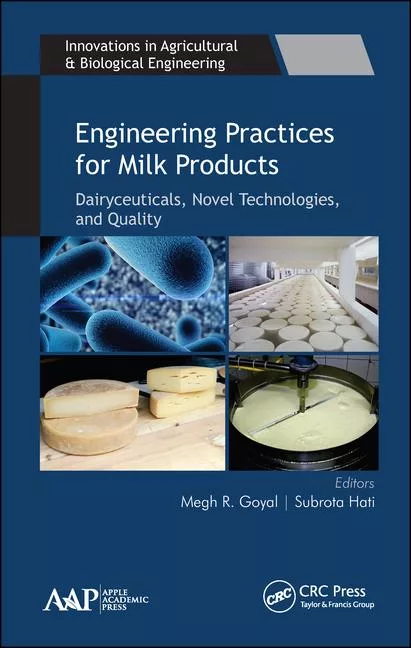
      Engineering Practices for Milk Products: Dairyceuticals, Novel Technologies, and Quality

    • icecream.gif

      Tharp & Young on Ice Cream: An Encyclopedic Guide to Ice Cream Science and Technology

    • two world.jpg

      The Potential Effect Of Two New Biotechnologies On The World Dairy Industry

    See More Products

    Events

    View AllSubmit An Event
    • September 10, 2025

      Turn Insights into Strategy: Bring Dairy Back to the Table

      On-Demand This session will also cover strategies for manufacturers to innovate and align with these trends, helping position dairy as a versatile, health-forward choice in the modern food landscape.
    View AllSubmit An Event

    Related Directories

    • Sani-Matic

      Sani-Matic delivers hygienic process solutions through expert engineering, automation, and service. Since 1943, we’ve served food, beverage, pharmaceutical, and industrial markets with CIP/COP systems, hygienic components, and data solutions. Backed by dedicated service teams, we turn every equipment purchase into a long-term partnership built on reliability and compliance.
    • Whey To Go

    • RWS ONE

      RWS ONE is a single source processing partner to the dairy industry, specializing in ESL & UHT technologies. We design, furnish, install and integrate sanitary process, filling and end of line equipment & systems, from receiving bay to warehouse and provide the most modern control and automation systems for your entire process. RWS One also manufactures modular process skids, tanks, vessels, silos and control panels, along with offering a full complement of engineering, process design, spare parts and equipment service divisions to support your operations.
    ×

    Stay ahead of the curve. Unlock a dose of cutting-edge insights.

    Receive our premium content directly to your inbox.

    SIGN-UP TODAY
    • RESOURCES
      • Advertise
      • Contact Us
      • Directories
      • Store
      • Want More
    • SIGN UP TODAY
      • Create Account
      • eMagazine
      • Newsletter
      • Customer Service
      • Manage Preferences
    • SERVICES
      • Marketing Services
      • Reprints
      • Market Research
      • List Rental
      • Survey/Respondent Access
    • STAY CONNECTED
      • LinkedIn
      • Facebook
      • YouTube
      • X (Twitter)
    • PRIVACY
      • PRIVACY POLICY
      • TERMS & CONDITIONS
      • DO NOT SELL MY INFORMATION
      • PRIVACY REQUEST
      • ACCESSIBILITY

    Copyright ©2026. All Rights Reserved BNP Media, Inc. and BNP Media II, LLC.

    Design, CMS, Hosting & Web Development :: ePublishing