Dairy Foods logo
search
cart
facebook twitter linkedin youtube
  • Sign In
  • Create Account
  • Sign Out
  • My Account
Dairy Foods logo
  • NEWS
    • DAIRY REGULATIONS
  • PRODUCTS
    • New Products
    • Butter
    • Cheese
    • Cultured Dairy
    • Frozen Desserts
    • Ice Cream/Novelties
    • Milk
    • Non-Dairy Beverages
    • Sales Data
    • Whey, Milk Powder
    • Dairy Alternatives
  • INGREDIENTS
    • Cocoa
    • Colors/Flavors
    • Cultures/Enzymes
    • Fiber
    • Gums, Stabilizers, and Texturants
    • Inclusions
    • Omegas/Lipids
    • Prebiotics
    • Probiotics
    • Sweeteners
    • Other
  • OPERATIONS
    • SUSTAINABILITY
    • Equipment
    • Processing
    • Packaging
    • Food Safety & Sanitation
    • Membrane Technology
  • MEDIA
    • Dairy Foods TV
    • Podcasts
    • Webinars
  • DIRECTORIES
    • Buyers Guide
    • Dairy Plants USA
  • MEMBRANE FORUM
  • MORE
    • Associations
    • Dairy Foods' News & Views Newsletter
    • Blogs
    • Case Studies
    • Classifieds
    • Custom Content & Marketing Services
    • Dairy Foods Store
    • Market Research
    • Supplier Spotlights
    • Tradeshows and Events
    • Strategy Guides
  • AWARDS
    • Dairy Plant of the Year Award
    • Breakthrough Award
    • Dairy Processor of the Year
  • EMAGAZINE
    • eMagazines
    • Archive Issues
    • Contact
    • Advertise
    • SIGN UP!
    • Columnists
    • Dairy 100
    • State of the Industry Report
    Dairy Foods Columnists

    Many roads lead to sodium reduction in cheese products
    By John A. Lucey Ph.D., Director, Center for Dairy Research
    January 20, 2014

    cheese doctorReducing sodium in cheese products requires innovative, research-based solutions. While some varieties of cheese have traditionally been difficult to manufacture with lower sodium levels, the dairy industry and researchers have been working to find solutions that reduce sodium in products from pizza to table cheese.

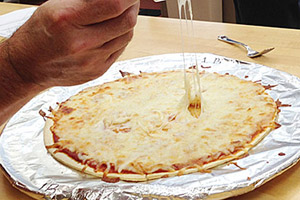
    In particular, researchers at the Center for Dairy Research have been working to create a reduced-fat and low-sodium pizza that includes a low-fat/low-sodium crust, sauce and cheese. So far, these efforts have been successful, yielding a product with significantly lower sodium levels. In fact, the whole wheat crust developed at CDR has a 40% sodium reduction and is baked with dairy permeate as a salt replacer.

    You may recall from a previous column that permeate is a by-product of the membrane filtration processes. Permeate contains milk minerals, such as sodium, calcium, potassium and magnesium, organic acids and lactose. This broad range of different minerals in permeates helps to provide a salty flavor and reduces the levels of traditional salts (sodium chloride) needed. The sauce has a 50% reduced-sodium level which, again, is possible through the use of whey permeate (labeled as “dairy solids”) as a salt replacer.

    Finally, the cheese used on the pizza itself is actually a blend of a shredded low-fat mozzarella-style cheese developed at CDR with commercial brick or Muenster cheese. The low-fat cheese was made at CDR using a patented process. Essentially, a skim-milk cheese base is manufactured by direct acidification and emulsifiers are added during a curd heating step. No sodium phosphate or citrate emulsifying salts are added, meaning that the only sodium in the cheese is from the skim cheese base.

    The end product is a low-fat, low-sodium mozzarella-style cheese that can be used as an ingredient cheese. This cheese is low in fat (<6%) and sodium, but it is not particularly flavorful. Therefore, CDR staff blended it with brick or Muenster cheese. This combination provides minimal blistering and a creamy, buttery taste without adding significant amounts of salt or fat to the pizza. In fact, the combination can be less than 275 milligrams of sodium, which is below the 280 milligram sodium limit outlined by the United States Department of Agriculture for the designation of low sodium.

    The combination of cheeses is also less than the 10.8% fat limit established by USDA which means that the pizza cheese can be used in school lunch programs. This pizza solution received favorable reviews at the annual CDR Industry Team meeting.

    Within the cheese industry, manufacturers are also now able to achieve a gradual reduction in the sodium levels in Cheddar and similar style table cheeses. Research has shown that for Cheddar the salt content can be successfully reduced from 1.8% (typical levels) to 1.2% while still maintaining a safe and typical flavored cheese.

    Cheddar type cheeses with salt levels of 1% have been made and primarily used as an ingredient (not table cheese). Additionally, the use of new enzymes/rennets, like camel chymosin, has been an area of research to offset bitterness that can be common in low-sodium cheeses.

    Potassium chloride has also been explored as a salt replacer. Studies show that a 25% replacement of sodium chloride can be achieved with potassium before most individuals will notice a change in flavor (although some individuals/consumers are sensitive to even lower substitution levels, and they mention a chemical/metallic off-flavor).

    Flavor enhancers, fermentates

    Other approaches that are being explored include: addition of flavor enhancers (often providing savory notes, since reduced/low sodium cheeses are often bland), use of fermentates (containing organic acids and antimicrobials, to help reduce the risk of unwanted pathogenic growth) and the use of selected starter adjuncts (to help provide more cheese flavor). Low-salt cheese can also be more acidic and strategies to avoid this situation include reducing the lactose levels in cheesemilk, or increasing the buffering capacity of the cheese curd by fortification with additional milk protein.

     Truly, sodium is an essential ingredient in cheese, both for safety reasons as well as taste and functionality. So far, there have not been many retail products introduced onto the U.S. marketplace claiming a very large reduction in sodium, but gradual reductions in sodium have been observed. As such, successfully achieving reduced sodium levels in cheese will continue to require innovative solutions and more research into possible process modifications. It’s up to the industry and researchers to discover not only what limits are possible, but also what limits are safe and acceptable to consumers. 

    KEYWORDS: alternative sodium reduction in cheese

    Share This Story

    Looking for a reprint of this article?
    From high-res PDFs to custom plaques, order your copy today!

    John lucey phd

    John Lucey, Ph.D., is the Owen R. Fennema Professor in Food Chemistry at the University of Wisconsin-Madison’s Center for Dairy Research.

    Recommended Content

    JOIN TODAY
    to unlock your recommendations.

    Already have an account? Sign In

    • Lifeway Organic Kefir in different flavors inside a refrigerated grocery shelf.

      Dairy Foods names Lifeway Foods 2025 Processor of the Year

      Lifeway Foods donates $10,000 to wildfire victims,...
      Innovation
      By: Brian Berk
    • Two female farmers are standing in a field, holding a large milk canister, looking at several cows at dairy farm.

      Honoring Women Leaders Shaping the Dairy Industry

      For the fourth consecutive year, Dairy Foods is proud to...
      Dairy Foods & Beverages
      By: Barbara Harfmann
    • Main feature for State of the Industry with dairy products album cover with a gradient circular--patterned backgorund.

      2025 State of the Dairy Industry

      Welcome to the 2025 State of the Industry report. For...
      Sales Data
    Manage My Account
    • eMagazine Subscription
    • Dairy Foods News & Views Newsletter
    • Online Registration
    • Manage My Preferences
    • Subscription Customer Service
    • Connect with Dairy Foods

    More Videos

    Popular Stories

    Close up of man adding Greek yogurt while preparing healthy smoothie in the kitchen.

    An expert guide to dairy and GLP-1 receptor agonists

    Splash of milk in form of arm muscle. 3D illustration.

    Protein: The Powerhouse of Health and Wellness

    Grilling foods

    Dairy’s Enduring Moment: Why Resilience and Renewal Define Today’s Dairy Story

    Nominate your product for the 2026 Dairy Foods Product of the Year!


    MTF webinar


    Food Safety webinar

    Events

    July 8, 2026

    Membrane Purification Enables Clean Beauty Actives

    The global cosmetics market is undergoing a major shift towards the use of natural bioactive ingredients as consumers grow more skeptical of traditional formulations and demand greater transparency and sustainability.

    July 8, 2026

    Advancements in RO for Dairy Processing

    Reverse osmosis (RO) membranes are well established in dairy processing but continue to evolve to improve performance, reduce energy use, and increase operational longevity. 

    View All Submit An Event

    Products

    Probiotic Ice Cream: Science and Technology

    Probiotic Ice Cream: Science and Technology

    See More Products
    health and wellness


    plant of the year

    Related Articles

    • Kraft says it is meeting its sodium-reduction goals in cheese, other foods

      See More
    • How to reduce sodium levels in cheese

      See More
    • Research shows how to reduce sodium in cheese

      See More

    Related Products

    See More Products
    • GlobalData_Consumer.jpg

      Cheese (Dairy & Soy Food) Market in North America - Outlook to 2022: Market Size, Growth and Forecast Analytics

    • Bioactive Components in Milk and Dairy Products

    • tech inv.jpg

      Technological Interventions in Dairy Science: Innovative Approaches in Processing, Preservation, and Analysis of Milk Products

    See More Products

    Related Directories

    • Roman Cheese Products Ltd.

    ×

    Stay ahead of the curve. Unlock a dose of cutting-edge insights.

    Receive our premium content directly to your inbox.

    SIGN-UP TODAY
    • RESOURCES
      • Advertise
      • Contact Us
      • Directories
      • Store
      • Want More
    • SIGN UP TODAY
      • Create Account
      • eMagazine
      • Newsletter
      • Customer Service
      • Manage Preferences
    • SERVICES
      • Marketing Services
      • Reprints
      • Market Research
      • List Rental
      • Survey/Respondent Access
    • STAY CONNECTED
      • LinkedIn
      • Facebook
      • YouTube
      • X (Twitter)
    • PRIVACY
      • PRIVACY POLICY
      • TERMS & CONDITIONS
      • DO NOT SELL MY INFORMATION
      • PRIVACY REQUEST
      • ACCESSIBILITY

    Copyright ©2026. All Rights Reserved BNP Media, Inc. and BNP Media II, LLC.

    Design, CMS, Hosting & Web Development :: ePublishing