Wellness Watch: Satiety and Weight Management

At the stroke of midnight a few weeks ago, many vowed that 2010 will be the year to “lose weight and get in better physical shape,” the most common New Year’s resolution. To benefit financially from consumers’ spirited determination, food and fitness marketers have historically introduced new products and offered promotions around this time of year. Since Y2K, which seems like just yesterday, there’s been a steady transformation in such products and services in order to appeal to a broader range of customers. Instead of a weight loss positioning, the message is about weight management.
Most consumers know the simple formula for weight management: calories in (eating) equal calories out (burning). Unfortunately, too often consumers are challenged with maintaining this equation because feelings of hunger arrive at inconvenient times.
An increasing number of today’s most popular weight management products contain either satiety-inducing or appetite-suppressing ingredients. Controlling appetite by promoting satiety, the feeling of being full, is a valuable approach to weight management.
Labeling laws prevent many outward claims of satiety on product packaging; however, promoting the content of certain nutrients recognized as contributing to satiety is increasingly more common.
“The issue of weight management is a significant concern for many people, so controlling hunger can be an appealing message to consumers,” says Laura Gottschalk, vice president of U.S. manufacturing and ingredient marketing for Dairy Management Inc. (DMI), Rosemont, Ill.
According to a 2008 consumer study conducted by the NPD Group, Port Washington, N.Y., for DMI, 67% of respondents said that feeling full is important to them when trying to lose weight. Interestingly, 72% agreed that the best way to control hunger is through a nutritionally balanced diet, with 60% believing that satisfaction from high-carbohydrate foods is short lived and 54% agreeing that protein-based foods are the best at satisfying hunger.
“We know that a higher-protein diet can be an excellent way to feel fuller longer and may help reduce the desire to reach for unhealthy snacks between meals,” says Matt Pikosky, registered dietitian and director of research transfer at the National Dairy Council with DMI. Indeed, calorie for calorie, protein has been shown to lead to greater satiety than carbohydrates or fats.
More than at any other time of the day, feeling full after breakfast is important to consumers, according to the NPD survey. Forty-two percent of the survey responders stated that morning is the most important time to eat or drink something that helps them feel full because they want to make it to lunch without getting off track. Also, 23% of consumers surveyed believe that the satiety of yogurt can be improved with protein fortification. Nineteen percent believe the same of smoothies.
“Plus, more than half of the survey responders indicated that they would expect to pay about 50 cents more for products fortified with protein to increase satiety,” Gottschalk says. “Such insight is crucial for manufacturers of breakfast foods and drinks to consider when developing new products.”

How foods satiate
Scientists now know that satiety has little to do with satisfying the body’s nutritional requirements. It’s all about gastrointestinal hormones.Ghrelin is believed to be the primary hunger hormone, with levels increasing before meals and decreasing after meals. In the brain’s hypothalamus, ghrelin binds to receptors related to metabolism, while also binding to receptors in the midbrain that link to reward and pleasurable food associations. Interestingly, lack of sleep can impact appetite and weight gain as a result of ghrelin, as levels increase due to short-sleep duration, thereby increasing appetite.
There are several other hormones recognized with controlling hunger and eating. For example, the peptide cholecystokinin helps the digestion of fats and protein in the small intestine. This neurotransmitter connects with CCK receptors in the central nervous system, where it influences reactions such as anxiety and nausea, as well as feelings of satiety and hunger. Glucagon-like peptide-1 and peptide YY are known for sending a message of fullness to both the brain and stomach. This slows the movement of food in the gut, thereby ensuring maximum digestion of nutrients and deceased appetite.
Ingredient suppliers offer an array of ingredients shown to assist with decreasing appetite, some of which accomplish this by influencing hormone activity. Others function by providing substantial bulk in the gastrointestinal system for prolonged periods, which also creates a feeling of fullness.
For example, Fiber One cottage cheese, milkshakes and yogurt from General Mills Inc., Minneapolis, are all excellent sources of fiber (20% of the Daily Value.) They are said to help curb hunger and help one feel satisfied, thus assisting with weight management.
Houston-based Labrada Nutrition markets Lean Body On the Go! Shakes. This aseptically packaged shake is described as providing quick, delicious lean muscle nutrition for active people. It claims to satisfy appetite and increase energy. Each 14-ounce single-serve plastic bottle delivers 4 grams of fiber in the form of fructooligosaccharides and 25 grams of protein, both of which contribute to the drink’s satiating characteristic. The proprietary protein blend, referred to as Lean Pro, includes milk protein isolate, whey protein peptides, branched-chain amino acids, casein peptides and whey protein concentrate, among other ingredients.
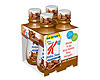
Kellogg Co., Battle Creek, Mich., offers Special K Protein Shakes, which feature a proprietary protein blend of nonfat milk, whey protein concentrate and soy protein isolate, and fiber, primarily from polydextrose.
Dairy foods, naturally a source of satiating high-quality proteins, are the ideal delivery vehicle for other satiating ingredients.
If It Looks Like a Beverage, It Probably Is One
Formulators entering the satiety beverage market should be aware that FDA recently issued a guidance document on liquid products labeled and marketed as dietary supplements. This guidance is the result of FDA’s concerns about two trends in the marketing of beverages.First, the agency has seen an increase in the marketing of beverages as dietary supplements, in spite of the fact that packaging and labeling suggests they are conventional foods. FDA points out that products represented as conventional foods do not meet the statutory definition of a dietary supplement and must meet the regulatory requirements that apply to conventional foods.
Labeling laws state that dietary supplements must not be represented for use as a conventional food or as a sole item of a meal or the diet. Even when the label of a liquid product characterizes it as a dietary supplement, the product may not in fact be a dietary supplement. Liquid products can be represented as conventional foods as a result of factors such as their packaging, the volume in which they are intended to be consumed, their product or brand name, and statements about the product in labeling or advertising.
The second trend observed by FDA is increased use of novel ingredients, such as botanical ingredients or their extracts. Some of these ingredients have not previously been used in conventional foods and may be unapproved food additives. In addition, ingredients that have been present in the food supply for many years are now being added to beverages and other conventional foods at levels in excess of their traditional use levels. This trend raises questions regarding whether these ingredients are unapproved food additives when used at higher levels or under other new conditions of use. Some foods with novel ingredients also bear claims that misbrand the product or otherwise violate labeling laws.
FDA does clarify that labeling laws specify that a “drug” includes articles intended to affect the structure or function of the body. This provision contains an exception for foods, which affect the structure and function of the body by virtue of providing nutrition to sustain life and health. Accordingly, with products that make a structure/function claim promoting a product for a use other than providing taste, aroma or nutritive value, such as blocking the absorption of carbohydrates in the gut, the claim may cause the product to be a drug by changing its primary use. In other words, because of the use promoted in the claim, the product may no longer be consumed as a food - primarily for taste, aroma or nutritive value - but rather as a drug for some other physiological effect.
The entire guidance document can be viewed at www.fda.gov/Food/GuidanceComplianceRegulatoryInformation/GuidanceDocuments/ucm192702.htm.
Looking for a reprint of this article?
From high-res PDFs to custom plaques, order your copy today!