Ingredient Technology
Natural and Organic Ingredients

 Editor’s Note: It’s the morning of Earth Day - April 22 - and I am giving this article one last read before it goes to the printer. The whole country is in this real “return to Mother Nature” mode, which will fade as the day progresses. The recycle bin might not be handy. The drive-thru will be convenient on the way to Little League. And let’s face it, disposable disinfectant wipes are a post-game necessity.
But every little bit helps. Food formulators can help consumers feel more in touch with Mother Nature by choosing ingredients she would be honored to endorse. And as Gary Hirshberg, president and CE-Yo, Stonyfield Farm Inc., Londonderry, N.H., pointed out in his interview in the documentary “Food Inc.,” which I was able to preview yesterday evening, if Wal-Mart wants to sell organic yogurt or any organic product, the naysayers in the industry should welcome this move. Hirshberg stresses that the retail discount giant will have an enormous positive environmental impact by virtue of its size alone.
Let’s start by talking “natural.” According to the American Grocery Shopper Study released in January by BrandSpark International, New York, more than half (58%) of the 51,295 U.S. shoppers surveyed consider it important for a new product they purchase to be natural. Further, 68% of respondents expressed increased concern about chemicals in food products.
Chicago-based Mintel Global New Products Database reports that natural ranked first on new food and drink launches in 2008. In fact, a natural claim appeared on nearly one in four (23%) launches, which was a 9% increase from 2007.
While it is true that the term natural is not federally regulated, FDA does provide guidance to qualify an ingredient as natural. Accordingly, natural ingredients are derived or extracted from natural sources. There are some gray areas, as some processing, often times a chemical reaction, is necessary to extract the ingredient from the natural raw material source.
According to the Encyclopedia of Common Natural Ingredients, a natural ingredient is defined as a “product that is derived from plant, animal or microbial sources, primarily through physical processing, sometimes facilitated by simple chemical reactions such as acidification, basification, ion exchange, hydrolysis and salt formation as well as microbial fermentation.” More gray comes into play when the materials that assist in this reaction are blatantly synthetic. This is when natural product enthusiasts say conscience becomes part of the formula.
Though initially targeted to the personal care products industry, the Natural Ingredient Resource Center (www.naturalingredient.org) was founded to help consumers, manufacturers and retailers learn more about the natural ingredients in the products they buy, make or sell. The volunteer advisory board that manages this non-profit website encourages and provides an opportunity for manufacturers of natural products to voluntarily show that they support the natural products sector and to provide a resource for education about natural ingredients. The NIRC does not certify ingredients, products or police compliance, but it does provide a logo that is free to use after a company takes the “truth in labeling” pledge, when conscience is considered.
When products are labeled organic, conscience is part of the formula from the onset of development.
Organic labeling is federally regulated, and everything you need to know about organic labeling can be found at www.ams.usda.gov. The natural ingredients marketplace can benefit from reviewing how the USDA National Organic Program (NOP) defines non-synthetic and synthetic. A non-synthetic ingredient is a “substance that is derived from mineral, plant or animal matter and does not undergo a synthetic process.” The NOP defines a synthetic as “a substance that is formulated or manufactured by a chemical process or by a process that chemically changes a substance extracted from naturally occurring plant, animal or mineral sources, except that such term shall not apply to substances created by naturally occurring biological processes.”
Though consumers want natural on their product label, they may soon want more. Don’t be surprised if they become more discriminating by questioning entries on the ingredient statement.
Consumers Union, publisher of Consumer Reports, an independent, nonprofit testing and information organization serving only consumers, states: “Natural is a general claim that implies that the product or packaging is made from or innate to the environment and that nothing artificial or synthetic has been added. There is currently no standard definition for the term except for meat and poultry products. Unless otherwise specified, there is no organization independently certifying this claim. The producer or manufacturer decides whether to use the claim and is not free from its own self-interest.”
Choose consciously.
Sidebar:
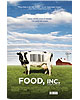
In “Food Inc.,” filmmaker Robert Kenner and authors Eric Schlosser (Fast Food Nation) and Michael Pollan (The Omnivore’s Dilemma) set out to lift the veil on the U.S. food industry - an industry these three men, and others interviewed in the documentary, say has often put profit ahead of consumer health, the livelihoods of American farmers, the safety of workers and our own environment.
“There is this deliberate veil, this curtain that’s drawn between us and where our food is coming from,” says Schlosser. “The industry doesn’t want you to know the truth about what you’re eating because if you knew, you might not want to eat it.”
As with many such films, “the other side” is not conveyed, including how advancements in food science and technology have helped reduce hunger, malnutrition and disease. Nevertheless, the businesses criticized in the film are mostly livestock, corn and soybeans. In fact, organic dairy, in particular Stonyfield Farm, are praised for doing business the right way in America.
“Actually, it’s a pretty easy decision to try to support things like organics or whatever it might be based on what the consumer wants. We see that and we react to it,” says Tony Airosa, chief dairy purchaser for Wal-Mart, Bentonville, Ark. “If it’s clear that the customer wants it, it’s really easy to get behind it and to push forward and try to make that happen.”
Stonyfield’s Gary Hirshberg concludes, “The irony is that the average consumer does not feel very powerful. They think that they are the recipients of whatever industry has put there for them to consume. Trust me, it’s the exact opposite. Those businesses spend billions of dollars to tally our votes. When we run an item past the supermarket scanner, we’re voting.”
But every little bit helps. Food formulators can help consumers feel more in touch with Mother Nature by choosing ingredients she would be honored to endorse. And as Gary Hirshberg, president and CE-Yo, Stonyfield Farm Inc., Londonderry, N.H., pointed out in his interview in the documentary “Food Inc.,” which I was able to preview yesterday evening, if Wal-Mart wants to sell organic yogurt or any organic product, the naysayers in the industry should welcome this move. Hirshberg stresses that the retail discount giant will have an enormous positive environmental impact by virtue of its size alone.
Let’s start by talking “natural.” According to the American Grocery Shopper Study released in January by BrandSpark International, New York, more than half (58%) of the 51,295 U.S. shoppers surveyed consider it important for a new product they purchase to be natural. Further, 68% of respondents expressed increased concern about chemicals in food products.
Chicago-based Mintel Global New Products Database reports that natural ranked first on new food and drink launches in 2008. In fact, a natural claim appeared on nearly one in four (23%) launches, which was a 9% increase from 2007.
While it is true that the term natural is not federally regulated, FDA does provide guidance to qualify an ingredient as natural. Accordingly, natural ingredients are derived or extracted from natural sources. There are some gray areas, as some processing, often times a chemical reaction, is necessary to extract the ingredient from the natural raw material source.
According to the Encyclopedia of Common Natural Ingredients, a natural ingredient is defined as a “product that is derived from plant, animal or microbial sources, primarily through physical processing, sometimes facilitated by simple chemical reactions such as acidification, basification, ion exchange, hydrolysis and salt formation as well as microbial fermentation.” More gray comes into play when the materials that assist in this reaction are blatantly synthetic. This is when natural product enthusiasts say conscience becomes part of the formula.
Though initially targeted to the personal care products industry, the Natural Ingredient Resource Center (www.naturalingredient.org) was founded to help consumers, manufacturers and retailers learn more about the natural ingredients in the products they buy, make or sell. The volunteer advisory board that manages this non-profit website encourages and provides an opportunity for manufacturers of natural products to voluntarily show that they support the natural products sector and to provide a resource for education about natural ingredients. The NIRC does not certify ingredients, products or police compliance, but it does provide a logo that is free to use after a company takes the “truth in labeling” pledge, when conscience is considered.
When products are labeled organic, conscience is part of the formula from the onset of development.
Organic labeling is federally regulated, and everything you need to know about organic labeling can be found at www.ams.usda.gov. The natural ingredients marketplace can benefit from reviewing how the USDA National Organic Program (NOP) defines non-synthetic and synthetic. A non-synthetic ingredient is a “substance that is derived from mineral, plant or animal matter and does not undergo a synthetic process.” The NOP defines a synthetic as “a substance that is formulated or manufactured by a chemical process or by a process that chemically changes a substance extracted from naturally occurring plant, animal or mineral sources, except that such term shall not apply to substances created by naturally occurring biological processes.”
Though consumers want natural on their product label, they may soon want more. Don’t be surprised if they become more discriminating by questioning entries on the ingredient statement.
Consumers Union, publisher of Consumer Reports, an independent, nonprofit testing and information organization serving only consumers, states: “Natural is a general claim that implies that the product or packaging is made from or innate to the environment and that nothing artificial or synthetic has been added. There is currently no standard definition for the term except for meat and poultry products. Unless otherwise specified, there is no organization independently certifying this claim. The producer or manufacturer decides whether to use the claim and is not free from its own self-interest.”
Choose consciously.
Sidebar:
In “Food Inc.,” filmmaker Robert Kenner and authors Eric Schlosser (Fast Food Nation) and Michael Pollan (The Omnivore’s Dilemma) set out to lift the veil on the U.S. food industry - an industry these three men, and others interviewed in the documentary, say has often put profit ahead of consumer health, the livelihoods of American farmers, the safety of workers and our own environment.
“There is this deliberate veil, this curtain that’s drawn between us and where our food is coming from,” says Schlosser. “The industry doesn’t want you to know the truth about what you’re eating because if you knew, you might not want to eat it.”
As with many such films, “the other side” is not conveyed, including how advancements in food science and technology have helped reduce hunger, malnutrition and disease. Nevertheless, the businesses criticized in the film are mostly livestock, corn and soybeans. In fact, organic dairy, in particular Stonyfield Farm, are praised for doing business the right way in America.
“Actually, it’s a pretty easy decision to try to support things like organics or whatever it might be based on what the consumer wants. We see that and we react to it,” says Tony Airosa, chief dairy purchaser for Wal-Mart, Bentonville, Ark. “If it’s clear that the customer wants it, it’s really easy to get behind it and to push forward and try to make that happen.”
Stonyfield’s Gary Hirshberg concludes, “The irony is that the average consumer does not feel very powerful. They think that they are the recipients of whatever industry has put there for them to consume. Trust me, it’s the exact opposite. Those businesses spend billions of dollars to tally our votes. When we run an item past the supermarket scanner, we’re voting.”
Links
Looking for a reprint of this article?
From high-res PDFs to custom plaques, order your copy today!


