Membrane Filtration Offers a Variety of Applications for Dairy
Since the introduction of membrane processing to the dairy industry in the late 1960's, separation of dairy fluids using semi-permeable membranes has been used to clarify, concentrate and fractionate a variety of dairy products. The time-honored and tested applications involving whey processing have introduced a plethora of refined proteins and commercial uses for a once wasted by-product. The membrane applications for fluid milk have been understood for as long as the whey applications but have been underutilized in commercial applications. The same concentration method of Reverse Osmosis used in whey processing is often a favorable alternative to evaporation techniques used in milk processing. The fractionating of whey proteins from the lactose in whey processing also has an attractive benefit in the fractionating of the same lactose from the milk proteins in fluid milk using the same Ultrafiltration techniques. Micro-filtration fills the separation profile of membranes out by further fractionating the specific milk proteins of casein and serum proteins away from each other. In a sense, membrane processing of fluid milk is acting like a harvester of specific milk components without imparting a phase change by the addition of heat, as is typical for evaporation, or an enzyme, as done in most cheese making techniques. The milk is modified by separating, clarifying, or fractionating a selected component in milk from other components using differences in their relative molecular weights and pore sizes of the membranes. This article deals with specific milk membrane filtering applications that are currently in use in the dairy industry and the multifaceted reasons behind their use both in technical as well as market driven, economic terms.
The Membrane Spectrum
No useful discussion of membrane filtration can begin without a look at the filtration spectrum. As you move from the right to the left of the spectrum you are following from coarse to fine filtration. Coarse particle filtering starts the spectrum and can most easily be associated with screen or sock filters. These separate the rocks from the water. The next is microfiltration. Here is where we can separate the large components that are in milk. Fat, for example, can be removed using a pore size that restricts only the cream from milk but allows the skim milk to pass. You can use yet another, even smaller pore size to allow a separation of the casein from the milk serum or "whey" proteins. Moving further along we get to Ultrafiltration where we reject all the large milk components, proteins and fat, but allow the lactose, minerals and water to pass. It is here that with the addition of water, or diafiltration, we can wash even more lactose from the milk. Nanofiltration is the next membrane used for dairy. This membrane rejects all components except for select salts and water. The final membrane used for dairy applications is reverse osmosis. This membrane allows only water to pass through the membrane, thus acting as pure concentration membrane.Reverse osmosis for milk and dairy products
Concentration of skim milk with reverse osmosis membranes can be achieved to a maximum total solids of 30%.In the cheese vat, increased solids have been used to fortify cheese vats with higher solids milk. This allows for higher equipment utilization rates and greater plant throughput based on existing equipment.
The same application is being used in the ice cream industry for increasing skim milk solids for ice cream mix. This allows an ice cream manufacturer to source whole milk for cream harvesting and then make concentrated skim for in-house use. The ability to direct source cream and condensed skim is an ingredient cost savings compared with buying value added cream and condensed skim pre-processed from the marketplace. An additional advantage is that reverse osmosis is a cold concentration technique. The ice cream maker has a better dairy flavor from reverse osmosis milk than from evaporated milk that is produced by adding heat to induce a phase change and evaporate the water from the milk. The flavor result of evaporated milk is often a cooked flavor, where reverse osmosis of skim imparts a fresh milk flavor.
For cultured products reverse osmosis of skim milk can also be used in the production of low fat or non-fat yogurt. Often yogurt manufacturers are faced with an ingredient dilemma in the production of non-fat yogurts because they need to add non-fat dry milk to increase the solids due to the lack of milk fat. Using reverse osmosis skim milk versus evaporated condensed milk allows for less heat damage or denatured protein found in evaporated milk. The organic yogurt manufacturers often cannot find a supply of organic non-fat dry milk for increasing the milk solids. Reverse osmosis can take fresh organic skim milk and dial in the solids number needed for making a non-fat or fat free yogurt.
Reverse osmosis of skim milk is also used as a system to complement existing skim milk evaporators as a way to increase capacity by pre-concentration. An RO system ahead of evaporation is generally a less expensive solution to increasing throughput ahead of non-fat milk dryers.
Ultrafiltration of milk
The next leg on the Membrane filtration spectrum is Ultrafiltration. It is characterized as having a molecular weight cut-off range (MWCO) from about 3000 to 100,000. The most common cut-off is the dairy standard of 10,000 MW. This is the traditional size for the fractionating of whey proteins from lactose commonly used to produce whey protein concentrates (WPC) of 35% to 85%WPC's.In the cheese vat, ultrafiltration of milk is yet another way of increasing solids. The major difference between reverse osmosis and ultrafiltration is that reverse osmosis retains all of the milk solids while ultrafiltration allows lactose and many milk minerals to pass through the membrane. This often has a benefit to the cheesemaker, as this cheese will produce less whey to handle and increase the throughput of existing cheese vats.
Ultrafiltration is being used to increase the percentage of protein in fluid milk as a method of fortifying proteins in fluid milk. This allows the flavor and mouth feel enhancing properties of milk proteins to be achieved naturally as opposed to adding non-fat dry milk which often leaves a cooked flavor in the fluid milk as well as increased sweetness from the excess lactose in NFDM. The resulting non-fat or low fat varieties have the flavor and mouth feel of whole milk product without the higher fat.
Ultrafiltration is being used to increase the milk solids for the manufacture of fat free sour cream.
In the ice cream industry, Ultrafiltration of milk ahead of the mix is mainly used to alter the lactose content. Increasing the protein level of ice cream allows for greater water mobilization, however adding Non fat dry milk solids increases the overall lactose content which contributes to sandiness from crystal formation during freezing. Ultrafiltration removes lactose in the permeate along with some milk minerals. Using ultrafiltration you can increase protein without the side effect of increased lactose concentration and achieve a longer shelf life because of less heat shock in the freeze thaw cycle.
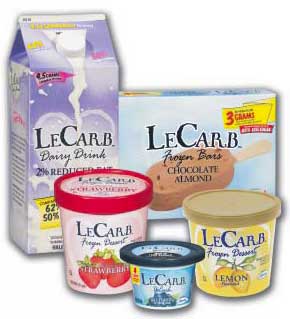
Production of lactose-free, sugar-free or low-carbohydrate Ice cream can be achieved using ultrafiltration in conjunction with diafiltration (addition of water) to remove up to 96% of the lactose found in milk. The final ice cream product can be in the range of less than one gram of carbohydrate per serving in the final product. The addition of a sugar substitute will satisfy the sweet tooth consumer and fill the need of ice cream in the growing "carb-free" dieters market being driven by the successful Atkins and Sugar Buster diets.
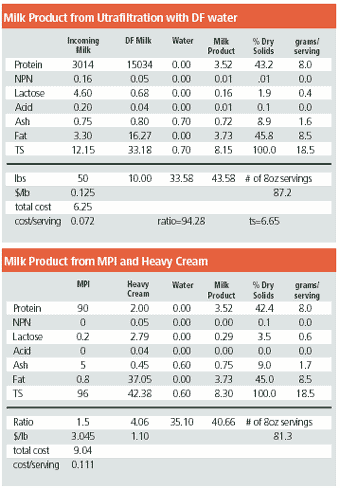
Dairy Beverages demonstrate another application for ultrafiltration in conjunction with diafiltration to make a "carb-free" milk product for the emerging diet market. Below is a chart comparing a dry milk protein concentrate based milk product and one made with fresh milk. Dried milk protein concentrate is made by ultrafiltering milk with diafiltration and then drying to a powder. Reconstituting with water and adding cream to get a composition of normal milk less 96% of the lactose can be achieved using ultrafiltration with diafiltration water with fresh whole milk.
Microfiltration of milk
As described earlier, microfiltration is the most open or porous in the filtration spectrum.The most common separation in this category is the removal of bacteria and spores from milk. In some regions the somatic cell count of fresh can be difficult to manage. In other parts of the world vegetative spores associated with animal feeds pass directly through the animal and into the milk supply. Some of these spores survive pasteurization and can cause shelf-life problems in certain of the final products produced. Microfiltration can allow milk to pass through the membrane and reject the problem bacteria which are too large to pass through the membrane. This can also be used as a precursor to pasteurization allowing for extended shelflife of products with standard pasteurization techniques.
The most promising and under-utilized microfiltration technique for milk is separating casein from the serum milk proteins or "whey" proteins. This application produces a casein-rich milk concentrate that can be used for cheese making and a fat free serum milk protein stream that can be further processed with ultrafiltration to make a whey protein-type concentrate.
Cross-flow membrane filtration has opened the doors to a variety of new and innovative dairy products. You don't have to look back to far to the days of the mechanical separator being the only means of harvesting a component of milk. Today, not only can we separate the cream; we can separate virtually every major component of milk through membrane filtration.
Looking for a reprint of this article?
From high-res PDFs to custom plaques, order your copy today!