Lab Talk: Kosher: A Symbol Worth Having
The Dairy Foods staff recently agreed to stop using trademark (™) and registration symbols (®) in editorial. The primary reason is that often status changes from the non-legally enforceable ™ to the U.S. trademark office-approved ®, and we cannot monitor these changes.

The Dairy Foods staff recently agreed to stop using trademark (™) and registration symbols (®) in editorial. The primary reason is that often status changes from the non-legally enforceable ™ to the U.S. trademark office-approved ®, and we cannot monitor these changes. Furthermore, it’s not our job to protect your brands. That’s your responsibility.
It is also your responsibility to use certifying symbols properly. For example, there’s increasing interest in labeling foods and beverages as kosher. To do so, all of the ingredients and the entire process must meet the standards of a kosher-certifying agency, since it is the agency that enables use of its registered trademarked symbols.
Can you just write the word kosher on a label without going through certification? The answer is yes, since FDA and USDA are not involved with defining or permitting use of this descriptor. However, consumers seeking out kosher-certified foods tend to be well versed in the subject and seek reputable kosher-certification symbols, starting with the OU symbol of the Orthodox Union.
The primary consumer of kosher foods is the real reason kosher certification exists. It’s the orthodox Jew who complies with Old Testament teachings regarding foods that are acceptable to eat, as well as how they must be prepared and how they are to be kept separate from certain other foods.
Interestingly, “It’s estimated that fewer than one third of consumers who buy kosher are Jewish,” says Rabbi Eliyahu Safran, v.p. communications & marketing with the Orthodox Union (OU) certifying agency in New York City. “Other kosher consumers include Muslims, Seventh Day Adventists, vegetarians, people with various types of allergies and consumers who simply value the quality of kosher products.”
 It is this last type of consumer that is a major driver of the kosher certification of foods, since for many consumers, quality is perceived as being more healthful. Unfortunately, just have a kosher corned beef on rye and that theory goes down the drain.
But there is truth to the quality factor. “When a finished product is certified kosher, the consumer can be assured that every ingredient going into that product is identified and sourced with the highest integrity,” adds Safran.
Milk is inherently kosher. In order to be certified kosher, anything added to the milk, including vitamins, must be kosher. And, if kosher products are manufactured on the same production line as non-kosher products, the equipment must be “kosherized” before the kosher product is produced.
Kosherizing is the process of making vessels, utensils, fillers, etc. kosher. It requires very strict cleaning procedures, which focus on temperature. This prevents cross-contamination of foods that are not allowed to be eaten together, basically dairy and meat, and it prevents contamination from previous non-kosher products.
 That brings us to the various kosher designations. Foods that do not contain either meat or dairy ingredients are termed “pareve,” which indicates a neutral state. All fruits, grains and vegetables in their natural state are kosher and pareve. A pareve item becomes kosher dairy or kosher meat when it is cooked together with a dairy or meat food, respectively.
This is important because of the waiting period kosher law requires between consuming certain food items. For most orthodox Jews, one cannot consume dairy until six hours after eating meat; however, on the reverse, meat can be consumed about an hour after eating dairy. With hard cheese the wait is about two hours. It all has to do with with food residue and aftertaste in the palate.
Basically, foods bearing a kosher-certified symbol with the word dairy or the letter D next to it either contain dairy ingredients or are hot processed on equipment used for dairy (i.e., kosher orange juice pasteurized on a fluid milk line without the line being kosherized.) The latter is based on the belief that any dairy absorptions by the equipment may come out during the heating process.
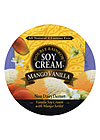
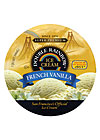
Kosherizing processing equipment is a very strict process, yet, many dairy manufacturers do so in order to produce pareve products. For example, Double Rainbow Gourmet Ice Creams Inc., San Francisco, produces kosher dairy ice cream and kosher pareve sorbet and soy frozen desserts.
For additional information, as well as a reference to kosher-sensitive ingredients in the dairy industry, visit www.oukosher.org/index.php/articles/single/kosher_sensitive_ingredients_in_the_dairy_industry/
The Dairy Foods staff recently agreed to stop using trademark (™) and registration symbols (®) in editorial. The primary reason is that often status changes from the non-legally enforceable ™ to the U.S. trademark office-approved ®, and we cannot monitor these changes. Furthermore, it’s not our job to protect your brands. That’s your responsibility.
It is also your responsibility to use certifying symbols properly. For example, there’s increasing interest in labeling foods and beverages as kosher. To do so, all of the ingredients and the entire process must meet the standards of a kosher-certifying agency, since it is the agency that enables use of its registered trademarked symbols.
Can you just write the word kosher on a label without going through certification? The answer is yes, since FDA and USDA are not involved with defining or permitting use of this descriptor. However, consumers seeking out kosher-certified foods tend to be well versed in the subject and seek reputable kosher-certification symbols, starting with the OU symbol of the Orthodox Union.
The primary consumer of kosher foods is the real reason kosher certification exists. It’s the orthodox Jew who complies with Old Testament teachings regarding foods that are acceptable to eat, as well as how they must be prepared and how they are to be kept separate from certain other foods.
Interestingly, “It’s estimated that fewer than one third of consumers who buy kosher are Jewish,” says Rabbi Eliyahu Safran, v.p. communications & marketing with the Orthodox Union (OU) certifying agency in New York City. “Other kosher consumers include Muslims, Seventh Day Adventists, vegetarians, people with various types of allergies and consumers who simply value the quality of kosher products.”
Foods without meat or dairy take the “pareve” symbol (top) but foods that contain dairy or are processed with equipment that is used for dairy take the kosher union symbol with the letter D.
But there is truth to the quality factor. “When a finished product is certified kosher, the consumer can be assured that every ingredient going into that product is identified and sourced with the highest integrity,” adds Safran.
Milk is inherently kosher. In order to be certified kosher, anything added to the milk, including vitamins, must be kosher. And, if kosher products are manufactured on the same production line as non-kosher products, the equipment must be “kosherized” before the kosher product is produced.
Kosherizing is the process of making vessels, utensils, fillers, etc. kosher. It requires very strict cleaning procedures, which focus on temperature. This prevents cross-contamination of foods that are not allowed to be eaten together, basically dairy and meat, and it prevents contamination from previous non-kosher products.
Foods without meat or dairy take the “pareve” symbol (top) but foods that contain dairy or are processed with equipment that is used for dairy take the kosher union symbol with the letter D.
This is important because of the waiting period kosher law requires between consuming certain food items. For most orthodox Jews, one cannot consume dairy until six hours after eating meat; however, on the reverse, meat can be consumed about an hour after eating dairy. With hard cheese the wait is about two hours. It all has to do with with food residue and aftertaste in the palate.
Basically, foods bearing a kosher-certified symbol with the word dairy or the letter D next to it either contain dairy ingredients or are hot processed on equipment used for dairy (i.e., kosher orange juice pasteurized on a fluid milk line without the line being kosherized.) The latter is based on the belief that any dairy absorptions by the equipment may come out during the heating process.
Kosherizing processing equipment is a very strict process, yet, many dairy manufacturers do so in order to produce pareve products. For example, Double Rainbow Gourmet Ice Creams Inc., San Francisco, produces kosher dairy ice cream and kosher pareve sorbet and soy frozen desserts.
For additional information, as well as a reference to kosher-sensitive ingredients in the dairy industry, visit www.oukosher.org/index.php/articles/single/kosher_sensitive_ingredients_in_the_dairy_industry/
Looking for a reprint of this article?
From high-res PDFs to custom plaques, order your copy today!