Ingredient Feature: Getting More Unique Fruits into Dairy
Overall fruit and vegetable consumption is on the rise for the first time in nearly 15 years, with a combined increase of 1% in annual eatings per capita between 2002 and 2004, according to a report issued by Produce for Better Health Foundation (PBH), Wilmington, Del. (Note: the number of times the average person consumes a fruit or vegetable item annually does not measure volume.)
This report details results from two comprehensive research studies commissioned by PBH and conducted by New York-based ACNielsen and NPD Foodworld Research. Both studies found upward trends in combined fruit and vegetable consumption. The ACNielsen study of nearly 2,600 households reports that the number of Americans claiming to eat five or more daily servings was 18% in 2004, up 50% from 2003. The NPD study of 2,000 households from its National Eating Trends panel shows a similar percentage of people who reported eating five or more servings of fruits and vegetables a day in 2004.
"With fad diet crazes on the wane, fewer Americans are focusing on what not to eat, and instead are becoming more aware of the foods they should be eating in greater quantities in order to maintain a healthy weight and live longer lives," says Elizabeth Pivonka, president of PBH.

Dairy foods, of course, are an excellent vehicle for delivering a half to a full serving of fruit. From smoothies to yogurt, and even select frozen products, dairy ingredients complement the flavor and color of most fruit ingredients.
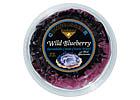
Bel/Kaukauna USA, the American subsidiary of Paris-based Fromageries Bel recently debuted a real fruit-topped cream cheese spread under the Connoisseur® brand. The wheels of cream cheese are topped with either apple cinnamon, cranberries, mango and peaches, mixed berries or wild blueberries, and are readily inverted onto a serving plate for entertaining- on a brunch buffet with bagels to an appetizer with wine and crackers during evening hours.
Indeed, fruit suppliers are working diligently to expand their offerings, making it easier for dairies to flag fruit addition and serving contents on packaging. New offerings include concentrated fruit juices and purees, along with high-integrity real fruit pieces.
For frozen desserts, an ice cream manufacturer can upgrade to real fruit pieces infused with sugar and natural stabilizers to keep the pieces soft, even at freezing temperatures. Unlike individually quick frozen (IQF) fruits, such infused fruits can be added directly to ice cream mix with minimal thawing.
White Plains, N.Y.-based The Dannon Co., did not hold back on fruit content with its new Activia™ probiotic yogurt line. The blueberry variety, in particular, has a very high fruit content, with many whole blueberries in every spoonful. Oddly, on-package graphics show a blended yogurt without any visible fruit pieces. The consumer is pleasantly surprised when they peal back the cup lid. Whole fruit pieces add value (and nutrition) in the eyes of the consumer.
SheerBliss Ice Cream LLC, Hallandale Beach, Fla., markets ice cream products made with all-natural, 100% pomegranate juice from POM Wonderful LLC, Los Angeles. These pomegranate-based flavors are getting phenomenal reception throughout the country, according to the company, because of the unique taste combination and the quality.
What's the trend in fruit?
There's no doubt that blueberry and pomegranate are becoming increasingly popular fruits to be added to all types of foods and beverages. But what else is being explored in product development labs?Starting at the beginning of the alphabet, there's açaí (ah-sigh-ee), an antioxidant-rich berry that grows wild in the Brazilian Amazon and is considered to be one of the top super foods in the world. In fact, Oprah endorses it as an anti-aging wonder. (Is there any value in her endorsement anymore? Time will tell.)
Açaí tastes like a blend of berries and chocolate. It is said to have significantly more antioxidants than blueberries, pomegranates and red wine, as well as be rich in essential fatty acids, fiber, protein and calcium. Amazon warriors harvested and enjoyed the benefits of açaí for centuries.
Apricots-Americans know apricots; however, fresh is the form in which they are most often consumed. This is starting to change as food manufactures explore apricot inclusion in different applications. These fragile peach-like fruits, with their perfumed aroma and ultra-sweet flavor, contain impressive amounts of beta-carotene. They are also a fair source of potassium and supply a good amount of fiber. U.K.-based Rachel's Organic Dairy recently introduced Probiotic Bio-live Fat Free Apricot yogurt, which contains 9% apricot in the form of whole pieces. The company is a forerunner with innovative yogurt flavors, as it also markets Greek-style yogurt with Coconut and Low Fat Rhubarb Yogurt.
Moving onto the letter B, blueberries have received a great deal of press in recent years because of their high level of antioxidants and their very appealing blue color. An abundant fruit grown in all regions of the country, blueberries will continue to show up in more and more dairy products in 2006.
Then there is the fig, which can only grow in very few regions along the northern West Coast. For the most part, historically Americans have not been screaming for figs. In fact, most consumers associate the fig with the Newton® without realizing it is a fruit; however, as chefs explore fig use in various condiments and entrees, product developers are taking note. Figs are a powerhouse of nutrition; a combination of fiber, minerals and nutrients. Figs are even often called "The Fitness Fruit."
Researchers at Rutgers University in New Jersey have determined that dried figs contain omega-3 and omega-6 essential fatty acids, as well as a number of phytosterols. Phytosterols are credited with decreasing natural cholesterol synthesis in the body, thus lowering overall cholesterol counts.
In dairy products, many all-natural and organic processors are exploring the inclusion of fig concentrates for the fruit's sweetening power. The concentrate is basically a water extract of dried figs that is derived by leaching the figs with water and concentrating the extract under vacuum to a minimum of 70 Brix. The color is a dark, natural brown, which complements many dairy products including those that are berry and chocolate flavored.
Finally, an article on fruit is not complete without a discussion on the pomegranate. Pomegranates are so trendy that the January 23 issue of Newsweek ran an article that read, "Pomegranates have been part of Mideastern and Mediterranean cuisine for centuries. But the ruby-red fruit was largely absent from the American diet. That's changing now. Spurred in part by the popularity of Pom Wonderful® pomegranate juice, which launched nationwide with a major marketing campaign in mid-2003, U.S. foodmakers are adding the fruit to chocolate, chewing gum, even chicken sausage. In the first nine months of 2005, at least 190 new pomegranate-flavored foods and drinks were introduced in the United States, according to U.K.'s Datamonitor's Productscan Online database of new products. "There's been a desire lately among consumers to gravitate toward exotic foods like this," says Tom Vierhile, Productscan Online's executive director.
With that said, a few of the other exotic (and not-so-exotic, but simply not-to-common in dairy foods) fruits for formulators to keep their eyes on include lychee, mango, pears and tamarind.
Photos courtesy ARS USDA.
Looking for a reprint of this article?
From high-res PDFs to custom plaques, order your copy today!


