Authentic Art
Emmi-Roth Käse USA is based in a region of Wisconsin known as “little Switzerland.” That’s appropriate for this division of dairy giant Emmi AG of Lucerne, Switzerland. The U.S. producer is shooting for sales of $500 million.

 Award-winning European-style artisan cheeses from Emmi-Roth Käse USA have made their mark with quality, consistency and targeted marketing. The company sold $82 million of cheese last year to foodservice, fine dining and retail customers. Throw in cultured products from parent company Emmi AG’s U.S. holdings, and the company sold more than $175 million. It is shooting for $500 million in sales five years from now.
The Monroe, Wis.-based specialty cheese business is fittingly based in a region referred to as “little Switzerland” for its rolling green pastures and high-quality milk supply. The company is a division of publicly traded Emmi AG, Lucerne, Switzerland.
The company’s roots date to 1863 with the founding of O. Roth & Cie in Switzerland by artisan cheesemaker Oswald Roth. In 1911, his son opened subsidiary Otto Roth & Company in New York to import Swiss Cheeses; the U.S. division began creating cheese in 1936. Various Swiss family members immigrated to America to be a part of the business, including Karl Jaeckle. In 1983 the business was purchased by General Foods. In 1991 three direct descendants of the original cheesemaker (cousins Fermo Jaeckle, Felix Roth and Ulrich Roth) started making Alpine-style cheeses under the name Roth Käse USA.
In 2006, Emmi AG entered into a strategic partnership with U.S. cheese producer Roth Ltd. In 2009, Emmi acquired Roth Käse USA. (Emmi comes from Emmen, a town near Lucerne. Käse is German for cheese). This year, Emmi USA and Roth-Käse USA integrated executive forces and each unit began using the full Emmi-Roth Käse USA name. While operating as separate legal entities, the two cultured and cheese businesses are now governed by a combined executive committee headed by Jaeckle as CEO and Steve McKeon as president/COO.
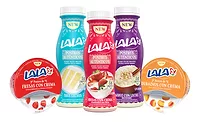
Emmi AG continues to build its U.S. business, gaining a foothold on the West Coast with the August acquisition of Cypress Grove Chèvre, Arcata, Calif. The branded fresh and ripened premium goat milk cheese specialty products generate $10 million in annual sales. Its processing plant employs 45 people.
On the East Coast, Emmi had a minority stake in CASP (Contract Aseptic & Specialty Packaging) LLC and bought a 100% interest in the business. The aseptic milk products company co-packs Emmi Caffè Latte for U.S. distribution from its Penn Yan, N.Y., facility. Production of Emmi yogurt products currently packaged elsewhere will shift to the CASP facility, executives say.
While Jaeckle has cheese in his lineage, he is enthusiastic about the opportunities available to the dairy drink and fresh cultured products.
“The fresh dairy section is the greatest opportunity for the dairy business in the U.S.,” he says, citing growth potential in the upwardly mobile U.S. consumption patterns compared to higher but flat European consumption. The fresh dairy drinks/cultured products and cheese businesses will continue to expand, with additional acquisitions on the horizon, chosen in part for distribution advantages, McKeon notes.
Partnerships and joint ventures are helping the company grow. In August, Emmi-Roth Käse and Swiss Valley Farms, Davenport, Iowa, formed a joint venture called White Hill Cheese Co. White Hill will operate from a Swiss Valley Farms cooperative facility in Shullsburg, Wis. The first batches of cheese – baby Swiss, no-salt-added Swiss and other Swiss varieties – will start being produced in February 2011. Emmi-Roth Käse plans to shift all Monroe facility Swiss production to White Hill. The move will effectively expand Monroe’s production and storage space to meet ever-increasing volume needs for Gruyère and other specialty cheeses.
“Gruyère is where we started out, and it’s the meat of the main course,” Jaeckle says of the company’s growth prospects. Fontina, Havarti and blue cheeses are the next biggest sellers for the company. The Monroe facility crafts 25 varieties of artisan cheeses and has more than 1,200 SKUs in its system.
“When we first came into Wisconsin, we found there were a lot of plants sitting inactive, just standing, not doing anything,” McKeon says. “Rather than building more plants, we develop co-ventures, strategic relationships.”
The partner plants guarantee to make a certain volume of raw cheese each month. Emmi-Roth Käse purchases the product, then handles the curing, packaging and marketing. This system allows the cheesemakers to focus on artisan style and provides them with a steady cash flow for milk deliveries and other operating costs.
Some cheeses produced by the partner cheesemakers would cause challenges in Monroe. For instance, blue cheese production in a non-blue cheese plant would be unusual due to cross-contamination concerns, while production of Dill Havarti could leave dill residue in brining operations.
Emmi-Roth Käse staff develops cheese varieties in Monroe then looks for producers.
“We birth the cheese here,” Jaeckle says. “Then we grow it to where it’s a nice chunk of volume for someone else to take over. We identify what we call a partner plant, and we introduce them to the concept of making cheese for us.”
“We’re more a market-by-market approach versus a national approach. We work with our customers’ needs, especially with educating and training them. Specialty cheese is a complicated industry,” McKeon says.
“Selling to foodservice is a specialized skill set, including understanding their marketing activities. Being able to work with them takes practice and skill,” Jaeckle says.
Emmi-Roth Käse can source just about any product or find an alternative, he says. The company also provides custom portions, like 2/3-ounce slices rather than the standard 3/4-ounce foodservice slice.
The company launched its foodservice line with versions of Alpine origin cheeses, highlighting Gruyère. Production and marketing have now grown to include all types of European specialty cheeses.
The addition of internationally renowned cheese expert and educator Regi Hise as corporate chef and director of culinary development at Emmi-Roth Käse underscores the company’s commitment to the channel.
Specialty retailers have the opportunity to create a cheese product at the company’s Cheesemaking 101 classes.
“We handle the curing, they build a ‘crafted by our sales associates’ promotion in their store. It gives the retail staff a little more stake in the product. Specialty cheese can be intimidating. Anything that you can do to help educate the sales force and ultimately the end user is wildly successfully,” says Kirsten M. Jaeckle Steinhauer, marketing manager (and daughter to the CEO).
In some cases, the company takes a traditional cheese and presents it in a way that meets modern expectations. Small retail packages appeal to shoppers looking for new cheeses and to one-person households. The four-ounce product size is supported with in-store marketing, and typically offered as part of a mix-and-match, two-for-$5 retail program.
“The four-ounce minis have been the most successful retail launch, and the [poor] economy has impacted it for the better,” McKeon says.
The company counts on display to drive impulse retail sales. New rigid modified-atmosphere packaging (MAP) used for some of the company’s offerings creates shelf appeal and product integrity. The MAP packaging “helps create an environment that is beneficial to selling it,” McKeon says.
The protective clamshell also is ideal for products like crumbled blues and wedges. Package graphics create a stackable billboard effect on shelves for visual impact.
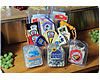
Portion-controlled menu items packaged in MAP trays are another solution-based offering from the company. Sliced or cubed cheeses along with condiments such as fig paste or combinations of five types of cheese are assembled according to customer specifications. These trays are particularly popular with caterers as labor- and cost-saving devices. One such MAP-packaged product is The Great American Cheese Board. The kit program is a single-unit, grab-and-go package that features three pieces of cheese, complementary condiments and wooden picks; it is sold through foodservice channels as well as airline, convenience stores and hotel shops.
The company is enthusiastic about some of its newer cheeses, including Rofumo, a smoked variation of Fontina. This fall the company introduces a creamy, spreadable Gorgonzola cheese modeled after the traditional Italian version.
St. Otto is a low-fat alternative that has garnered American Cheese Society awards. Based on World War II-era methods for cheesemaking (when fat was scarce), the cheese is produced with a low fat content resulting in 6% fat in dry matter. Most cheeses contain 45% fat in dry matter.
To avoid a texture that is like an eraser, red smear rinding technology teams with curing to provide a flavorful product with a nice mouthfeel.
“Long ago, we figured out that us doing presentations at customers was good for business, but it was always a slam dunk if we could get them to come up here and see the reality of this,” Jaeckle says, sweeping his arm around the visitor center. The centerpiece is a kitchen with stovetop island, refrigeration and running water. Long, polished tables equipped with comfortable chairs create a lodge-like setting. Windows overlook 24-foot-tall towers of curing Gruyère in a portion of the facility’s 24,000 square feet of automated cheese curing rooms.
The public viewing hall helps the company make the plant an educational experience for customers. (Jaeckle calls the facility “an agribusiness destination point.”) The company teams with the Wisconsin Milk Marketing Board (WMMB) and the University of Wisconsin to use the plant for tours, cheesemaking classes, internships and other educational activities.
As for social networking, Emmi-Roth Käse taps into WMMB’s Facebook and Twitter campaigns. Steinhauer notes the company has long teamed with WMMB on marketing such as in-store events and tasting demonstrations. It is not yet ready to go it alone with its own social media campaigns.
“Social media is an awesome tool if you can dedicate the time to make it work for you. But if you are only going to post something once a week or once a month, that doesn’t work. You can’t mismanage it,” Steinhauer says.
Overall marketing tactics under the new Emmi-Roth Käse USA name are in development. Cheese-brand advertising has been selective up to this point.
“We’re trying to work through branding issues as a team, keeping what makes sense from a branding standpoint in perspective,” Steinhauer says. “We’re also looking for marketing synergies, and at areas where we need to bolster up our marketing resources in order to build end-user relevant brands,” she says.
Part of the process will include focus on product line breadth and identification of brands with the most relevance at the retailer level, she adds.
Participation in community events such as the Monroe (Wis.) Cheese Days will continue because it solidifies the company’s position and serves as a way to donate to a worthy cause. The event, held every other year, allows local cheesemakers to sell products directly to the public; proceeds are donated to charitable causes.
Emmi-Roth Käse is a nimble company that is creating new products. Being relatively unknown with few established retail varieties will allow the company to make its mark with innovation, Jaeckle says.
“We’re in a fortunate situation. We’ve got a very rapidly expanding specialty cheese business, and it’s the one of all categories that’s growing the fastest,” Jaeckle says. “We feel as if we’re very well positioned to take advantage of that.”
The Monroe, Wis.-based specialty cheese business is fittingly based in a region referred to as “little Switzerland” for its rolling green pastures and high-quality milk supply. The company is a division of publicly traded Emmi AG, Lucerne, Switzerland.
The company’s roots date to 1863 with the founding of O. Roth & Cie in Switzerland by artisan cheesemaker Oswald Roth. In 1911, his son opened subsidiary Otto Roth & Company in New York to import Swiss Cheeses; the U.S. division began creating cheese in 1936. Various Swiss family members immigrated to America to be a part of the business, including Karl Jaeckle. In 1983 the business was purchased by General Foods. In 1991 three direct descendants of the original cheesemaker (cousins Fermo Jaeckle, Felix Roth and Ulrich Roth) started making Alpine-style cheeses under the name Roth Käse USA.
In 2006, Emmi AG entered into a strategic partnership with U.S. cheese producer Roth Ltd. In 2009, Emmi acquired Roth Käse USA. (Emmi comes from Emmen, a town near Lucerne. Käse is German for cheese). This year, Emmi USA and Roth-Käse USA integrated executive forces and each unit began using the full Emmi-Roth Käse USA name. While operating as separate legal entities, the two cultured and cheese businesses are now governed by a combined executive committee headed by Jaeckle as CEO and Steve McKeon as president/COO.
Emmi AG continues to build its U.S. business, gaining a foothold on the West Coast with the August acquisition of Cypress Grove Chèvre, Arcata, Calif. The branded fresh and ripened premium goat milk cheese specialty products generate $10 million in annual sales. Its processing plant employs 45 people.
On the East Coast, Emmi had a minority stake in CASP (Contract Aseptic & Specialty Packaging) LLC and bought a 100% interest in the business. The aseptic milk products company co-packs Emmi Caffè Latte for U.S. distribution from its Penn Yan, N.Y., facility. Production of Emmi yogurt products currently packaged elsewhere will shift to the CASP facility, executives say.
While Jaeckle has cheese in his lineage, he is enthusiastic about the opportunities available to the dairy drink and fresh cultured products.
“The fresh dairy section is the greatest opportunity for the dairy business in the U.S.,” he says, citing growth potential in the upwardly mobile U.S. consumption patterns compared to higher but flat European consumption. The fresh dairy drinks/cultured products and cheese businesses will continue to expand, with additional acquisitions on the horizon, chosen in part for distribution advantages, McKeon notes.
Partnerships and joint ventures are helping the company grow. In August, Emmi-Roth Käse and Swiss Valley Farms, Davenport, Iowa, formed a joint venture called White Hill Cheese Co. White Hill will operate from a Swiss Valley Farms cooperative facility in Shullsburg, Wis. The first batches of cheese – baby Swiss, no-salt-added Swiss and other Swiss varieties – will start being produced in February 2011. Emmi-Roth Käse plans to shift all Monroe facility Swiss production to White Hill. The move will effectively expand Monroe’s production and storage space to meet ever-increasing volume needs for Gruyère and other specialty cheeses.
“Gruyère is where we started out, and it’s the meat of the main course,” Jaeckle says of the company’s growth prospects. Fontina, Havarti and blue cheeses are the next biggest sellers for the company. The Monroe facility crafts 25 varieties of artisan cheeses and has more than 1,200 SKUs in its system.
A good neighbor approach
Emmi-Roth Käse makes roughly 50% of the cheese it markets, including every wheel of its iconic Gruyère. Mass production of a wide line of artisan cheeses in one facility simply is not practical or even desirable. That is why the company has long tapped underutilized regional cheesemaking capacity.“When we first came into Wisconsin, we found there were a lot of plants sitting inactive, just standing, not doing anything,” McKeon says. “Rather than building more plants, we develop co-ventures, strategic relationships.”
The partner plants guarantee to make a certain volume of raw cheese each month. Emmi-Roth Käse purchases the product, then handles the curing, packaging and marketing. This system allows the cheesemakers to focus on artisan style and provides them with a steady cash flow for milk deliveries and other operating costs.
Some cheeses produced by the partner cheesemakers would cause challenges in Monroe. For instance, blue cheese production in a non-blue cheese plant would be unusual due to cross-contamination concerns, while production of Dill Havarti could leave dill residue in brining operations.
Emmi-Roth Käse staff develops cheese varieties in Monroe then looks for producers.
“We birth the cheese here,” Jaeckle says. “Then we grow it to where it’s a nice chunk of volume for someone else to take over. We identify what we call a partner plant, and we introduce them to the concept of making cheese for us.”
Meeting the needs of foodservice clients
Foodservice and white tablecloth restaurant clients have long known Emmi-Roth Käse as the U.S. experts on specialty cheeses.“We’re more a market-by-market approach versus a national approach. We work with our customers’ needs, especially with educating and training them. Specialty cheese is a complicated industry,” McKeon says.
“Selling to foodservice is a specialized skill set, including understanding their marketing activities. Being able to work with them takes practice and skill,” Jaeckle says.
Emmi-Roth Käse can source just about any product or find an alternative, he says. The company also provides custom portions, like 2/3-ounce slices rather than the standard 3/4-ounce foodservice slice.
The company launched its foodservice line with versions of Alpine origin cheeses, highlighting Gruyère. Production and marketing have now grown to include all types of European specialty cheeses.
The addition of internationally renowned cheese expert and educator Regi Hise as corporate chef and director of culinary development at Emmi-Roth Käse underscores the company’s commitment to the channel.
Taking on the retail market
A separate high-end specialty-cheese sales division is focused solely on the retail accounts that management considers “high-profile opinion formers.” These include Whole Foods, Trader Joe’s, Wegmans, Zabar’s, Formaggio Kitchen and Fox & Obel in Chicago.Specialty retailers have the opportunity to create a cheese product at the company’s Cheesemaking 101 classes.
“We handle the curing, they build a ‘crafted by our sales associates’ promotion in their store. It gives the retail staff a little more stake in the product. Specialty cheese can be intimidating. Anything that you can do to help educate the sales force and ultimately the end user is wildly successfully,” says Kirsten M. Jaeckle Steinhauer, marketing manager (and daughter to the CEO).
In some cases, the company takes a traditional cheese and presents it in a way that meets modern expectations. Small retail packages appeal to shoppers looking for new cheeses and to one-person households. The four-ounce product size is supported with in-store marketing, and typically offered as part of a mix-and-match, two-for-$5 retail program.
“The four-ounce minis have been the most successful retail launch, and the [poor] economy has impacted it for the better,” McKeon says.
The company counts on display to drive impulse retail sales. New rigid modified-atmosphere packaging (MAP) used for some of the company’s offerings creates shelf appeal and product integrity. The MAP packaging “helps create an environment that is beneficial to selling it,” McKeon says.
The protective clamshell also is ideal for products like crumbled blues and wedges. Package graphics create a stackable billboard effect on shelves for visual impact.
Portion-controlled menu items packaged in MAP trays are another solution-based offering from the company. Sliced or cubed cheeses along with condiments such as fig paste or combinations of five types of cheese are assembled according to customer specifications. These trays are particularly popular with caterers as labor- and cost-saving devices. One such MAP-packaged product is The Great American Cheese Board. The kit program is a single-unit, grab-and-go package that features three pieces of cheese, complementary condiments and wooden picks; it is sold through foodservice channels as well as airline, convenience stores and hotel shops.
The company is enthusiastic about some of its newer cheeses, including Rofumo, a smoked variation of Fontina. This fall the company introduces a creamy, spreadable Gorgonzola cheese modeled after the traditional Italian version.
St. Otto is a low-fat alternative that has garnered American Cheese Society awards. Based on World War II-era methods for cheesemaking (when fat was scarce), the cheese is produced with a low fat content resulting in 6% fat in dry matter. Most cheeses contain 45% fat in dry matter.
To avoid a texture that is like an eraser, red smear rinding technology teams with curing to provide a flavorful product with a nice mouthfeel.
Social media and on-site marketing
Emmi-Roth Käse tailors its marketing to the needs of its sales channels. Chefs and restaurant owners receive the Culinary Connections newsletter. Fondue presentations are another approach.“Long ago, we figured out that us doing presentations at customers was good for business, but it was always a slam dunk if we could get them to come up here and see the reality of this,” Jaeckle says, sweeping his arm around the visitor center. The centerpiece is a kitchen with stovetop island, refrigeration and running water. Long, polished tables equipped with comfortable chairs create a lodge-like setting. Windows overlook 24-foot-tall towers of curing Gruyère in a portion of the facility’s 24,000 square feet of automated cheese curing rooms.
The public viewing hall helps the company make the plant an educational experience for customers. (Jaeckle calls the facility “an agribusiness destination point.”) The company teams with the Wisconsin Milk Marketing Board (WMMB) and the University of Wisconsin to use the plant for tours, cheesemaking classes, internships and other educational activities.
As for social networking, Emmi-Roth Käse taps into WMMB’s Facebook and Twitter campaigns. Steinhauer notes the company has long teamed with WMMB on marketing such as in-store events and tasting demonstrations. It is not yet ready to go it alone with its own social media campaigns.
“Social media is an awesome tool if you can dedicate the time to make it work for you. But if you are only going to post something once a week or once a month, that doesn’t work. You can’t mismanage it,” Steinhauer says.
Overall marketing tactics under the new Emmi-Roth Käse USA name are in development. Cheese-brand advertising has been selective up to this point.
“We’re trying to work through branding issues as a team, keeping what makes sense from a branding standpoint in perspective,” Steinhauer says. “We’re also looking for marketing synergies, and at areas where we need to bolster up our marketing resources in order to build end-user relevant brands,” she says.
Part of the process will include focus on product line breadth and identification of brands with the most relevance at the retailer level, she adds.
Participation in community events such as the Monroe (Wis.) Cheese Days will continue because it solidifies the company’s position and serves as a way to donate to a worthy cause. The event, held every other year, allows local cheesemakers to sell products directly to the public; proceeds are donated to charitable causes.
Emmi-Roth Käse is a nimble company that is creating new products. Being relatively unknown with few established retail varieties will allow the company to make its mark with innovation, Jaeckle says.
“We’re in a fortunate situation. We’ve got a very rapidly expanding specialty cheese business, and it’s the one of all categories that’s growing the fastest,” Jaeckle says. “We feel as if we’re very well positioned to take advantage of that.”
Looking for a reprint of this article?
From high-res PDFs to custom plaques, order your copy today!