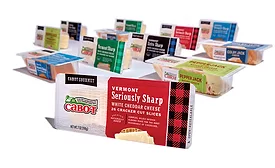
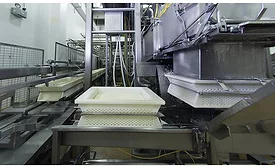
Neal Schuman and his three children have a nose for good cheeses. They are also adept at sniffing out opportunities with innovative flavors and packaging to appeal to millennials and baby boomers alike.
Neal Schuman is perhaps the most ardent defender of Parmesan cheese in the United States. Incensed that some cheesemakers were adulterating grated Parm with cellulose, Schuman organized the True Cheese campaign, warning consumers and retailers that all was not right in shelf-stable grated Parmesan products.
When dairy cooperative members sign off on investments, the dairy processing arm develops new products and formats. This yields a win for farmers, employees, customers and consumers.
Our farmers and employees appreciate the honor of being named the 2017 Dairy Foods Plant of the Year. This vote of confidence by one of our industry’s most trusted information sources reflects our entire industry’s commitment to making high-quality U.S. dairy products.
The cheese expo takes place April 12 and 13 in Madison, Wis., at the Alliant Energy Center.
March 10, 2017
Nearly 2,000 cheese industry leaders, suppliers and cheese manufacturers will gather in Madison, Wis., for the Wisconsin Cheese Industry Conference (WCIC) to share information about the latest in cheese technology, new products and issues affecting the cheese, butter and whey industries.
Arla’s cheese plant in Wisconsin is said to be the largest producer of Havarti in the United States. It also turns out Gouda, Edam, Fontina and Muenster.
To see how White Clover Dairy grew up to become Arla Foods, it helps to look at a series of aerial photos hung in the entrance hallway to this cheese plant in Hollandtown, Wis. In the first image there is a farmhouse near the original plant. Later images show how expansions to the plant crept closer and closer to the house. Eventually, the plant completely surrounds the farmhouse, and in the last image, the house is gone. These additions over the years turned the facility into a 110,000-square-foot plant.
Havarti, Gouda and Edam are cheese types from the Old World. But Arla is making them in Wisconsin. The CEO of the U.S. division of this European dairy co-op talks about Arla’s growth strategy here and its Cheddar cheese joint venture with Dairy Farmers of America.
The European dairy cooperative Arla Foods amba has set its sights on the United States. The strategic plan of this co-op based in Denmark states that the goal is to “excel in eight dairy categories; focus on six geographical regions and win as one united and efficient Arla.”
These are good times to be in cheese. It is a dairy food that consumers like and it can be packaged in formats that fit an on-the-go way of life. Dairy processors are investing in capacity to keep up with demand.
Consumers love their cheese and are clear about what they want. It has to be easy to eat, portable, available in a variety of flavors and all-natural. These are the dominant themes from almost every cheese processor we spoke with. Convenience, flavor innovation, authenticity and freshness are key factors that will drive consumer cheese purchases, according to the Wisconsin Milk Marketing Board, Madison.
The Latin American cheese market is growing. It’s important for cheesemakers to know the three distinct styles: fresh, melting and grating of these unique cheeses.
Latin American cheese production in the United States has seen substantial growth over the last decade. Driven by the increase in the Hispanic population in the United States, which is now over 55 million, as well as increased consumer interest in specialty cheese, production has increased from around 167 million pounds 10 years ago to around 254 million pounds in 2015.
Beth Ford, the chief operating officer of the largest dairy co-op in the United States, talks about developing new cheese, butter and dessert products, and investing in manufacturing plants.
Litehouse CEO Frank talks to Dairy Foods about the challenges of heading an employee-owned business; achieving SQF Level 3 certification; and growth plans.
Litehouse Inc. President and CEO Jim Frank is the first nonfamily member to head the Idaho-based manufacturer of refrigerated salad dressings and blue-veined cheeses. In this interview, he talks about the challenges of running this employee-owned dairy business.