Nonfood applications for dairy proteins intrigue scientists
Advancements in processing techniques enable caseins’ usage in packaging materials, glue and cosmetics.
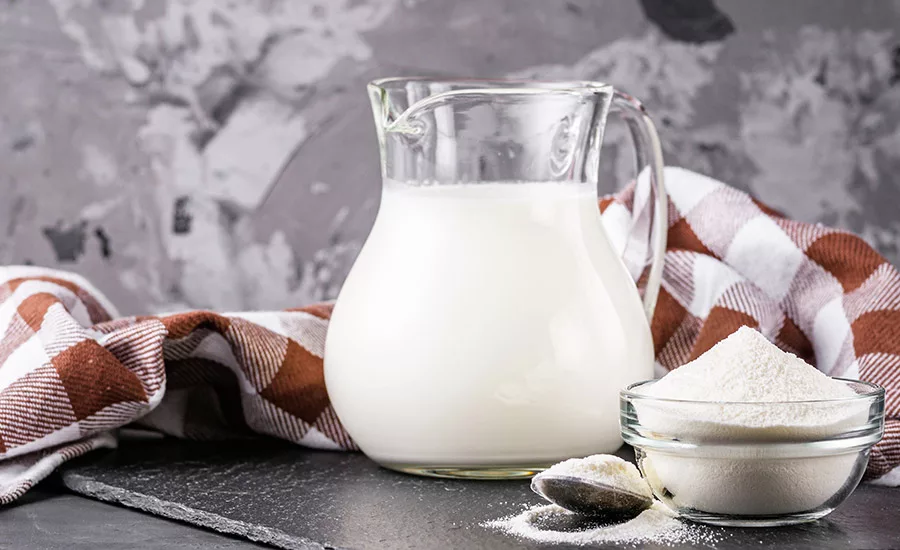
Photo courtesy of Andrii Pohranychnyi / iStock / Getty Images Plus

Milk proteins, one of milk's macroconstituents, encompass two principal types of proteins: casein (CN) and whey protein (WP). The advancements in membrane fractionation and chemical and physical processing techniques enabled the production of many milk-derived protein ingredients. Due to milk proteins' superior nutritional quality and broader functionality, they have been used in several food applications like infant formulas, dietary supplements, and sports nutrition. However, the milk proteins' specific structural and versatile technical properties have also been helpful in a wide range of nonfood applications. In this article, we explore the nonfood uses of milk proteins.
The No. 1 protein in cow’s milk, casein’s usage historically significant
Casein, the major protein (~80 % of total protein) in bovine milk, has a rich history of use in nonfood applications dating back to the early 19th century. For instance, caseinates have been instrumental in various industries with their excellent adhesion properties to substrates like wood, glass and paper. This functionality is primarily due to caseinates' hydrophilicity due to the availability of many polar groups, which makes the coated film an outstanding gas (oxygen, carbon dioxide) barrier.
Casein glues are used in industrial applications such as exterior and interior woodworking, labeling adhesives in the bottling industry, ink binders in the paper industry, pigment and mineral binders in the industrial coatings, and drug binders in the pharmaceutical industry. Additionally, the caseinates' applications as emulsifiers and conditioners in the cosmetic industry stand as a testament to the enduring value of casein in nonfood applications. However, the caseinates applications in some areas, like leather finishing, textile coating, and water-based glues, are more historical and have been replaced by cost-effective alternative chemicals.
The transparency, biodegradability and excellent barrier properties to aroma components and gases make casein films one of the best candidates for making environmentally friendly packaging material. However, casein films' brittleness and water sensitivity are still challenges that need to be addressed to improve their workability, elasticity, flexibility, and water vapor permeability. Several research studies are in progress to enhance and address these challenges.
The potential of whey proteins demonstrated in clinical trials
Whey proteins, the second major protein (~20 % of total protein), are making significant strides in nonfood uses, propelled by the advancements of membrane fractionation technology and improved understanding of their health benefits. The nonfood uses of whey proteins are much more advanced and beyond industrial applications. Many of these applications are in the advanced stages of research, hinting at the vast potential yet to be fully realized.
The biological components of whey, including lactoferrin, beta-lactoglobulin, alpha-lactalbumin, glycomacropeptide, and immunoglobulins, demonstrate a range of immune-enhancing properties. Whey can also function as an antioxidant, antihypertensive, antitumor, hypolipidemic, antiviral, antibacterial, and chelating agent. Several clinical trials have successfully been performed using whey in treating cancer, HIV, hepatitis B, cardiovascular disease, osteoporosis, and as an antimicrobial agent. The ongoing research and clinical trials underscore the immense potential of whey proteins in nonfood applications.
Lactoferrin, a milk protein fraction, can chelate iron, depriving microorganisms of this essential nutrient and functioning as an antiviral, antifungal, and antibacterial agent. It has also been assessed for its antibiotic properties, as it can release the lipopolysaccharide components from the outer membrane of gram-negative bacteria. Similarly, alpha-lactalbumin chelates heavy metals, reducing oxidative stress. Beta-lactoglobulin has been studied for its effect on lowering cholesterol. Whey proteins also contain a variety of enzymes, including hydrolases, transferases, lyases, proteases, and lipases. Lactoperoxidase, for instance, catalyzes the peroxidation of thiocyanate, iodine, and bromide, generating end products that inhibit the growth of a range of bacterial species. Clinical studies indicate that whey protein fractions can aid in preventing and treating cancer and have a viable effect in patients infected with Hepatitis B or C.
In summary, milk proteins, one of the oldest functional foods available to mammals, continue to intrigue scientists and researchers. Understanding their uses beyond nutritional applications is evolving, with ongoing research exploring their impact on overall health and disease. For instance, the immune-enhancing properties of whey proteins could be harnessed to develop new treatments for infectious diseases. This dynamic field of study promises exciting discoveries and potential applications, keeping the scientific community engaged and inspired.
The possible health benefits of milk proteins are vast. They could significantly contribute to the prevention and treatment of various diseases, making this a topic of great interest and importance. The future of milk proteins in therapeutic applications is bright, with potential breakthroughs and applications yet to be discovered.
Venkateswarlu (Venkat) Sunkesula, Ph.D., is the vice president of research and product development at Idaho Milk Products where he is responsible for all aspects of new ingredients and product development, evaluation of new technologies, and coordination of scale-up of new products, technologies, and intellectual property development to support IMP’s product and technology portfolio. Venkat has bachelor’s, master’s, and doctorate degrees in dairy science manufacturing along with more than 20 years of experience in confectionery, brewing, chemicals, and dairy food industries. Venkat is responsible for researching milk protein ingredients and developing high-protein dairy and food products.
References:
Goulding, D.A., Fox, P.F. and O’Mahony, J.A., 2020. Milk proteins: An overview. Milk proteins, pp.21-98.
Audic, J.L., Chaufer, B. and Daufin, G., 2003. Non-food applications of milk components and dairy co-products: A review. Le Lait, 83(6), pp.417-438.
Keri Marshall, N.D., 2004. Therapeutic applications of whey protein. Alternative medicine review, 9(2), pp.136-156.
Looking for a reprint of this article?
From high-res PDFs to custom plaques, order your copy today!