Farm to Fork
Faribault Dairy profile; Cornell rBST Study
In the 1850s, the Fleckenstein Brewery dug an extensive series of caves into the bluffs to age lager beer. In 1936 when Felix Frederickson bought the caves and established Treasure Cave Blue Cheese. Frederickson found that sandstone is an ideal environment to age cheese. A porous stone, it provides a natural cleansing effect, as water vapor and ammonia are absorbed easily and can move through it.
While the cheese thrived, the business changed ownership several times, until Beatrice Cheese, a division of ConAgra, closed it and sold the caves in 1993. Jeff Jirik and Randy Ochs, who worked for Beatrice, went in different directions, but kept alive the memory of this special place. In particular, Jirik continued to ponder ways to reopen the creamery; finally, in 2001, the owner agreed to sell the caves to Jeff, Randy, and several investor friends.
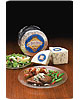
They then cleaned ten years worth of dirt from 29,000 square feet of 20-foot-high caves; this included applying whitewash to the walls to maintain the sandstone surface. At 162 feet underground, the caves maintain a constant 53-degree temperature and 95% humidity. Since re-opening the caves in 2001, Faribault Dairy has developed three blue cheeses, with more on the way. To insure the safety of their products, they test every truckload of milk for antibiotics and possible pathogens. The dairy makes a signature cheese-St. Pete’s Select-with milk obtained from a local coop. After aging three to five months, it emerges with a bright white color filled with prominent blue veins; an aroma of milk and spice carries over into a delicate, tangy, lightly salted, creamy, complex flavored cheese with a lingering aftertaste. The cheese has received awards from the American Cheese Society, U.S. Championship Cheese Contest, and the World Cheese Awards.
Faribault Dairy Co. Inc.
222 NE 3rd St., Faribault, MN 55021
Cheesemaking established 2001
www.faribaultdairy.com
Visitors: Retail store only; 8 a.m.-4:30 p.m., Monday thru Friday
Phone: 507/334-5260
On-premise retail store and nationwide distribution.
This research found that, compared to a non-supplemented population, giving rBST to 1 million cows would enable the same amount of milk to be produced using 157,000 fewer cows. The nutrient savings would be 491,000 metric tons of corn and 158,000 metric tons of soybeans, and total feedstuffs would be reduced by 2.3 million metric tons.
The study looked at three models based on a projection of how what the milk supply will look like in 30 or 40 years, assuming 3-a-day domestic consumption. The first model was conventional farming, the second conventional with rBST, and the third was an organic model based primarily on organic feed.
Producers could reduce cropland use by 219,000 hectares and reduce 2.3 million tons of soil erosion annually.
“Supplementing cows with rBST on an industry-wide scale would improve sustainability and reduce the dairy industry’s contribution to water acidification, algal growth, and global warming,” says Judith L. Capper, Cornell post-doctoral researcher, and the lead author of The Environmental Impact of Recombinant Bovine Somatotropin (rbST) Use in Dairy Production, PNAS.
Among the co-authors of the paper were Dale Bauman, a Cornell professor of animal science, and Roger Cady, of Monsanto, St. Louis. Cornell funded the research. The study addressed in brief the impact of pasture-based organic production, but concluded that such a model would require even more land usage than the others.
Artisan Profile: Faribault Dairy Co.
The story of Faribault Dairy Co. illustrates the changes occurring in American agriculture and the alternatives to industrial food production. The story begins thousands of years ago during the last ice age, when retreating glaciers deposited thick layers of sand that over time evolved into sandstone. The rock formation, known as St. Peter sandstone is found only in Illinois, Iowa, Minnesota, and northern Missouri. Over time, rivers carved through it, creating high bluffs, like those found in Faribault, located south of St. Paul in the Cannon River Valley.In the 1850s, the Fleckenstein Brewery dug an extensive series of caves into the bluffs to age lager beer. In 1936 when Felix Frederickson bought the caves and established Treasure Cave Blue Cheese. Frederickson found that sandstone is an ideal environment to age cheese. A porous stone, it provides a natural cleansing effect, as water vapor and ammonia are absorbed easily and can move through it.
While the cheese thrived, the business changed ownership several times, until Beatrice Cheese, a division of ConAgra, closed it and sold the caves in 1993. Jeff Jirik and Randy Ochs, who worked for Beatrice, went in different directions, but kept alive the memory of this special place. In particular, Jirik continued to ponder ways to reopen the creamery; finally, in 2001, the owner agreed to sell the caves to Jeff, Randy, and several investor friends.
They then cleaned ten years worth of dirt from 29,000 square feet of 20-foot-high caves; this included applying whitewash to the walls to maintain the sandstone surface. At 162 feet underground, the caves maintain a constant 53-degree temperature and 95% humidity. Since re-opening the caves in 2001, Faribault Dairy has developed three blue cheeses, with more on the way. To insure the safety of their products, they test every truckload of milk for antibiotics and possible pathogens. The dairy makes a signature cheese-St. Pete’s Select-with milk obtained from a local coop. After aging three to five months, it emerges with a bright white color filled with prominent blue veins; an aroma of milk and spice carries over into a delicate, tangy, lightly salted, creamy, complex flavored cheese with a lingering aftertaste. The cheese has received awards from the American Cheese Society, U.S. Championship Cheese Contest, and the World Cheese Awards.
Faribault Dairy Co. Inc.
222 NE 3rd St., Faribault, MN 55021
Cheesemaking established 2001
www.faribaultdairy.com
Visitors: Retail store only; 8 a.m.-4:30 p.m., Monday thru Friday
Phone: 507/334-5260
On-premise retail store and nationwide distribution.
Cornell Study: rBST Could Help The Environment
Cornell University recently relased a study indicating that the widespread use of recombinant bovine somatotropin (rBST) could lessen the entire dairy industry’s “carbon hoofprint.” The reasons: Cows supplemented with hormones produce more milk per cow and that milk’s production requires fewer resources than milk produced organically.This research found that, compared to a non-supplemented population, giving rBST to 1 million cows would enable the same amount of milk to be produced using 157,000 fewer cows. The nutrient savings would be 491,000 metric tons of corn and 158,000 metric tons of soybeans, and total feedstuffs would be reduced by 2.3 million metric tons.
The study looked at three models based on a projection of how what the milk supply will look like in 30 or 40 years, assuming 3-a-day domestic consumption. The first model was conventional farming, the second conventional with rBST, and the third was an organic model based primarily on organic feed.
Producers could reduce cropland use by 219,000 hectares and reduce 2.3 million tons of soil erosion annually.
“Supplementing cows with rBST on an industry-wide scale would improve sustainability and reduce the dairy industry’s contribution to water acidification, algal growth, and global warming,” says Judith L. Capper, Cornell post-doctoral researcher, and the lead author of The Environmental Impact of Recombinant Bovine Somatotropin (rbST) Use in Dairy Production, PNAS.
Among the co-authors of the paper were Dale Bauman, a Cornell professor of animal science, and Roger Cady, of Monsanto, St. Louis. Cornell funded the research. The study addressed in brief the impact of pasture-based organic production, but concluded that such a model would require even more land usage than the others.
Looking for a reprint of this article?
From high-res PDFs to custom plaques, order your copy today!


