Function Follows Form


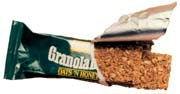
For the overall segment, sales of functional bars, candy and snacks are expected to increase 83% at current prices between 2003 and 2008 (a 63% growth at constant 2003 prices). Again, bars will lead the way, though increased competition and maturation may slow growth.
More important than their healthful aspects, the convenience of bars may be their biggest selling point. If forced to choose, mainstream consumers are unwilling to sacrifice convenience (or taste, for that matter) for health. Further complicating matters is the level of confusion regarding the benefits of functional items. Mintel's exclusive consumer research finds 60% of respondents unconvinced of the benefits of functional foods; however, more than half of those surveyed would like to know more about them.
Most respondents indicate a preference for vitamin/mineral benefits from a pill than from food, but Mintel believes this is because consumers are unaware of how functional ingredients confer benefits. For that matter, consumers remain ignorant about certain ingredients, and Mintel lays the blame for this squarely at the feet of companies. Manufacturers "have not done a good job educating them about the often-complex information," the report finds.

Photo courtesy Alfa Laval
What's Your Function?
Consumers are interested in functional foods, according to respondents, and most are apt to turn to the press or media for information about functional foods, although a quarter gather information from the Internet. However, only 2% report using manufacturers' websites for information. Roughly 10% look to healthcare professionals for information on functional foods, earmarking the healthcare profession as a prime secondary focus of education efforts.Any such effort would come amid a growing interest in healthful eating. Interestingly, older adults are much more likely to "always try to maintain a healthy diet," yet only 11% of those 55 and older purchase functional food regularly. About half of those never buy functional food, opting instead for drugs or supplements to treat a medical condition. The reason for this could be the fixed incomes of many seniors, and the higher price tag for certain functional food items. Mintel believes a functional cereal targeting this age group may hold promise for two reasons: seniors spend more on cereal than other age groups, and a functional cereal specifically for seniors might attract current as well as future seniors.
For that matter, Mintel regards functional cereals as a possible gateway to other functional products for all occasional purchasers; functional varieties have outperformed nonfunctional counterparts. Mintel's research found occasional buyers just as likely to eat functional cereal as the regular buyers, and yogurt may hold similar potential.
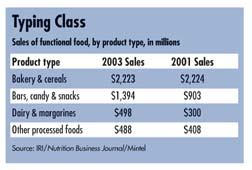
Functional cereals and bakery items account for just less than half of all functional foods' 2003 sales, and consumers seem well aware of the functional aspects of cereal. Unfortunately, the notion of a sit-down breakfast is little more than a memory in many homes, and functional bakery/cereal sales have reflected that trend. Between 2001 and 2003, the functional bakery/cereal area recorded no change in sales.
A Functional Boom?
Mintel has found young adults to be a willing audience for functional foods, but Baby Boomers (who begin turning 60 in 2006) may hold untapped potential. The aging consumer may face chronic health conditions that respond to dietary management and fortification. However, Mintel's consumer research found seniors the least likely group to purchase functional foods, partially due to the youth-oriented marketing efforts of most functional foods. Additionally, older adults are more comfortable taking pills to solve health conditions.The youth-oriented marketing efforts have propelled younger consumers to the forefront of functional food consumption. Respondents aged 18-34 are most likely to purchase functional food, even though one third of this group never has bought such products. Only 15% are regular purchasers, while 41% buy occasionally and 56% are interested in learning more about the products. Clearly, the opportunity exists to grow the segment. Functional cereals, yogurt and nutritional bars, Mintel believes, can serve as "gateway" products, a means of introducing new consumers to the benefits of functional foods, while package labeling can combine advertising with health information.
Currently, functional food consumers can be grouped into one of three classifications:
• Medically driven purchasers seek products to address a specific disease or condition. Likely over the age of 45, over 65 in particular, they want functional foods to address high cholesterol, high blood pressure or osteoporosis.
• The healthy generalist consumer is most likely a regular purchaser of functional foods and wants a range of products promoting a healthy lifestyle.
• The average consumer, meanwhile, wants more-healthful food options but has specific requirements: it cannot be too much trouble, and it must add a new element of taste or convenience. This group is probably not willing to pay more for a product solely on the basis of enhanced nutrition, warns Mintel. Unfortunately, consumers do not understand most functional products or their benefits, a further reflection of the opportunities and importance to be found in education efforts.
The importance of functional ingredients to recent growth in yogurt sales cannot be denied. The category's best-selling dairy product, functional yogurt, accounts for almost 56% of dairy/margarine sales, and has benefited from the inclusion of such complementary ingredients as prebiotics and probiotics. Among the probiotics serving to boost the category are Lactobacillus casei, L. reuteri and Bifidobacterium bifidum.
The future for this segment, however, may rest in margarines boasting cholesterol-lowering esterized phytosterols. Some 43% of respondents report buying cholesterol-lowering spreads. Aggressive public health recommendations warning of the hazards of high cholesterol levels likely will boost consumer interest in the products, as have the heart-protective health labels on margarines containing sterol esters, permitted by the FDA since 2000. In addition, osteoporosis concerns are expected to benefit sales of margarines fortified with calcium, perhaps making margarines a delivery vehicle for other functional benefits, also.
As consumers become more comfortable with the possibilities of functional foods, product sales should continue to increase faster than the rate of overall foods, Mintel predicts. In the near-term, consumers are more likely to accept functional additives in foods already perceived as healthful, i.e., yogurt, but functional cereal bars could benefit also, as the need for convenient nutrition increases. Long-term success for the category, however, will demand more education of consumers, more concern about dietary choices by consumers and the evolution of the category to incorporate functional aspects into a wider array of products.
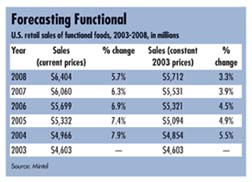
Mintel predicts a 39% jump in sales (in current prices, 24% at constant prices) of functional foods between 2003 and 2008, when the market will hit $6.4 billion. In that time, the market will endure the greatest change of its young history, as the number of current primary consumers (those aged 18-34) will decrease. In the process, the group for whom functional foods hold the most promise (those 45 and over) will grow rapidly. n
This story originally appeared in Prepared Foods magazine. For more information on the report mentioned in this article, "The U.S. Functional Food Market," contact Mintel International Group Ltd.; 213 W. Institute Place, Suite 208; Chicago, IL 60610; phone: 312/932-0400.
Website Resources:
http://www.mintel.com - Mintel International Grouphttp://www.ific.org - International Food Information Council
http://www.medicinalfoodnews.com/vol01/issue1/ffood011.htm - "Functional Foods-What are We Talking About" from Medicinal Food News
http://www.NutraSolutions.com - NutraSolutions, a special section of Prepared Foods magazine
Looking for a reprint of this article?
From high-res PDFs to custom plaques, order your copy today!