Gums, emulsifiers and stabilizers go “clean”
Ingredient suppliers cite price fluctuations and raw material availability as challenges.
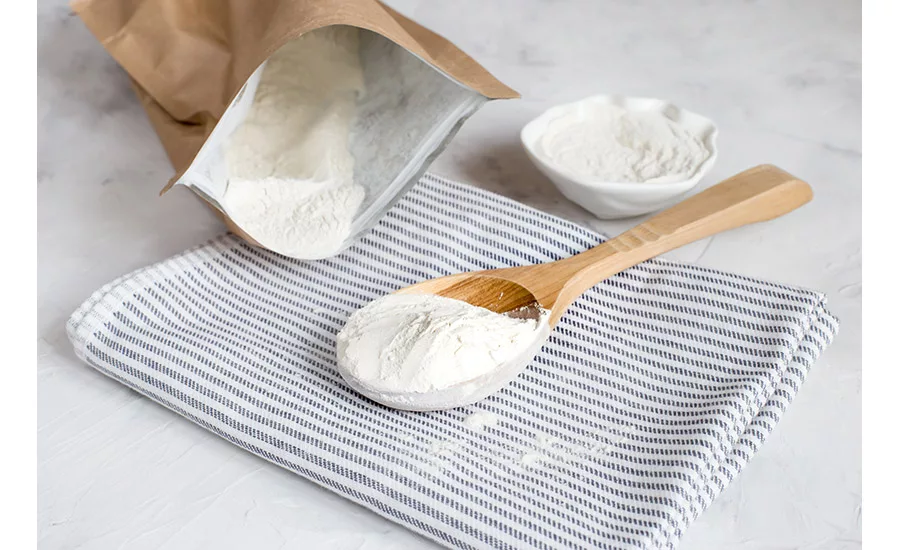
Photo courtesy of Marika Kosheleva / iStock / Getty Images Plus
When it comes to the true “workforce” ingredients that contribute to product quality, shelf life, and much more, look no further than gums, emulsifiers, and stabilizers. They are intended to help ensure that the quality and sensory characteristics of dairy products hold firm during the entire dairy product’s shelf life.
The market for these ingredients continues to grow, with the gum fiber market, for example, expected to grow at a 7.5% compound annual growth (CAGR) from 2023 to 2032. According to Global Market Insights data, the global gum fiber market should reach $2.5 billion by the end of 2032.
The market will be driven by the food segment, which comprises frozen food, confectionery, beverages, and dairy, the report reveals. “Since gum fibers are widely used in the food manufacturing industry, owing to their applicability as thickeners, emulsifiers, and stabilizers, these are increasingly adapted in the food manufacturing industry,” the report from the Selbyville, Del., research firm states. “Besides, favorable government initiatives regarding the recognition of gum fibers will also influence the market expansion. For instance, in January 2022, it was reported that the FDA (U.S. Food and Drug Administration) plans to recognize Gum Arabic as a dietary fiber, based on its nutritional composition.”

Christine Addington, enterprise technical customer lead for Wayzata, Minn.-based Cargill, explains gums, emulsifiers, and stabilizers share some similarities, but each have distinct properties and roles to play in formulations.
“Gums are hydrocolloids, which means they can form water gels. In dairy and dairy alternative applications, gums contribute to mouthfeel and viscosity, creating the creamy, indulgent textures consumers crave,” she explains. “Alongside their role as thickeners and gelling agents, they also help maintain stability over shelf life, assisting with syneresis control. Examples of gums include pectin, xanthan gum, guar gum, locust bean gum, and carrageenan.”
Emulsifiers are designed to bring oil (or fat) and water bases together, Addington adds. “They have a water-loving and an oil-loving end, which allows them to stabilize and maintain the structure of an emulsion, preventing separation of oil and water. Ingredients like lecithin and mono- and diglycerides provide good emulsion stability.”

Last but certainly not least are stabilizers, which often perform both these functions, imparting mouthfeel and providing stability over shelf life and processing. “For example, buffering salts are key ingredients for many coffee creamers. Without this stabilizer, adding a neutral pH dairy product to coffee, an acidic beverage, will cause particles to fall out of solution and cause agglomerations. Starches also function as stabilizers in dairy applications like yogurts and sour creams, aiding in the prevention of syneresis and contributing to product shelf life,” Addington maintains.
Pricing problems
Now that we have a strong working definition of these valuable ingredients, let’s look at trends and changes recently occurring in gums, emulsifiers, and stabilizers. David Dukes, president of Linden, N.J.-based IFC Solutions, sees major supply chain changes taking place.
“We are finally seeing the supply chain situation improve for lecithins across the board — and for sunflower lecithin in particular. After a couple years of short supply and super high prices, we are now seeing excellent availability and lower prices, although not as low as what they were prior to COVID and the war in the Ukraine,” he reveals.
Dukes stresses that this positive situation might be short-lived depending on what happens in Ukraine early this year. However, currently, the company has a “healthy” supply and can offer much lower pricing for its ingredients. These include sunflower lecithin (non-GMO): in powder and liquid; organic sunflower lecithin: in powder and liquid; rapeseed/canola) lecithin (non-GMO): in powder and liquid; soy lecithin (non-GMO, identify preserved): in powder and liquid; organic soy lecithin: in powder and liquid; soy lecithin (GMO): in liquid only; and specialty lecithin blends (made from the above lecithins blended with other ingredients): in powder and liquid.
Pricing and raw material costs continue to be one of the biggest challenges for those who manufacture gums, emulsifiers, and stabilizers, however. The consistent sourcing of high-quality raw materials remains an ongoing concern.
Looking at the use of starches for texture and stability, manufacturers should select a starch that is compatible with their process conditions and clean-label objectives,” suggests Jamie Matthews, head of customer technical support, North America, Parsippany, N.J.-based BENEO, whose portfolio is composed of both native and modified rice starches from three different rice varieties. “At the same time, producers are faced with how to best develop formulations that balance functionality with taste and texture targets.
“Heat, high shear, and acidity will all degrade the functionality of native starches,” Matthews continues. “Modified starches are designed to be more tolerant of the processing conditions found in many manufacturing sites. And newer to the industry, functionalized native starches provide a similar process tolerance with the added benefit of being a clean-label choice.”
Although they make up a small fraction of the finished product, emulsifiers and stabilizers have a significant impact on quality and, ultimately, on the consumer experience, adds Claus Prior Hansen, application manager for ice cream and dairy at Palsgaard A/S. The Juelsminde, Denmark-based company offers emulsifiers, stabilizers, and custom-designed emulsifier and stabilizer blends for dairy products including ice cream, yogurts, flavored milks, creams, ultra-high temperature (UHT) recombined milk and sweetened condensed milk.
“Locust bean gum (LBG) has long been the go-to stabilizer in luxury ice cream products as it allows manufacturers to ensure good quality mouthfeel, control meltdown properties, and prevent ice crystal growth. Unfortunately, it’s highly susceptible to price fluctuations and unstable supplies. In recent times, it has become eye-wateringly expensive. Tara gum can deliver a quality that is close to that of LBG, but its costs have now skyrocketed too,” Hansen states. “There isn’t any single ingredient that can provide a perfect replacement for LBG, but blends of emulsifiers and stabilizers can be used to achieve a similar functionality at a much more reasonable cost,” Hansen continues. “Our Palsgaard ExtruIce 306 has been created to deliver the same benefits as LBG as far as possible, including a rich, creamy eating experience, high overrun, and heat shock protection.”
An Ho, director of food science and innovation at Fenton, Mo.-based IFPC, which offers dairy alternative stabilization, clean label alternatives (colors, flavor, mouthfeel, preservatives), sugar and salt reduction while maintaining full-bodied texture, and custom blends to accommodate various customers processing, packaging and preferences within the gums, emulsifiers, and stabilizers space, notes the constant fluctuation in price and supply make formulating stabilizers challenging.
“Substitutions may not be an option if the customer does not want to change their ingredient declaration,” she says. “It can take just one study to create fear in a consumer, even though the FDA does not back it up. On the contrary, if the FDA slightly backs up a study about an ingredient, then scientists need to find alternatives quickly.”
Price fluctuations are nothing new in the gums, emulsifiers, and stabilizers market, but in recent years, “we’ve had to deal with historic levels of volatility,” Addington stresses. “That is perhaps the biggest takeaway. We need to prepare for higher levels of market volatility, whether sparked by climate change, geopolitical disruptions, or other factors. Change is something we need to expect, and brands will need partners like Cargill, who are equipped to support them as we all navigate an ever-changing global marketplace.”

How is Cargill taking on this challenge? “One way we’re doing this is by sourcing raw materials from multiple locations,” Addington answers. “At the same time, we’re being proactive to understand replacement options better, so if one ingredient is in short supply, we can help customers adjust their formulations to utilize other options. In the future, perhaps we’ll be able to tap new technologies such as precision fermentation to further augment the sourcing landscape for some ingredients.”
What’s trending for hydrocolloids
Beyond a challenging pricing and raw material environment, other trends have also begun to take shape. Ho states that most gums, emulsifiers, and stabilizers are generally label-friendly. But, some are more desirable on a label than others, such as locust (carob), acacia, non-soy or corn- based starches, and allergen- and GMO-free ingredients.
“So, there is a push for these types of ingredients,” Ho notes. “Stabilizers with the least amount of ingredients are also trending. In-house testing may prove that the texture is sacrificed, but a cleaner label is worth it.”
Cargill continues to see strong demand for label-friendly, plant-based ingredients, a perfect fit for ingredients like pectin and label-friendly starches. “Cargill’s annual IngredienTracker survey, which tracks consumer perceptions for hundreds of ingredients, backs this up,” Addington reveals. “Among the hydrocolloids included in the survey, pectin consistently earns the highest health perception score. It’s also among the most familiar, with half of all consumers reporting they are very or somewhat familiar with the ingredient.”
Sustainability is a growing priority, too, where pectin also shines, Addington continues. “It has a compelling origin story as pectin is made from the leftovers of juice production: apple pomace and citrus peels,” she says. “Our newest pectin production plant, located in Bebedouro, Brazil, takes that upcycled, sustainability story one step further. It is located in close proximity to Brazilian citrus suppliers and their Rainforest Alliance-certified farms, which helps minimize CO2 emissions from raw material transport and promotes regenerative agriculture practices. Additionally, our Bebedouro plant is powered by thermal energy generated from biomass and biogas, further supporting the sustainability credentials of our pectin products.”
In addition to pectin, Cargill offers carrageenan, sourced from red seaweed, which works well in neutral pH situations, such as chocolate milk; xanthan gum, produced through fermentation, is well suited for applications such as powdered dairy beverages and cottage cheese; lecithin; both modified starches and functional native starches, sold under the SimPure brand; and a broad portfolio of functional systems developed specifically for dairy and plant-based products.
Clean living
With clean-label ingredients a clear consumer desire, the challenge for suppliers is to provide a familiar mouthfeel to traditional ingredients. Innovation is the key to accomplishing this task, Ho states.
“Texture manipulation takes ingredient synergies, processing improvements, and extensive testing to mimic a mouthfeel that consumers find pleasing,” she says.
Starches, on the other hand, will generally be applied to increase viscosity, which aids in stability, Matthews adds. “They are also used to create a pleasant mouthfeel and build rich creamy textures. Finally, they can support the creation of low-fat and low-calorie dairy, i.e., ice cream and yogurts, and can be used successfully in both dairy and non-dairy alternatives.
“Rice starch is unique among other starches and this presents several opportunities for dairy and dairy alternative applications,” Matthews continues. “With the smallest granule size of any starch, it can mimic the sensation of fat on the tongue and therefore help to improve mouthfeel in reduced-fat dairy. In addition, the specific branching of rice starch molecules supports stability in a number of ways, making rice starch less prone to syneresis and giving it excellent freeze-thaw stability.
“Looking at plant-based options, BENEO’s specialty rice ingredients are ideal clean-label texturizing ingredients in dairy and chocolate alternatives. They create stable and creamy textures with a soft, smooth mouthfeel. At the same time, their neutral taste makes them easy to combine and eliminates the need to balance out off-flavors,” Matthews states.
Gums and stabilizers are key to achieving the creamy, indulgent mouthfeel that consumers desire, especially in the plant-based dairy-alternative space, Addington notes. “Dairy fats contribute so much to mouthfeel, replicating that experience can be a trick,” the Cargill executive explains. “In plant-based products, as well as reduced-fat or reduced-sugar dairy products, ingredients like pectin, carrageenan and even lecithin help formulators close that gap, contributing to creamier mouthfeel perceptions. Our technical teams can work with brands to find solutions that meet their sensory and label expectations.”
A stable future
Now that we know where gums, emulsifiers, and stabilizers stand today, where might they go in the future? “Innovation will continue to fuel the development of new and improved emulsifier and stabilizer solutions, expanding application possibilities and introducing new capabilities,” says Palsgaard’s Hansen. “Manufacturers are also likely to focus more on sustainable sourcing and production methods in emulsifiers and stabilizers in line with wider industry trends.”
Gums, emulsifiers, and stabilizers can be used to enhance the texture of more nutritious products and meet the needs and wants of the modern consumer, IFPC’s Ho relays. “They may prefer consuming food in the form of a gummy, ready-to-drink beverage, ready-to-mix beverage, instant product, firm, and toothful dessert, etc.” Ho maintains. “The modern consumer also is exposed to more international textures that can be mimicked domestically with the use of these ingredients.”
As sustainability grows in importance, Cargill’s Addington thinks we’ll see technologies like precision fermentation play a bigger role in ingredient production. “Xanthan gum is already produced via fermentation. As the technology advances, other gums may take a similar path,” Addington concludes. “We’ll also continue to see the influence of clean-label trends and that may spark the development of new texturizing solutions that consumers perceive as more label-friendly.”
Looking for a reprint of this article?
From high-res PDFs to custom plaques, order your copy today!