Dairy Foods logo
search
cart
facebook twitter linkedin youtube
  • Sign In
  • Create Account
  • Sign Out
  • My Account
Dairy Foods logo
  • NEWS
    • DAIRY REGULATIONS
  • PRODUCTS
    • New Products
    • Butter
    • Cheese
    • Cultured Dairy
    • Frozen Desserts
    • Ice Cream/Novelties
    • Milk
    • Non-Dairy Beverages
    • Sales Data
    • Whey, Milk Powder
    • Dairy Alternatives
  • INGREDIENTS
    • Cocoa
    • Colors/Flavors
    • Cultures/Enzymes
    • Fiber
    • Gums, Stabilizers, and Texturants
    • Inclusions
    • Omegas/Lipids
    • Prebiotics
    • Probiotics
    • Sweeteners
    • Other
  • OPERATIONS
    • SUSTAINABILITY
    • Equipment
    • Processing
    • Packaging
    • Food Safety & Sanitation
    • Membrane Technology
  • MEDIA
    • Dairy Foods TV
    • Podcasts
    • Webinars
  • DIRECTORIES
    • Buyers Guide
    • Dairy Plants USA
  • MEMBRANE FORUM
  • MORE
    • Associations
    • Dairy Foods' News & Views Newsletter
    • Blogs
    • Case Studies
    • Classifieds
    • Custom Content & Marketing Services
    • Dairy Foods Store
    • Market Research
    • Supplier Spotlights
    • Tradeshows and Events
    • Strategy Guides
  • AWARDS
    • Dairy Plant of the Year Award
    • Breakthrough Award
    • Dairy Processor of the Year
  • EMAGAZINE
    • eMagazines
    • Archive Issues
    • Contact
    • Advertise
    • SIGN UP!
    • Columnists
    • Dairy 100
    • State of the Industry Report
    Dairy Foods ColumnistsDairy Processing and EquipmentProcessing

    Turning waste into energy

    Dairy producers and processors have found value in what they used to throw away.

    By Clay Detlefsen
    August 23, 2013
    In the early 1990s, not long after I started work at the International Dairy Foods Association, I was sent around the country to tour various dairy plant operations in order to better acquaint myself with dairy processing and the challenges associated with the U.S. Environmental Protection Agency (EPA) and Occupational Safety and Health Administration (OSHA) regulations.

    Many of my visits were quite memorable. In Michigan, Country Fresh impressed me with its emergency rescue system that was developed in response to OSHA’s promulgation of a confined-space entry rule. In St. Louis, I was impressed by the hospitality of Ice Cream Specialties and their encouragement of me to eat as many ice cream novelties as I wanted. Even though I was an adult I can tell you that was a kid-in-a-candy store moment.

    Out west, I visited the Golden Cheese Co. of California. This was the first cheese plant I ever visited and my first exposure to deriving energy from waste. My recollection is that the plant was built in the 1980s as a response to the oil crisis of the 1970s. At that time it was envisioned that dairy processing waste, whey in particular, could be turned into energy in the form of ethanol. While I could be wrong in my recollection, I believe Golden Cheese of California’s operations were envisioned to produce ethanol as a primary product and cheese as a by-product. To say the least, I found the concept fascinating and was very impressed with what I saw.

    A long time coming

    When I left California I was sure that what I had just seen was the start of a movement that would take off at an amazing pace. Alternative energy from nonpetroleum sources was such a great idea. Sadly, I was wrong.

    Fast forward about 20 years to the first Sustainability Summit in Bentonville, Ark., where again I felt the energy (or should I say excitement?) about alternative energy. This time the excitement was about dairy power on the farm: energy from methane digesters. I moderated a panel that included Dennis Haubenschild of Haubenschild Family Farms, Princeton, Minn., who spoke about the anaerobic digester he installed in the late 1990s.

    While I have always been a fan of technology and a big fan of nonpetroleum based energy, I think what impressed me most was Dennis himself and his decision to pursue digester technology. Dennis knew it would be a challenge and that the road would have its fair share of bumps, but he quite simply summed up his decision as being the right thing to do. It was clear at the summit that digester technology was the right thing to do. It is finally starting to catch on for a variety of reasons.

    In February of this year, the Innovation Center for U.S. Dairy released a report prepared by Informa Economics, entitled the “National Market Value of Anaerobic Digester Products.” Informa’s conclusion is that anaerobic digesters can be a profitable and sustainable solution for dairy operations.

    What is different now — and what is changing the game — is the realization that additional and different waste streams from a variety of sources greatly enhance the production of methane and that it isn’t just the methane that has value. Haubenschild learned on his farm that using recycled newspaper bedding instead of straw resulted in significantly more methane production. He also learned that the end product digestate has value as a soil amendment. 

    A juicy milkshake from food waste

    Others have discovered that combining dairy processing waste and wastewater with dairy farm waste yields a nice uptick in gas yield as well. Of particular interest these days is food waste generated at retail operations. Traditionally, that waste stream was destined for landfills. The Food Marketing Institute, which is a key player in the Food Waste Reduction Alliance Project, estimates that the re-use of food waste by conversion into energy could generate enough power to supply 16 million homes for a year. For a dairy producer, the acceptance of food waste may also create a revenue stream in the form of a tipping fee – the fee normally paid to a municipal solid waste facility for dumping. The national average for tipping fees is a little over $40 per ton of waste.

    Farm-based digester technology is not the only option either. In May, the Los Angeles Times described Kroger’s entry into the digester game. The supermarket chain is taking food waste that cannot be donated from its Ralphs and Food 4 Less retail operations, mixing it with wastewater from its nearby creamery to create a “juicy milkshake” that is ultimately fed into a 2-million-gallon silo where it is digested and turned into 13 million kilowatt hours of electricity per year. Kroger is looking at other locations for similar installations.

    Better gas yields, tipping fees, renewable energy and similar credits, and useful environmentally friendly by-products (like animal bedding, soil amendments and fertilizer) are changing the game, as are years of good experience and new developments with running and maintaining the digesters. And by the way, what is the national market value of anaerobic digester products? According to Informa, somewhere between $19 billion and $55 billion. Those figures are based only on farm systems, not the one that Kroger has put into operation.

    Let’s keep the methane out of landfills and convert it into clean energy. The time has finally arrived.

    KEYWORDS: alternative methane digesters sustainable practices

    Share This Story

    Looking for a reprint of this article?
    From high-res PDFs to custom plaques, order your copy today!

    Clay Detlefsen is senior vice president, regulatory and environmental affairs and staff counsel for the National Milk Producers Federations, Arlington, Va. Previously, he was a vice president at the International Dairy Foods Association, Washington, D.C.

    Recommended Content

    JOIN TODAY
    to unlock your recommendations.

    Already have an account? Sign In

    • Lifeway Organic Kefir in different flavors inside a refrigerated grocery shelf.

      Dairy Foods names Lifeway Foods 2025 Processor of the Year

      Lifeway Foods donates $10,000 to wildfire victims,...
      Innovation
      By: Brian Berk
    • Two female farmers are standing in a field, holding a large milk canister, looking at several cows at dairy farm.

      Honoring Women Leaders Shaping the Dairy Industry

      For the fourth consecutive year, Dairy Foods is proud to...
      Dairy Foods & Beverages
      By: Barbara Harfmann
    • Main feature for State of the Industry with dairy products album cover with a gradient circular--patterned backgorund.

      2025 State of the Dairy Industry

      Welcome to the 2025 State of the Industry report. For...
      Ingredients for Dairy Processors
    Manage My Account
    • eMagazine Subscription
    • Dairy Foods News & Views Newsletter
    • Online Registration
    • Manage My Preferences
    • Subscription Customer Service
    • Connect with Dairy Foods

    More Videos

    Popular Stories

    Close up of a whipped frozen dessert with a light green color.

    The keys to high-protein dairy formulations

    A young Asian mother holding her son and a sippy cup, an older woman is in the blurred background.

    Finding the right infant formula is crucial to a baby’s growth and development

    A row of Frios Gourmet Pops with a tie dye pattern as a background.

    How Frios Gourmet Pops delivers happiness

    Outlook Report: Women in Dairy

    Products

    Probiotic Ice Cream: Science and Technology

    Probiotic Ice Cream: Science and Technology

    See More Products
    Let's Talk Dairy podcast promo

    Related Articles

    • Turning waste into revenue

      See More
    • Cheesemaker turns waste whey into energy

      See More
    • Functional dairy: Formulating energy into dairy foods

      Functional dairy: Formulating energy into dairy foods

      See More

    Related Products

    See More Products
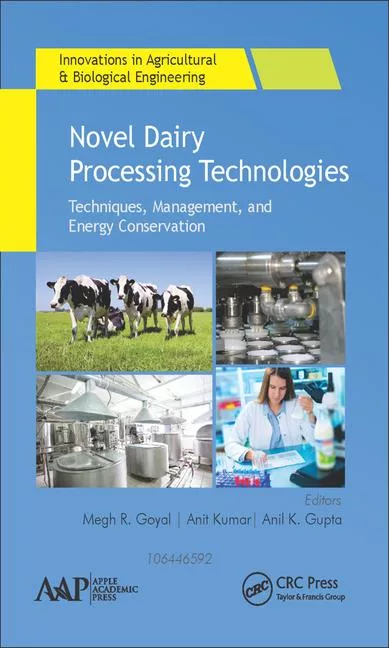
    • novel.jpg

      Novel Dairy Processing Technologies: Techniques, Management, and Energy Conservation

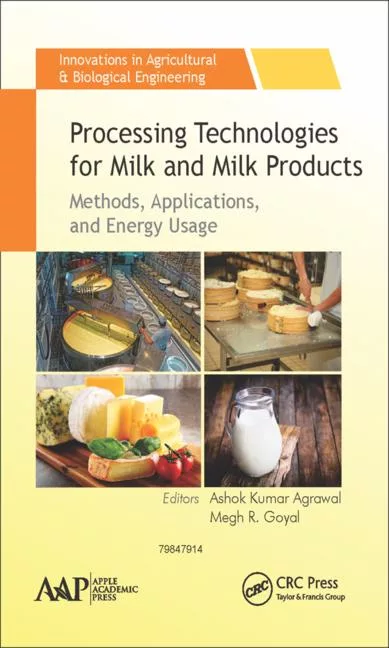
    • processing tech.jpg

      Processing Technologies for Milk and Milk Products: Methods, Applications, and Energy Usage

    • 0470655844.jpg

      Sustainable Dairy Production

    See More Products

    Related Directories

    • Armor Limited Inc.

      TUFCHEM™ Tiling Systems’ fully-vitrified tile from ErgonArmor is a smart investment, providing aesthetics and outstanding performance, turning your production areas into a showplace. Choose from a variety of colors and anti-slip textures in both rectangular and hexagonal shapes. Epoxy THINSET™ vibration setting process means less lippage and more impact resistance.
    ×

    Stay ahead of the curve. Unlock a dose of cutting-edge insights.

    Receive our premium content directly to your inbox.

    SIGN-UP TODAY
    • RESOURCES
      • Advertise
      • Contact Us
      • Directories
      • Store
      • Want More
    • SIGN UP TODAY
      • Create Account
      • eMagazine
      • Newsletter
      • Customer Service
      • Manage Preferences
    • SERVICES
      • Marketing Services
      • Reprints
      • Market Research
      • List Rental
      • Survey/Respondent Access
    • STAY CONNECTED
      • LinkedIn
      • Facebook
      • YouTube
      • X (Twitter)
    • PRIVACY
      • PRIVACY POLICY
      • TERMS & CONDITIONS
      • DO NOT SELL MY INFORMATION
      • PRIVACY REQUEST
      • ACCESSIBILITY

    Copyright ©2026. All Rights Reserved BNP Media, Inc. and BNP Media II, LLC.

    Design, CMS, Hosting & Web Development :: ePublishing