
Dairy Foods logo
search
cart
facebook twitter linkedin youtube
  • Sign In
  • Create Account
  • Sign Out
  • My Account
Dairy Foods logo
  • NEWS
    • DAIRY REGULATIONS
  • PRODUCTS
    • New Products
    • Butter
    • Cheese
    • Cultured Dairy
    • Frozen Desserts
    • Ice Cream/Novelties
    • Milk
    • Non-Dairy Beverages
    • Sales Data
    • Whey, Milk Powder
    • Dairy Alternatives
  • INGREDIENTS
    • Cocoa
    • Colors/Flavors
    • Cultures/Enzymes
    • Fiber
    • Gums, Stabilizers, and Texturants
    • Inclusions
    • Omegas/Lipids
    • Prebiotics
    • Probiotics
    • Sweeteners
    • Other
  • OPERATIONS
    • SUSTAINABILITY
    • Equipment
    • Processing
    • Packaging
    • Food Safety & Sanitation
    • Membrane Technology
  • MEDIA
    • Dairy Foods TV
    • Podcasts
    • Webinars
  • DIRECTORIES
    • Buyers Guide
    • Dairy Plants USA
  • MEMBRANE FORUM
  • MORE
    • Associations
    • Dairy Foods' News & Views Newsletter
    • Blogs
    • Case Studies
    • Classifieds
    • Custom Content & Marketing Services
    • Dairy Foods Store
    • Market Research
    • Supplier Spotlights
    • Tradeshows and Events
    • Strategy Guides
  • AWARDS
    • Dairy Plant of the Year Award
    • Breakthrough Award
    • Dairy Processor of the Year
  • EMAGAZINE
    • eMagazines
    • Archive Issues
    • Contact
    • Advertise
    • SIGN UP!
    • Columnists
    • Dairy 100
    • State of the Industry Report
    Ingredients for Dairy Processors

    Lab Talk

    By D. Berry
    January 19, 2004
    Frozen Desserts Formulated with Polyols

    If you are a frozen dessert formulator, you are likely actively developing product lines for the upcoming summer season. And if you read this month's Ingredient Technology feature on formulating dairy foods for low-carb diets, you have heard suppliers talk extensively about polyols.

    What exactly are polyols and why are they so effective in reducing the carbohydrate content of frozen desserts?

    Polyols are sugar alcohols. They are derived from sugar, but not processed by the body like sugar. Chemically, part of the structure resembles sugar and part resembles alcohol, as polyols are derived from carbohydrates whose carbonyl group has been reduced to a primary or secondary hydroxyl group.

    Some of the polyols that have application as food ingredients includes erythritol, glycerin, hydrogenated starch hydrolysates (HSH), isomalt, lactitol, maltitol, maltitol syrups, mannitol, sorbitol and xylitol. These food ingredients have been available for some time, however, their use in the dairy industry has been minimal . . . but that is changing, and very rapidly.

    This is because polyols are classified as low-glycemic carbohydrates. Glycemic index is the relative rate at which glucose appears in the blood after one consumes food. High-glycemic sugars such as sucrose enter the bloodstream quickly, stimulating the production of insulin. Insulin assists in removing sugar from the blood and storing it in the cells of the body. This is undesirable for diabetics who do not produce their own, or enough of their own insulin. It is better for them to consume low-glycemic carbohydrates so that the sugars enter the bloodstream slowly over a long period of time. Low-carb dieters also avoid high-glycemic carbohydrates.

    Thus, traditional ice cream, with its relatively high sucrose content, is not suitable for diabetics or low-carb dieters. The deal with sucrose, though, is not only does it sweeten ice cream, it also adds solids, providing essential bulk, texture and body. It acts as a foundation for, and enhancer of added flavors, and provides a means to control freezing point, affecting frozen dessert hardness and scoopability. When high-intensity sweeteners are used to replace sucrose, it is necessary to add solids that do not contribute energy in the form of glucose in order to replace the solids that were provided by sucrose. This typically requires flavor and process adjustments.

    In general, polyols provide ice cream mix with both sweetness and bulk. And like sucrose, most polyols are effective in lowering freezing points because they are similar in composition and molecular weight.
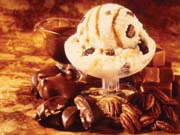
    Some polyols can replace sucrose in a 1:1 ratio, without the addition of other ingredients, while other polyols work better in a systems approach. In other words, just as not all carbohydrates are created equal, neither are all polyols.

    Sorbitol, for example, can effectively replace all the sucrose in ice cream, but consumption levels of sorbitol must be limited because of sorbitol's laxative nature. This is not something a marketer wants to be associated with. Take it from the olestra folks.

    Recent research conducted at Penn State University showed that a specific maltitol syrup is able to replace all of the added sugar in ice cream without the addition of bulking agents or high-intensity sweeteners. The syrup contains 25% water, and handles like sucrose solutions. The molecular weights of maltitol and sucrose are very similar, and the two have comparable solubilities and relative effects on freezing point depression. At the recommended replacement levels, the maltitol syrup exhibits the sweetness of sucrose, does not require adjustments for freezing point like some other polyols require and is easily adaptable to ice creams with fat contents of 8% or higher.

    As mentioned, another way to lower carbohydrates in frozen desserts is to take a systems approach. For example, at the recent Worldwide Food Expo, a low-glycemic, no-sugar-added ice cream was sampled that was made with an ingredient blend of lactitol, polydextrose, mono and diglycerides, locust bean gum, cellulose gum, guar gum, sucralose and carrageen.

    Another supplier showed how erythritol can be used at levels up to 10% in frozen dairy desserts along with most intense sweeteners.

    Because most ice cream manufacturing handbooks and textbooks do not address the use of polyols in mix formulations, it is necessary to work closely with suppliers of polyols, stabilizers and high-intensity sweeteners to identify your company's perfect, signature, low-carb frozen dessert formulation. Good luck.

    Share This Story

    Looking for a reprint of this article?
    From high-res PDFs to custom plaques, order your copy today!

    D. Berry is a former freelance contributor to Dairy Foods.

    Recommended Content

    JOIN TODAY
    to unlock your recommendations.

    Already have an account? Sign In

    • Lifeway Organic Kefir in different flavors inside a refrigerated grocery shelf.

      Dairy Foods names Lifeway Foods 2025 Processor of the Year

      Lifeway Foods donates $10,000 to wildfire victims,...
      Dairy Foods & Beverages
      By: Brian Berk
    • Two female farmers are standing in a field, holding a large milk canister, looking at several cows at dairy farm.

      Honoring Women Leaders Shaping the Dairy Industry

      For the fourth consecutive year, Dairy Foods is proud to...
      Innovation
      By: Barbara Harfmann
    • Main feature for State of the Industry with dairy products album cover with a gradient circular--patterned backgorund.

      2025 State of the Dairy Industry

      Welcome to the 2025 State of the Industry report. For...
      Ingredients for Dairy Processors
    Manage My Account
    • eMagazine Subscription
    • Dairy Foods News & Views Newsletter
    • Online Registration
    • Manage My Preferences
    • Subscription Customer Service
    • Connect with Dairy Foods

    More Videos

    Popular Stories

    Close up of a whipped frozen dessert with a light green color.

    The keys to high-protein dairy formulations

    A young Asian mother holding her son and a sippy cup, an older woman is in the blurred background.

    Finding the right infant formula is crucial to a baby’s growth and development

    A row of Frios Gourmet Pops with a tie dye pattern as a background.

    How Frios Gourmet Pops delivers happiness

    Outlook Report: Women in Dairy

    Products

    Probiotic Ice Cream: Science and Technology

    Probiotic Ice Cream: Science and Technology

    See More Products
    Let's Talk Dairy podcast promo

    Related Articles

    • Lab Talk: Ingredient Trends from Abroad

      See More
    • Lab Talk: A Juicy Opportunity

      See More
    • Lab Talk: Language that Sells

      See More

    Related Products

    See More Products
    • Handbook of Antioxidants for Food Preservation, 1st Edition

    • analytical.jpg

      Analytical Methods for Milk and Milk Products

    See More Products
    ×

    Stay ahead of the curve. Unlock a dose of cutting-edge insights.

    Receive our premium content directly to your inbox.

    SIGN-UP TODAY
    • RESOURCES
      • Advertise
      • Contact Us
      • Directories
      • Store
      • Want More
    • SIGN UP TODAY
      • Create Account
      • eMagazine
      • Newsletter
      • Customer Service
      • Manage Preferences
    • SERVICES
      • Marketing Services
      • Reprints
      • Market Research
      • List Rental
      • Survey/Respondent Access
    • STAY CONNECTED
      • LinkedIn
      • Facebook
      • YouTube
      • X (Twitter)
    • PRIVACY
      • PRIVACY POLICY
      • TERMS & CONDITIONS
      • DO NOT SELL MY INFORMATION
      • PRIVACY REQUEST
      • ACCESSIBILITY

    Copyright ©2026. All Rights Reserved BNP Media, Inc. and BNP Media II, LLC.

    Design, CMS, Hosting & Web Development :: ePublishing