Osteoporosis & Dairy Foods
Osteoporosis is characterized as the progressive loss of bone mass and
bone tissue deterioration, leading to skeletal weakness and an
increased risk for bone fractures. Approximately 10 million U.S. adults
aged 50 years and older suffer from osteoporosis while another 33 – 34
million have low bone mass and are at high risk for the disease.
Osteoporosis is characterized as the progressive loss of bone mass and bone tissue deterioration, leading to skeletal weakness and an increased risk for bone fractures. Approximately 10 million U.S. adults aged 50 years and older suffer from osteoporosis while another 33 – 34 million have low bone mass and are at high risk for the disease. Bone mass later in life is determined primarily by peak bone mass development, of which more than 90% is attained by approximately 20 years of age and 99% by about 26 years. Osteoporosis and low bone mass is recognized to be a “pediatric disease with geriatric consequences.” Although women are four times more likely than men to develop osteoporosis, this disease also affects men and occurs in all ages and ethnic groups. Osteoporosis is responsible for approximately 1.5 million spontaneous bone fractures each year, incurring direct healthcare costs of up to $17 billion. It is estimated that by 2020, half of Americans over age 50 will have, or be at high risk of, osteoporosis if preventative measures are not taken.

Cow’s milk and other dairy foods are the major source of calcium in the U.S. diet, providing more than 70% of the calcium available in the food supply. In an analysis of food sources of calcium, milk and milk products provided 83% of the calcium in the diets of young children, 77% of the calcium in adolescent females’ diets, and between 65% and 72% of the calcium in adults’ diets. Pragmatically, it is difficult to achieve dietary calcium recommendations without consuming dairy products. Milk and other dairy foods also contribute substantial amounts of other essential nutrients to the U.S. diet. In a report by the 2005 Dietary Guidelines Advisory Committee (DGAC), nutrients identified as ‘nutrients of concern’ that Americans are not getting enough of include vitamin A, C, and E, calcium, magnesium, potassium, and fiber for adults and vitamin E, calcium, magnesium, potassium, and fiber for children. DGAC recognized that inclusion of the recommended three servings a day of milk and milk products contributes important amounts of ‘nutrients of concern’ for adults and children.
The low dietary intake of calcium by adolescents is of particular concern because it coincides with a period of rapid skeletal growth - which represents a “window of opportunity” to maximize bone mass. About 90% of humans’ bone mass is achieved by age 20.
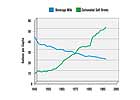
The calcium crisis may be attributed, at least in part, to changes in food consumption patterns of the U.S. population over the past century, in particular the trend toward consuming less milk and more soft drinks. In 1945, Americans consumed more than four times as much milk as soft drinks. In contrast, in 1998, 2 1/3 times more soda was consumed than milk (Fig. 1). After age 8, the intake of soft drinks increases dramatically and by age 18, adolescents drink approximately 19 oz/day whereas milk consumption decreases to less than one serving per day.
The amount and quality of the skeleton achieved by adulthood and, hence, the potential susceptibility to osteoporosis, depends on a number of factors including genetic tendency, nutrient intake and physical activity. The importance of achieving peak bone mass in early adulthood for maximal bone strength later in life was first suggested from survey studies showing that older individuals had lower bone mass than younger individuals but that the degree of bone loss was proportionately the same in those with high and low starting bone mass. These observations suggested that, in general, bone mass tracks across the lifespan and that individuals who are at the high end of the population for bone mass development at age 30 will also be at the high end at age 70. This same pattern of bone mass distribution has also been observed in studies over short time spans in young children and in older adults.
This conclusion was officially adopted in the 2005 Dietary Guidelines for Americans.
Educating consumers about the importance of getting at least three servings of dairy foods a day to help reduce the risk of developing osteoporosis provides an opportunity to communicate the full nutrient rich package that dairy foods deliver in addition to calcium. The message to consume three servings of dairy a day gives consumers an easy actionable goal to achieve the bone building nutrient package that dairy delivers. Dairy foods are a great tasting and convenient way to enhance the nutrient content of the diet, while helping to reduce the risk of developing osteoporosis.
Osteoporosis is characterized as the progressive loss of bone mass and bone tissue deterioration, leading to skeletal weakness and an increased risk for bone fractures. Approximately 10 million U.S. adults aged 50 years and older suffer from osteoporosis while another 33 – 34 million have low bone mass and are at high risk for the disease. Bone mass later in life is determined primarily by peak bone mass development, of which more than 90% is attained by approximately 20 years of age and 99% by about 26 years. Osteoporosis and low bone mass is recognized to be a “pediatric disease with geriatric consequences.” Although women are four times more likely than men to develop osteoporosis, this disease also affects men and occurs in all ages and ethnic groups. Osteoporosis is responsible for approximately 1.5 million spontaneous bone fractures each year, incurring direct healthcare costs of up to $17 billion. It is estimated that by 2020, half of Americans over age 50 will have, or be at high risk of, osteoporosis if preventative measures are not taken.
Nutritional value of milk
With respect to diet, dairy foods contribute a number of bone-building nutrients. Approximately 99% of total body calcium is found in the skeleton. The amount of bone accumulated during growth is related to the amount of calcium consumed. Because of the increased rate of bone growth during childhood and adolescence, calcium needs are high during these years. Unfortunately, many youth, especially those older than 8 years of age, fail to meet their needs for calcium, primarily because of their low intake of dairy foods.Cow’s milk and other dairy foods are the major source of calcium in the U.S. diet, providing more than 70% of the calcium available in the food supply. In an analysis of food sources of calcium, milk and milk products provided 83% of the calcium in the diets of young children, 77% of the calcium in adolescent females’ diets, and between 65% and 72% of the calcium in adults’ diets. Pragmatically, it is difficult to achieve dietary calcium recommendations without consuming dairy products. Milk and other dairy foods also contribute substantial amounts of other essential nutrients to the U.S. diet. In a report by the 2005 Dietary Guidelines Advisory Committee (DGAC), nutrients identified as ‘nutrients of concern’ that Americans are not getting enough of include vitamin A, C, and E, calcium, magnesium, potassium, and fiber for adults and vitamin E, calcium, magnesium, potassium, and fiber for children. DGAC recognized that inclusion of the recommended three servings a day of milk and milk products contributes important amounts of ‘nutrients of concern’ for adults and children.
A calcium crisis in America
The major concern in the U.S. is meeting current recommended intakes of calcium. Unfortunately, most Americans are not meeting the dietary recommendations for calcium, particularly young and adolescent girls and older adults. USDA surveys indicate that nine out of 10 teenage girls and adult women, and seven out of 10 teenage boys and adult men fail to meet calcium recommendations. Only 4 – 5% of women ages 50 to 70 and older consume 100% of the calcium recommendation. Individuals, both male and female, after age 10, do not reach recommended calcium intakes for either males or females. After age 50, the mean intakes by females and males are only about 600 and 700 mg/day, respectively, a level that is only 50% of the recommended intake.The low dietary intake of calcium by adolescents is of particular concern because it coincides with a period of rapid skeletal growth - which represents a “window of opportunity” to maximize bone mass. About 90% of humans’ bone mass is achieved by age 20.
The calcium crisis may be attributed, at least in part, to changes in food consumption patterns of the U.S. population over the past century, in particular the trend toward consuming less milk and more soft drinks. In 1945, Americans consumed more than four times as much milk as soft drinks. In contrast, in 1998, 2 1/3 times more soda was consumed than milk (Fig. 1). After age 8, the intake of soft drinks increases dramatically and by age 18, adolescents drink approximately 19 oz/day whereas milk consumption decreases to less than one serving per day.
Figure 1.
Importance of peak bone mass
In the past 35 years, numerous studies in children, adults and older adults have demonstrated the importance of peak bone mass development for reducing the risk of osteoporosis and bone fracture rates later in life. The bones in the human skeleton grow in length, width, and in mass in parallel with overall body growth. About 85-90% of final adult bone mass is acquired by age 18 in girls and about 20 years in boys. Bone formation and bone resorption (loss) is an ongoing process that is in balance under normal conditions in adults. Under conditions of developing osteoporosis from aging and loss of estrogen (menopause), however, the rate of bone resorption exceeds the rate of bone formation resulting in a reduction in bone mass and, hence, in bone strength.The amount and quality of the skeleton achieved by adulthood and, hence, the potential susceptibility to osteoporosis, depends on a number of factors including genetic tendency, nutrient intake and physical activity. The importance of achieving peak bone mass in early adulthood for maximal bone strength later in life was first suggested from survey studies showing that older individuals had lower bone mass than younger individuals but that the degree of bone loss was proportionately the same in those with high and low starting bone mass. These observations suggested that, in general, bone mass tracks across the lifespan and that individuals who are at the high end of the population for bone mass development at age 30 will also be at the high end at age 70. This same pattern of bone mass distribution has also been observed in studies over short time spans in young children and in older adults.
Dairy reduces risk
In its 2005 report, the DGAC concluded that there is strong and consistent evidence that the intake of milk products is protective against osteoporosis: “Consuming three servings of milk and milk products each day can reduce the risk of low bone mass and contribute important amounts of many nutrients. Furthermore, this amount of milk product consumption may have additional benefits and is not associated with increased body weight. Therefore, the intake of three cups of milk products per day is recommended.”This conclusion was officially adopted in the 2005 Dietary Guidelines for Americans.
Educating consumers about the importance of getting at least three servings of dairy foods a day to help reduce the risk of developing osteoporosis provides an opportunity to communicate the full nutrient rich package that dairy foods deliver in addition to calcium. The message to consume three servings of dairy a day gives consumers an easy actionable goal to achieve the bone building nutrient package that dairy delivers. Dairy foods are a great tasting and convenient way to enhance the nutrient content of the diet, while helping to reduce the risk of developing osteoporosis.
Looking for a reprint of this article?
From high-res PDFs to custom plaques, order your copy today!