Ingredient Focus
An update on fiber and dairy

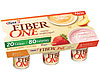 The evidence continues to mount regarding the benefits of consuming ample dietary fiber-either directly through plant foods such as fruits, vegetables and whole grains, or through fiber-enrichment of foods including those based on dairy. “Fiber has been proven to play an important role in health including both digestive health and as part of weight management,” says Suzanne Skapyak, a registered dietician with the General Mills Bell Institute of Health and Nutrition, Minneapolis.
The benefits are many, and they vary by fiber type. Non-fermentable fibers, more commonly called insoluble fibers, are well known for their laxation effect. Fermentable fibers, also called soluble fibers, resist digestion and absorption in the small intestine, with complete or partial fermentation taking place in the large intestine. This action has been strongly associated with reducing the risk of colon cancer.
Insoluble fiber ingredients often contain cellulose, hemicellulose, lignin or resistant starch; whereas many soluble fiber ingredients contain fructooligosaccharide, gum, inulin, pectin, polydextrose or resistant maltodextrin.
Epidemiological studies have shown that diets low in saturated fat and cholesterol and high in fiber help reduce the risk of certain cancers, diabetes, digestive disorders and heart disease. Most recently, eating more fiber during the first trimester of pregnancy has been shown to reduce the risk of developing preeclampsia, a potentially fatal condition characterized by elevated blood pressure.
The findings, published July 17 in the online edition of the American Journal of Hypertension, included more than 1,500 pregnant women in Washington State who filled out a questionnaire listing the types of food they ate, both before they conceived and during the early weeks of their pregnancy. Women who consumed 21.2g or more of fiber per day were 72% less likely to develop preeclampsia, compared with women who ate less than 11.9g a day. Triglyceride concentrations were lower and levels of high-density lipoprotein (HDL) or “good” cholesterol concentrations were higher in women consuming more fiber.
The authors, from the Swedish Medical Center and the University of Washington School of Public Health and Community Medicine in Seattle, noted that adding an extra 5g of fiber a day was associated with a 14% reduction in the risk of developing preeclampsia.
In most countries, sufficient levels of fiber are consumed through the regular diet. Unfortunately, Americans, in general, do not eat enough of the “right” foods (whole grains, fruits and vegetables) to consume adequate amounts of fiber, naturally. This is why fortification has become quite common.
And the encouraging news is that according to the 2008 International Food Information Council Foundation Food & Health Survey, 77% (n=915) of adults responding to a web-based survey conducted earlier this year said they are trying to consume more fiber in their diet. As Americans realize fiber’s numerous health benefits including helping with weight management, they’re seeking easy ways to fit it into their diets. Dairy foods manufacturers can help by developing products that appeal to consumers.
Numerous suppliers showcased their fiber ingredients in dairy applications at this year’s IFT. For example, Grain Processing Corp., Muscatine, Iowa, sampled Maltrin OR organic rice maltodextrin in an organic soft-serve frozen dairy dessert. This hypoallergenic ingredient adds body and texture to a variety of frozen desserts without excessive sweetness or freezing-point depression.
Orafti Synergy1 is a prebiotic fiber from Beneo-Orafti, Morris Plains, N.J. New findings examining life-long supplementation with Orafti Synergy1 in rats demonstrate its beneficial impact in the aging process resulting in an improved quality of life and life prolongation.
Within the microbial ecology of the intestinal tract, age-related changes occur in the population levels of dominant groups of bacteria. Such alterations can contribute to malfunctioning of the intestines, leading to inconveniences such as constipation, as well as an increased risk of developing diseases such as colitis or colon cancer. Ecological changes in the gut microflora of elderly individuals may induce physiological effects that go beyond the gastrointestinal tract and adversely affect overall health. Prebiotic and synbiotic supplementation has been shown to restore the intestinal ecology and to improve well-being in the elderly.
New VegeFull from ADM, Decatur, Ill., provides a convenient way for food manufacturers to take advantage of the many nutritional benefits of beans when creating better-for-you foods, particularly foods designed to be a source of fiber. Beans are the only food that appears twice on the USDA food pyramid, in both the “meat and bean” category and the “vegetable” category. When incorporated into formulations, VegeFull bean ingredients not only provide a source of protein and fiber, but can also add up to a full serving of vegetables. It can be used in dairy applications such as dips and spreads.
Through a joint venture with ADM, Matsutani America, Inc., Decatur, Ill., markets Fibersol-2, which is produced from corn starch by pyrolysis and subsequent enzymatic treatment (similar to the process to manufacture conventional maltodextrins) to purposefully convert a portion of the normal alpha-1,4 glucose linkages to random 1,2-, 1,3- and 1,4- alpha or beta linkages. The human digestive system effectively digests only alpha 1,4- linkages; therefore the other linkages render the molecules resistant to digestion. Thus, Fibersol-2 is generally recognized as safe as maltodextrin. It is approximately 90% soluble fiber and has application in most dairy foods.
A new range of prebiotic dietary fibers from Tate & Lyle, Decatur, Ill.-Promitor Soluble Corn Fiber-is described as being easy to integrate into existing dairy product formulations without compromising flavor or texture. Tate & Lyle has sampled Promitor in frozen desserts such as a no-sugar-added orange sherbet, chocolate mousse ice cream and premium light ice cream. Other dairy applications include sour cream without added milk solids and a chocolate milk drink that is suitable for the school lunch program.
Nutriose soluble fiber from National Starch Food Innovation, Bridgewater, N.J., provides fiber fortification and prebiotic activity in beverages, dairy products and other foods. At only 2 calories per gram, Nutriose keeps calories low and assists with sugar reduction in many formulations. Additionally, Nutriose is considered a low-glycemic ingredient carbohydrate.
Fiber Krunch fiber crisp, from Cargill Inc., Minneapolis, is a high-fiber, extruded, crunchy crisp inclusion that contains 35% dietary fiber. Made with MaizeWise whole grain corn, Fiber Krunch can be added to the chocolate coating of frozen novelties.
Cargill also sampled its Barliv barley betafiber in a juice beverage. Cargill conducted clinical trials with the University of Minnesota to test the efficacy of Barlív barley betafiber and submitted a petition to FDA in 2006 for an amendment to the soluble fiber health claim to include Barlív barley betafiber. Barliv barley betafiber is now authorized by FDA as a source of soluble fiber eligible for the soluble fiber claim: Diets low in saturated fat and cholesterol that include 3g per day of beta-glucan soluble fiber from barley betafiber may reduce the risk of heart disease.
GTC Nutrition, Golden, Colo., a business unit of Corn Products International Inc., debuts BioAgave agave active fiber, which features a branched structure and high degree of polymerization. As a result, it offers unique functionalities and superior stability, particularly in liquid form. Derived from the Blue Weber agave plant in Mexico, BioAgave contains 90% inulin.
Viscofiber from Natraceutical Group, Edmonton, Alberta, Canada, is a high-viscosity fiber with a high concentration of oat beta-glucan. Its health benefits are said to include a healthier heart, longer sustained energy, easier weight control and improved digestion. Viscofiber can help maintain heart health by re-routing dietary cholesterol and maintaining cholesterol levels that are already within the normal range. It helps control blood sugar levels to help maintain more balanced energy levels. It also moderates glucose absorption in the body to reduce cravings, helping the body utilize nutrients longer and providing the body with more energy. The ingredient can be incorporated into beverages, yogurts, ice cream and other foods.
FiberRite RW, a new generation resistant starch, from MGP Ingredients, Atchison, Kan., delivers dietary fiber, performs as a partial fat replacer and reduces caloric content in a variety of processed foods, including viscous dairy-based products.
The benefits are many, and they vary by fiber type. Non-fermentable fibers, more commonly called insoluble fibers, are well known for their laxation effect. Fermentable fibers, also called soluble fibers, resist digestion and absorption in the small intestine, with complete or partial fermentation taking place in the large intestine. This action has been strongly associated with reducing the risk of colon cancer.
Insoluble fiber ingredients often contain cellulose, hemicellulose, lignin or resistant starch; whereas many soluble fiber ingredients contain fructooligosaccharide, gum, inulin, pectin, polydextrose or resistant maltodextrin.
Epidemiological studies have shown that diets low in saturated fat and cholesterol and high in fiber help reduce the risk of certain cancers, diabetes, digestive disorders and heart disease. Most recently, eating more fiber during the first trimester of pregnancy has been shown to reduce the risk of developing preeclampsia, a potentially fatal condition characterized by elevated blood pressure.
The findings, published July 17 in the online edition of the American Journal of Hypertension, included more than 1,500 pregnant women in Washington State who filled out a questionnaire listing the types of food they ate, both before they conceived and during the early weeks of their pregnancy. Women who consumed 21.2g or more of fiber per day were 72% less likely to develop preeclampsia, compared with women who ate less than 11.9g a day. Triglyceride concentrations were lower and levels of high-density lipoprotein (HDL) or “good” cholesterol concentrations were higher in women consuming more fiber.
The authors, from the Swedish Medical Center and the University of Washington School of Public Health and Community Medicine in Seattle, noted that adding an extra 5g of fiber a day was associated with a 14% reduction in the risk of developing preeclampsia.
We all need more fiber
Indeed, this new research shows that pregnant women might benefit from increasing their dietary fiber intake. This is on top of the fact that, overall, most Americans struggle to consume even half of the suggested amount of fiber, which is 25g per day for women and 38g for men.In most countries, sufficient levels of fiber are consumed through the regular diet. Unfortunately, Americans, in general, do not eat enough of the “right” foods (whole grains, fruits and vegetables) to consume adequate amounts of fiber, naturally. This is why fortification has become quite common.
And the encouraging news is that according to the 2008 International Food Information Council Foundation Food & Health Survey, 77% (n=915) of adults responding to a web-based survey conducted earlier this year said they are trying to consume more fiber in their diet. As Americans realize fiber’s numerous health benefits including helping with weight management, they’re seeking easy ways to fit it into their diets. Dairy foods manufacturers can help by developing products that appeal to consumers.
More fiber options for dairy
Though all fiber ingredients have plant origins, the plants from which they are derived continues to grow. For example, at the recent IFT Annual Meeting & Food Expo in New Orleans, dates, fenugreek, purslane and sweet potato greens were identified as emerging sources of fiber ingredients. “These sources create great opportunities for the food industry,” said Cal Kelly, president of Emerald Seed Products in Saskatchewan, Canada, where his company cultivates and processes legumes and fenugreeks for fiber.Numerous suppliers showcased their fiber ingredients in dairy applications at this year’s IFT. For example, Grain Processing Corp., Muscatine, Iowa, sampled Maltrin OR organic rice maltodextrin in an organic soft-serve frozen dairy dessert. This hypoallergenic ingredient adds body and texture to a variety of frozen desserts without excessive sweetness or freezing-point depression.
Orafti Synergy1 is a prebiotic fiber from Beneo-Orafti, Morris Plains, N.J. New findings examining life-long supplementation with Orafti Synergy1 in rats demonstrate its beneficial impact in the aging process resulting in an improved quality of life and life prolongation.
Within the microbial ecology of the intestinal tract, age-related changes occur in the population levels of dominant groups of bacteria. Such alterations can contribute to malfunctioning of the intestines, leading to inconveniences such as constipation, as well as an increased risk of developing diseases such as colitis or colon cancer. Ecological changes in the gut microflora of elderly individuals may induce physiological effects that go beyond the gastrointestinal tract and adversely affect overall health. Prebiotic and synbiotic supplementation has been shown to restore the intestinal ecology and to improve well-being in the elderly.
New VegeFull from ADM, Decatur, Ill., provides a convenient way for food manufacturers to take advantage of the many nutritional benefits of beans when creating better-for-you foods, particularly foods designed to be a source of fiber. Beans are the only food that appears twice on the USDA food pyramid, in both the “meat and bean” category and the “vegetable” category. When incorporated into formulations, VegeFull bean ingredients not only provide a source of protein and fiber, but can also add up to a full serving of vegetables. It can be used in dairy applications such as dips and spreads.
Through a joint venture with ADM, Matsutani America, Inc., Decatur, Ill., markets Fibersol-2, which is produced from corn starch by pyrolysis and subsequent enzymatic treatment (similar to the process to manufacture conventional maltodextrins) to purposefully convert a portion of the normal alpha-1,4 glucose linkages to random 1,2-, 1,3- and 1,4- alpha or beta linkages. The human digestive system effectively digests only alpha 1,4- linkages; therefore the other linkages render the molecules resistant to digestion. Thus, Fibersol-2 is generally recognized as safe as maltodextrin. It is approximately 90% soluble fiber and has application in most dairy foods.
A new range of prebiotic dietary fibers from Tate & Lyle, Decatur, Ill.-Promitor Soluble Corn Fiber-is described as being easy to integrate into existing dairy product formulations without compromising flavor or texture. Tate & Lyle has sampled Promitor in frozen desserts such as a no-sugar-added orange sherbet, chocolate mousse ice cream and premium light ice cream. Other dairy applications include sour cream without added milk solids and a chocolate milk drink that is suitable for the school lunch program.
Nutriose soluble fiber from National Starch Food Innovation, Bridgewater, N.J., provides fiber fortification and prebiotic activity in beverages, dairy products and other foods. At only 2 calories per gram, Nutriose keeps calories low and assists with sugar reduction in many formulations. Additionally, Nutriose is considered a low-glycemic ingredient carbohydrate.
Fiber Krunch fiber crisp, from Cargill Inc., Minneapolis, is a high-fiber, extruded, crunchy crisp inclusion that contains 35% dietary fiber. Made with MaizeWise whole grain corn, Fiber Krunch can be added to the chocolate coating of frozen novelties.
Cargill also sampled its Barliv barley betafiber in a juice beverage. Cargill conducted clinical trials with the University of Minnesota to test the efficacy of Barlív barley betafiber and submitted a petition to FDA in 2006 for an amendment to the soluble fiber health claim to include Barlív barley betafiber. Barliv barley betafiber is now authorized by FDA as a source of soluble fiber eligible for the soluble fiber claim: Diets low in saturated fat and cholesterol that include 3g per day of beta-glucan soluble fiber from barley betafiber may reduce the risk of heart disease.
GTC Nutrition, Golden, Colo., a business unit of Corn Products International Inc., debuts BioAgave agave active fiber, which features a branched structure and high degree of polymerization. As a result, it offers unique functionalities and superior stability, particularly in liquid form. Derived from the Blue Weber agave plant in Mexico, BioAgave contains 90% inulin.
Viscofiber from Natraceutical Group, Edmonton, Alberta, Canada, is a high-viscosity fiber with a high concentration of oat beta-glucan. Its health benefits are said to include a healthier heart, longer sustained energy, easier weight control and improved digestion. Viscofiber can help maintain heart health by re-routing dietary cholesterol and maintaining cholesterol levels that are already within the normal range. It helps control blood sugar levels to help maintain more balanced energy levels. It also moderates glucose absorption in the body to reduce cravings, helping the body utilize nutrients longer and providing the body with more energy. The ingredient can be incorporated into beverages, yogurts, ice cream and other foods.
FiberRite RW, a new generation resistant starch, from MGP Ingredients, Atchison, Kan., delivers dietary fiber, performs as a partial fat replacer and reduces caloric content in a variety of processed foods, including viscous dairy-based products.
Looking for a reprint of this article?
From high-res PDFs to custom plaques, order your copy today!


