Culturally Speaking
While the range of cultured dairy foods available in the United States continues to expand beyond cultured buttermilk, sour cream and yogurt, we can learn a lot by looking around the world to see what types of other products different cultures (no pun intended) produce.

While the range of cultured dairy foods available in the United States continues to expand beyond cultured buttermilk, sour cream and yogurt, we can learn a lot by looking around the world to see what types of other products different cultures (no pun intended) produce. During the last two years, I have spent a great deal of time in Ukraine, which has a long history of fermented milk consumption.
Products such as kefir, sour cream, ryazhenka, and yogurt are traditional components of the Ukrainian diet. In addition to the inherent nutritional value of the products, regional Ukrainian fermented dairy products are often revered for their putative functional properties and beneficial health effect (probiotics effects).
Ilya Ilich Mechnikov, a Ukrainian-born zoologist and microbiologist, who received the Nobel Prize in 1908, suggested that the longevity of Caucasians was related to their high intake of milk products fermented with lactic acid bacteria. While many of the fermented dairy products available in Ukraine are similar to those found in the U.S. market, there is generally a wider range of composition available-particularly with respect to fat level. In addition there are some unique products.
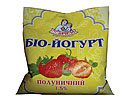
Interestingly, yogurt (spoonable and drinking), the number-one fermented milk product in the U.S., ranks last place in Ukraine, although recent reports indicate production and consumption of yogurt is increasing. Cultured buttermilk is not generally available for retail sale in Ukraine. Rather, people prepare sour milk from raw milk obtained from local farms.
Many of the Ukrainian products are the same as in the U.S. What's the difference?
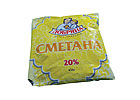
Methods and cultures used to manufacture smetana (sour cream) and yogurt are the same as those employed in the U.S. The primary difference in these products is that gum-based stabilizer systems are not employed and the range of fat contents available is wider. Smetana, for example, is manufactured with fat levels varying from as low as 10% (a pourable product) to levels of more than 40%, which is a very thick and spoonable product. Sour cream products of various fat levels are used extensively in Ukrainian cuisine. The fat content of yogurt varies from about 0.5% fat up to as much as 4% fat. Much of the yogurt is sold as yogurt drink, which is available in the same fat contents. When flavored, yogurts are flavored with natural fruit flavors.
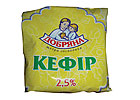
In traditional manufacture, the heated milk is cooled to a temperature of 20-22°C and then inoculated with "kefir-grains," a naturally occurring undefined culture composed of strains of the yeasts Saccharomyces kefir, Torula, and Candida kefir, and several different types of bacteria including Lactobacillus kefir, Leuconostoc species and various strains of mesophilic lactococci. The exact composition of the grain is variable and is still an active area of research. Kefir grains, when isolated from freshly fermented product, look like small cauliflowers. Following incubation for approximately 12-16 hours, a smooth coagulum with a TA of 0.8 to 1% (lactic acid) is formed. The coagulum is broken and then strained through a stainless steel screen or cheese cloth to remove the kefir grains, which increase in size and number during incubation. The recovered grains are used as starter for the next day's production (a process known as "back slopping") or dried for use at a later time.
Kefir can also be manufactured using commercially available starter culture systems. These starters are formulated to contain the "essential" yeast and bacteria required to produce kefir. The primary difference in the manufacturing procedure is that there is no need to strain the product to remove kefir grains. This simplifies processing considerably and reduces the risk of contamination of subsequent batches. However, purists insist the best product must be made using kefir grains.
Due to the metabolic activity of the yeasts contained in the product, kefir contains both ethanol and carbon dioxide. The level of these compounds depends on the relative amount of yeast in the inoculum as well as the temperature of incubation and storage. Production of carbon dioxide during storage (by strains of yeast and Leucosnostoc) can lead to undesirable swelling of the packages at the retail level. This can be partially controlled by culture selection and adequate refrigeration.
A well-made kefir has a clean acid and diacetyl flavor with a slight fizz. Though it is possible to achieve alcohol contents of approximately 2%, most products made using the traditional method contain no more than 1% and lower levels are normally found in products made using the more defined starters. Kefir is available in plain or a variety of fruit flavors in packages, ranging from 250 ml to one liter or more. The slight effervescence provided by carbon dioxide makes kefir very refreshing. Some specialized U.S. companies have been very successful in introducing kefir to a limited audience. Now that yogurt based smoothies have been embraced, there may be more opportunity for kefir as an upscale alternative product.
After cooking, the product is cooled to 39°C, inoculated with a starter culture composed solely of Streptococcus thermophilus and incubated for approximately eight hours. The product may be made "set style" with the fermentation occurring in the retail package or stirred style with the fermentation occurring in a large processor with packaging following fermentation. The product has a viscous consistency with a delicate cooked-milk and clean acid flavor. It is generally consumed without the addition of flavoring materials. Ryazhenka is another alternative fermented milk beverage that may be successful now that yogurt drinks have become mainstream. The product may have potential, particularly as a niche product for food purists.
Various strains of bacteria, including species of Bifidobacterium, Lactobacillus, Streptococcus or Probionibactrium may be added to these products. More information regarding putative health benefits appears on product labels since labeling and health-claim regulations are not as strict or as strictly enforced as in the U.S. Probiotic products have a long history in Ukraine and it is clear that Ukrainians seriously consider the health-promoting aspects of these products when making purchase decisions.
A great deal of research has been conducted in Ukraine on the putative health benefits of probiotic-containing traditional Ukrainian fermented milk products. Currently, our laboratory at Penn State is characterizing traditional probiotic cultures used in Ukraine to determine how these strains differ from those used in other parts of the world.
While the range of cultured dairy foods available in the United States continues to expand beyond cultured buttermilk, sour cream and yogurt, we can learn a lot by looking around the world to see what types of other products different cultures (no pun intended) produce. During the last two years, I have spent a great deal of time in Ukraine, which has a long history of fermented milk consumption.
Products such as kefir, sour cream, ryazhenka, and yogurt are traditional components of the Ukrainian diet. In addition to the inherent nutritional value of the products, regional Ukrainian fermented dairy products are often revered for their putative functional properties and beneficial health effect (probiotics effects).
Ilya Ilich Mechnikov, a Ukrainian-born zoologist and microbiologist, who received the Nobel Prize in 1908, suggested that the longevity of Caucasians was related to their high intake of milk products fermented with lactic acid bacteria. While many of the fermented dairy products available in Ukraine are similar to those found in the U.S. market, there is generally a wider range of composition available-particularly with respect to fat level. In addition there are some unique products.
In Ukraine and most of Eastern Europe, the designation "BIO" indicates a product contains live and active culture, enticing to many Ukrainians.
What types of fermented dairy products are available in Ukraine?
Most fluid milk in Ukraine is aseptically processed and packaged, and is shelf-stable. Thus, the refrigerated dairy case in a typical Ukrainian supermarket contains a variety of fermented dairy products including kefir, sour cream (smetana), ryazhenka (cooked, fermented milk) and yogurt. In order of total volume of production, kefir is the number-one fermented milk product in Ukraine followed by sour cream and ryazhneka.Interestingly, yogurt (spoonable and drinking), the number-one fermented milk product in the U.S., ranks last place in Ukraine, although recent reports indicate production and consumption of yogurt is increasing. Cultured buttermilk is not generally available for retail sale in Ukraine. Rather, people prepare sour milk from raw milk obtained from local farms.
Many of the Ukrainian products are the same as in the U.S. What's the difference?
Methods and cultures used to manufacture smetana (sour cream) and yogurt are the same as those employed in the U.S. The primary difference in these products is that gum-based stabilizer systems are not employed and the range of fat contents available is wider. Smetana, for example, is manufactured with fat levels varying from as low as 10% (a pourable product) to levels of more than 40%, which is a very thick and spoonable product. Sour cream products of various fat levels are used extensively in Ukrainian cuisine. The fat content of yogurt varies from about 0.5% fat up to as much as 4% fat. Much of the yogurt is sold as yogurt drink, which is available in the same fat contents. When flavored, yogurts are flavored with natural fruit flavors.
The refrigerated dairy case in a typical Ukrainian supermarket contains a variety of fermented dairy products, including kefir (a fermented milk).
What is kefir?
Kefir is a fermented milk drink available on a limited basis in the U.S. market. The product is manufactured by standardizing milk to the desired fat and milk solids not fat level (typically 0.5-4% fat and 8-11% milk solids not fat), followed by pasteurization and then a heat treatment of 180°F for 30 minutes or equivalent. This is meant to denature whey proteins to increase the water-holding capacity of the coagulum and prevent syneresis (wheying off) during storage.In traditional manufacture, the heated milk is cooled to a temperature of 20-22°C and then inoculated with "kefir-grains," a naturally occurring undefined culture composed of strains of the yeasts Saccharomyces kefir, Torula, and Candida kefir, and several different types of bacteria including Lactobacillus kefir, Leuconostoc species and various strains of mesophilic lactococci. The exact composition of the grain is variable and is still an active area of research. Kefir grains, when isolated from freshly fermented product, look like small cauliflowers. Following incubation for approximately 12-16 hours, a smooth coagulum with a TA of 0.8 to 1% (lactic acid) is formed. The coagulum is broken and then strained through a stainless steel screen or cheese cloth to remove the kefir grains, which increase in size and number during incubation. The recovered grains are used as starter for the next day's production (a process known as "back slopping") or dried for use at a later time.
Kefir can also be manufactured using commercially available starter culture systems. These starters are formulated to contain the "essential" yeast and bacteria required to produce kefir. The primary difference in the manufacturing procedure is that there is no need to strain the product to remove kefir grains. This simplifies processing considerably and reduces the risk of contamination of subsequent batches. However, purists insist the best product must be made using kefir grains.
Due to the metabolic activity of the yeasts contained in the product, kefir contains both ethanol and carbon dioxide. The level of these compounds depends on the relative amount of yeast in the inoculum as well as the temperature of incubation and storage. Production of carbon dioxide during storage (by strains of yeast and Leucosnostoc) can lead to undesirable swelling of the packages at the retail level. This can be partially controlled by culture selection and adequate refrigeration.
A well-made kefir has a clean acid and diacetyl flavor with a slight fizz. Though it is possible to achieve alcohol contents of approximately 2%, most products made using the traditional method contain no more than 1% and lower levels are normally found in products made using the more defined starters. Kefir is available in plain or a variety of fruit flavors in packages, ranging from 250 ml to one liter or more. The slight effervescence provided by carbon dioxide makes kefir very refreshing. Some specialized U.S. companies have been very successful in introducing kefir to a limited audience. Now that yogurt based smoothies have been embraced, there may be more opportunity for kefir as an upscale alternative product.
The refrigerated dairy case in a typical Ukrainian supermarket contains a variety of fermented dairy products, including smetana (sour cream).
What is ryazhnka?
My first experience with ryazhenka was while setting up a new yogurt plant in the Eastern Ukrainian city of Donetsk during the summer of 1999. Ryazhnenka is made by standardizing milk (0-4% fat, 8-12% MSNF) followed by pasteurization, homogenization and cooking. Cooking consists of heating the mix to at least 95°C for approximately three hours. During the cooking process, whey proteins are denatured, lactose is partially broken down and peptides are produced from the protein. In addition, cooking results in substantial browning and "cooked-flavor" development.After cooking, the product is cooled to 39°C, inoculated with a starter culture composed solely of Streptococcus thermophilus and incubated for approximately eight hours. The product may be made "set style" with the fermentation occurring in the retail package or stirred style with the fermentation occurring in a large processor with packaging following fermentation. The product has a viscous consistency with a delicate cooked-milk and clean acid flavor. It is generally consumed without the addition of flavoring materials. Ryazhenka is another alternative fermented milk beverage that may be successful now that yogurt drinks have become mainstream. The product may have potential, particularly as a niche product for food purists.
What are "BIO" products?
In Ukraine and most of Eastern Europe, the designation "BIO" indicates a product contains live and active culture and generally further indicates it also contains probiotic bacteria added for specific putative health promoting effects.Various strains of bacteria, including species of Bifidobacterium, Lactobacillus, Streptococcus or Probionibactrium may be added to these products. More information regarding putative health benefits appears on product labels since labeling and health-claim regulations are not as strict or as strictly enforced as in the U.S. Probiotic products have a long history in Ukraine and it is clear that Ukrainians seriously consider the health-promoting aspects of these products when making purchase decisions.
A great deal of research has been conducted in Ukraine on the putative health benefits of probiotic-containing traditional Ukrainian fermented milk products. Currently, our laboratory at Penn State is characterizing traditional probiotic cultures used in Ukraine to determine how these strains differ from those used in other parts of the world.
A comment regarding natural and organic...
While teaching in Ukraine, I found that regardless of age, people wanted products that are "natural." Cultured milk products in Ukraine are uniformly manufactured without the use of stabilizers and emulsifiers to enhance body and texture. People seem to accept that these products naturally separate (or whey off) and need to be mixed before consumption. In terms of biotechnology, BST and other products of genetic engineering are regarded with a great deal of skepticism.A final word
By looking at cultured dairy products indigenous to various parts of the world, it may be possible to gain insight into products that may achieve success in the U.S. market.Looking for a reprint of this article?
From high-res PDFs to custom plaques, order your copy today!


