Dairy Foods logo
search
cart
facebook twitter linkedin youtube
  • Sign In
  • Create Account
  • Sign Out
  • My Account
Dairy Foods logo
  • NEWS
    • DAIRY REGULATIONS
  • PRODUCTS
    • New Products
    • Butter
    • Cheese
    • Cultured Dairy
    • Frozen Desserts
    • Ice Cream/Novelties
    • Milk
    • Non-Dairy Beverages
    • Sales Data
    • Whey, Milk Powder
    • Dairy Alternatives
  • INGREDIENTS
    • Cocoa
    • Colors/Flavors
    • Cultures/Enzymes
    • Fiber
    • Gums, Stabilizers, and Texturants
    • Inclusions
    • Omegas/Lipids
    • Prebiotics
    • Probiotics
    • Sweeteners
    • Other
  • OPERATIONS
    • SUSTAINABILITY
    • Equipment
    • Processing
    • Packaging
    • Food Safety & Sanitation
    • Membrane Technology
  • MEDIA
    • Dairy Foods TV
    • Podcasts
    • Webinars
  • DIRECTORIES
    • Buyers Guide
    • Dairy Plants USA
  • MEMBRANE FORUM
  • MORE
    • Associations
    • Dairy Foods' News & Views Newsletter
    • Blogs
    • Case Studies
    • Classifieds
    • Custom Content & Marketing Services
    • Dairy Foods Store
    • Market Research
    • Sponsor Insights
    • Supplier Spotlights
    • Tradeshows and Events
    • Strategy Guides
  • AWARDS
    • Dairy Plant of the Year Award
    • Breakthrough Award
    • Dairy Processor of the Year
  • EMAGAZINE
    • eMagazines
    • Archive Issues
    • Contact
    • Advertise
    • SIGN UP!
    • Columnists
    • Dairy 100
    • State of the Industry Report
    Food Safety for Dairy Processors

    Quality on the Line

    Controlling listeria in a dairy plant

    The dairy industry has learned quite a bit about Listeria since a major outbreak in 1985.

    By Henry Randolph
    June 15, 2013
    In 1985, the world changed for the dairy industry. The New England Journal of Medicine reported that from Jan. 1 to Aug. 15, there were 142 confirmed cases and 48 deaths associated with listeriosis, a serious infection usually caused by eating food contaminated with the bacterium Listeria monocytogenes.

    The cases were centered in the local Hispanic population of Los Angeles. These were “confirmed” cases; however, the actual number is estimated to be significantly higher. The outbreak was eventually linked to Jalisco Mexican Products Inc., commonly known as “Jalisco Cheese.” Investigators determined that an unknown portion of the milk used to make the company’s fresh Mexican-style cheeses was not pasteurized. This was not by mistake. Raw milk added to pasteurized milk enhanced the flavor of the cheese, giving it a slight rancid flavor.

    At the time, we knew virtually nothing about Listeria. We were asking:

    • What is it and how pathogenic is it?
    • Where did it come from?
    • How does it grow?
    • Can we control it?

    But the most important questions in 1985 were: Will sanitizers destroy it and does it survive pasteurization?


    Listeria hysteria is long gone

    In general, this outbreak caused a panic in the dairy industry and was termed the “Listeria Hysteria.” People were shocked and amazed that this could happen.

    Today, Listeria is still a major issue in the food and dairy industry, even though it probably is our most studied pathogenic bacterium. We now know that:

    • There are at least two pathogenic species of Listeria, L. monocytogenesand L. ivanovii. Therefore, control efforts in operations must focus on all Listeria, not just L. monocytogenes.
    • Listeria is commonly present in raw milk. Separation of raw and pasteurized product is essential for control.
    • Listeria is also commonly present in the general environment. We must follow good manufacturing practices and use floor foamers to sanitize our footwear.
    • Normal refrigeration, at temperatures between 34 to 40 F, will not stop Listeria’s growth because they are psychotropic pathogens. This finding was earth-shaking and means that coolers and conveyors need to be cleaned and sanitized, as well as the processing areas.
    • When on a surface, Listeria will quickly form a tenacious bio-film. The presence of this bio-film necessitates the need for very vigorous cleaning to expose the viable microbial cell to a sanitizer. It has now been proven that sanitizers in use today are effective against Listeria, when used as directed.

    The bottom line is that controlling Listeria is not an issue of sanitizer effectiveness but of effective cleaning.


    Time, temperature do their work

    In the years immediately following 1985, there were several studies trying to determine if Listeria survived pasteurization as defined in the Pasteurized Milk Ordinance. For white milks, the PMO sets vat pasteurization at ≥ 145 F for a minimum of 30 minutes and HTST pasteurization at ≥ 161 F for a minimum of 15 seconds.

    Incredibly, a few of the early studies indicated that Listeria, in fact, would survive pasteurization. This was appalling. Not only was Listeria common in raw milk and would grow under refrigeration but  now we had to ask: Might it survive pasteurization? Fortunately, we now know that pasteurization does indeed control Listeria. Thus, stopping post-pasteurization contamination becomes eminently important.

    Today, it is known that Listeria can be controlled — but not eliminated — in dairy processing plants. By using vigorous cleaning and sanitizing, GMPs and incorporating an aggressive environmental Listeria monitoring program, this very bad bug can be controlled.

    For More Information

    Learn more about Randolph Associates Inc.’s training programs, products and technical expertise by visiting www.raiconsult.com. Sign up for the following training courses:

    • HACCP Certification Course, Sept. 23 to 25
    • Implementing SQF Systems, Sept. 25 to 27
    • Dairy Technology Workshop, Oct. 7 to 10

    For registration and additional information, contact Kristy Clark at 205-595-6455 or email kristy.clark@raiconsult.com.

    KEYWORDS: dairy food safety food safety news listeria

    Share This Story

    Looking for a reprint of this article?
    From high-res PDFs to custom plaques, order your copy today!

    “Quality on the Line” by Henry Randolph, Ph.D., offers dairy processors an inside perspective on the operations and quality issues most important to their business. Throughout more than 40 years, in academic pursuit and as president of Randolph Associates, Inc., Henry Randolph has helped dairy companies find technical and quality solutions to processing concerns.

    Recommended Content

    JOIN TODAY
    to unlock your recommendations.

    Already have an account? Sign In

    • Lifeway Organic Kefir in different flavors inside a refrigerated grocery shelf.

      Dairy Foods names Lifeway Foods 2025 Processor of the Year

      Lifeway Foods donates $10,000 to wildfire victims,...
      Cultured Dairy
      By: Brian Berk
    • Two female farmers are standing in a field, holding a large milk canister, looking at several cows at dairy farm.

      Honoring Women Leaders Shaping the Dairy Industry

      For the fourth consecutive year, Dairy Foods is proud to...
      Innovation
      By: Barbara Harfmann
    • Main feature for State of the Industry with dairy products album cover with a gradient circular--patterned backgorund.

      2025 State of the Dairy Industry

      Welcome to the 2025 State of the Industry report. For...
      Cheese
    Manage My Account
    • eMagazine Subscription
    • Dairy Foods News & Views Newsletter
    • Online Registration
    • Manage My Preferences
    • Subscription Customer Service
    • Connect with Dairy Foods

    More Videos

    Sponsored Content

    Sponsored Content is a special paid section where industry companies provide high quality, objective, non-commercial content around topics of interest to the Dairy Foods audience. All Sponsored Content is supplied by the advertising company and any opinions expressed in this article are those of the author and not necessarily reflect the views of Dairy Foods or its parent company, BNP Media. Interested in participating in our Sponsored Content section? Contact your local rep!

       close
    • Xylem’s largest BVF reactor at a dairy farm
      Sponsored byXylem

      Preparing water systems for dairy growth in 2026

    Popular Stories

    Close up of man adding Greek yogurt while preparing healthy smoothie in the kitchen.

    An expert guide to dairy and GLP-1 receptor agonists

    Splash of milk in form of arm muscle. 3D illustration.

    Protein: The Powerhouse of Health and Wellness

    Oberweis new protein ice cream

    Oberweis to debut High Protein Ice Cream

    Nominate your product for the 2026 Dairy Foods Product of the Year!


    MTF webinar


    Food Safety webinar

    Events

    July 8, 2026

    Membrane Purification Enables Clean Beauty Actives

    The global cosmetics market is undergoing a major shift towards the use of natural bioactive ingredients as consumers grow more skeptical of traditional formulations and demand greater transparency and sustainability.

    July 8, 2026

    Advancements in RO for Dairy Processing

    Reverse osmosis (RO) membranes are well established in dairy processing but continue to evolve to improve performance, reduce energy use, and increase operational longevity. 

    View All Submit An Event

    Products

    Probiotic Ice Cream: Science and Technology

    Probiotic Ice Cream: Science and Technology

    See More Products
    health and wellness


    plant of the year

    Related Articles

    • Video - Dairy food safety: controlling pathogens in a dairy plant

      See More
    • Maximize efficiency and food safety in a dairy plant

      Maximize efficiency and food safety in a dairy plant

      See More
    • Finding detection systems that meet all needs in a dairy processing plant

      Finding detection systems that meet all needs in a dairy processing plant

      See More

    Related Products

    See More Products
    • public role.jpg

      The Public Role In The Dairy Economy: Why And How Governments Intervene In The Milk Business

    • 9781771887656.jpg

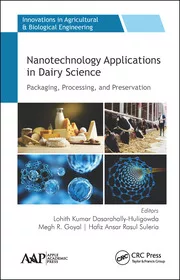
      Nanotechnology Applications in Dairy Science Packaging, Processing, and Preservation

    • tech inv.jpg

      Technological Interventions in Dairy Science: Innovative Approaches in Processing, Preservation, and Analysis of Milk Products

    See More Products

    Events

    View AllSubmit An Event
    • December 9, 2015

      Optimizing ‘Product Mix’ in a Volatile Global Dairy Ingredients Market: Unlocking Flexibility and Efficiency in your Production Lines

      On Demand FREE Webinar: Excellent long term growth in the dairy ingredient market is underpinned by strong fundamental drivers, however, volatility will remain a key challenge but also an opportunity.
    View AllSubmit An Event

    Related Directories

    • NCSU Dairy Plant

    • Deseret Dairy Plant

    • Babcock Hall Dairy Plant

    ×

    Stay ahead of the curve. Unlock a dose of cutting-edge insights.

    Receive our premium content directly to your inbox.

    SIGN-UP TODAY
    • RESOURCES
      • Advertise
      • Contact Us
      • Directories
      • Store
      • Want More
    • SIGN UP TODAY
      • Create Account
      • eMagazine
      • Newsletter
      • Customer Service
      • Manage Preferences
    • SERVICES
      • Marketing Services
      • Reprints
      • Market Research
      • List Rental
      • Survey/Respondent Access
    • STAY CONNECTED
      • LinkedIn
      • Facebook
      • YouTube
      • X (Twitter)
    • PRIVACY
      • PRIVACY POLICY
      • TERMS & CONDITIONS
      • DO NOT SELL MY INFORMATION
      • PRIVACY REQUEST
      • ACCESSIBILITY

    Copyright ©2026. All Rights Reserved BNP Media, Inc. and BNP Media II, LLC.

    Design, CMS, Hosting & Web Development :: ePublishing