Fighting Fire with Phage
New European technology said to provide a safe weapon against Listeria

Listeria monocytogenes is a continuous concern for food producers. Complete control of this pathogenic bacterium is nearly impossible. Now an elegant solution has been developed, based on the use of bacteriophages. Research carried out by NIZO food research demonstrates that a preparation, containing anti-Listeria bacteriophages, developed by EBI Food Safety, is effective at preventing the outgrowth of Listeria in contamination-sensitive cheese types.
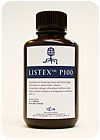
Traditionally in the food and fermentation sector, bacteriophages (phages) are considered a threat. Phages can infect and completely inactivate bacteria that are used in fermentation processes. With EBI Food Safety's Listex P100™ product, the tables have turned; bacteriophages can now be used to protect food against a dangerous pathogen. With this revolutionary concept all kinds of food products sensitive to bacterial contamination, such as soft and surface-ripened cheeses like Brie, Taleggio, Gorgonzola, Munster, Appenzeller, Tilsiter, can be effectively protected against the outgrowth of Listeria monocytogenes.
Experiments with Listeria monocytogenes have shown that the use of anti-Listeria bacteriophages can be effective in protecting smeared cheese types such as Munster. There is other evidence that the bacteriophages can protect other, sensitive cheese types. It can be expected that the same strategy will also be successful in protecting non-dairy food products such as sliced meat, pâtés, desserts and salads against Listeria-contamination.
 Listeria monocytogenes can be found in a large number of food products, such as cheese, pâtés, ice-cream, several fish products, salads. Listeriosis leads to serious disorders, such as diarrhea, meningitis and abortion, and is deadly in 25-30% of the cases.
Bacteriophages (lit.: bacteria eaters) are micro-organisms which exclusively target bacteria. Bacteriophages are harmless to people, plants and animals. This makes them extremely suitable for natural and biological suppression of food pathogens. Phages lack a number of properties of an independent organism. Because they lack their own metabolism, bacteriophages are unable to multiply independently. For replication a bacteriophage must infect a host, take over the regulation mechanism and metabolism of the host.
Bacteriophages are not considered damaging to the ecology as they are non-chemical and friendly "organisms" which do not leave an ecological footprint.
The inability to target Listeria monocytogenes with conventional measures has lead to the development of a method based on the use of bacteriophages specific against Listeria monocytogenes. This strategy seems attractive because bacteriophages are generally specific and therefore do not damage other, desirable, micro-organisms in food such as starter cultures or bacterial flora of the human gut. Furthermore, their use does not impact the traditional characteristics or the sensory qualities of food.
The efficacy of the anti-Listeria bacteriophages has been examined on surface ripened cheese with a pH similar to that of smeared cheeses during production. Model cheeses were inoculated with increasing quantities of Listeria. On all untreated cheeses, the Listeria proliferated. However, when a single dose of phage-preparation was applied, on two of three cheeses, Listeria was no longer detectable in the cheese. At the highest Listeria contamination level, eradication was not achieved and Listeria did continue to grow. For this reason applications models involve a preventative application regime.
Editor's note: This is an excerpt from a white paper written by Prof. Jeroen Hugenholtz, Dirk de Meester (MBA), Martin Warmerdam (MSc.), Saskia van Schalkwijk (MSc.) and Jeroen Wouters (PhD). NIZO food research and EBI Food Safety B.V. For complete information visit www.dairyfoods.com.
Listeria monocytogenes is a continuous concern for food producers. Complete control of this pathogenic bacterium is nearly impossible. Now an elegant solution has been developed, based on the use of bacteriophages. Research carried out by NIZO food research demonstrates that a preparation, containing anti-Listeria bacteriophages, developed by EBI Food Safety, is effective at preventing the outgrowth of Listeria in contamination-sensitive cheese types.
Traditionally in the food and fermentation sector, bacteriophages (phages) are considered a threat. Phages can infect and completely inactivate bacteria that are used in fermentation processes. With EBI Food Safety's Listex P100™ product, the tables have turned; bacteriophages can now be used to protect food against a dangerous pathogen. With this revolutionary concept all kinds of food products sensitive to bacterial contamination, such as soft and surface-ripened cheeses like Brie, Taleggio, Gorgonzola, Munster, Appenzeller, Tilsiter, can be effectively protected against the outgrowth of Listeria monocytogenes.
Experiments with Listeria monocytogenes have shown that the use of anti-Listeria bacteriophages can be effective in protecting smeared cheese types such as Munster. There is other evidence that the bacteriophages can protect other, sensitive cheese types. It can be expected that the same strategy will also be successful in protecting non-dairy food products such as sliced meat, pâtés, desserts and salads against Listeria-contamination.
Bacteriophages (lit.: bacteria eaters) are micro-organisms which exclusively target bacteria. Bacteriophages are harmless to people, plants and animals. This makes them extremely suitable for natural and biological suppression of food pathogens. Phages lack a number of properties of an independent organism. Because they lack their own metabolism, bacteriophages are unable to multiply independently. For replication a bacteriophage must infect a host, take over the regulation mechanism and metabolism of the host.
Bacteriophages are not considered damaging to the ecology as they are non-chemical and friendly "organisms" which do not leave an ecological footprint.
The inability to target Listeria monocytogenes with conventional measures has lead to the development of a method based on the use of bacteriophages specific against Listeria monocytogenes. This strategy seems attractive because bacteriophages are generally specific and therefore do not damage other, desirable, micro-organisms in food such as starter cultures or bacterial flora of the human gut. Furthermore, their use does not impact the traditional characteristics or the sensory qualities of food.
The efficacy of the anti-Listeria bacteriophages has been examined on surface ripened cheese with a pH similar to that of smeared cheeses during production. Model cheeses were inoculated with increasing quantities of Listeria. On all untreated cheeses, the Listeria proliferated. However, when a single dose of phage-preparation was applied, on two of three cheeses, Listeria was no longer detectable in the cheese. At the highest Listeria contamination level, eradication was not achieved and Listeria did continue to grow. For this reason applications models involve a preventative application regime.
Editor's note: This is an excerpt from a white paper written by Prof. Jeroen Hugenholtz, Dirk de Meester (MBA), Martin Warmerdam (MSc.), Saskia van Schalkwijk (MSc.) and Jeroen Wouters (PhD). NIZO food research and EBI Food Safety B.V. For complete information visit www.dairyfoods.com.
Looking for a reprint of this article?
From high-res PDFs to custom plaques, order your copy today!