Dairy Foods logo
search
cart
facebook twitter linkedin youtube
  • Sign In
  • Create Account
  • Sign Out
  • My Account
Dairy Foods logo
  • NEWS
    • DAIRY REGULATIONS
  • PRODUCTS
    • New Products
    • Butter
    • Cheese
    • Cultured Dairy
    • Frozen Desserts
    • Ice Cream/Novelties
    • Milk
    • Non-Dairy Beverages
    • Sales Data
    • Whey, Milk Powder
    • Dairy Alternatives
  • INGREDIENTS
    • Cocoa
    • Colors/Flavors
    • Cultures/Enzymes
    • Fiber
    • Gums, Stabilizers, and Texturants
    • Inclusions
    • Omegas/Lipids
    • Prebiotics
    • Probiotics
    • Sweeteners
    • Other
  • OPERATIONS
    • SUSTAINABILITY
    • Equipment
    • Processing
    • Packaging
    • Food Safety & Sanitation
    • Membrane Technology
  • MEDIA
    • Dairy Foods TV
    • Podcasts
    • Webinars
  • DIRECTORIES
    • Buyers Guide
    • Dairy Plants USA
  • MEMBRANE FORUM
  • MORE
    • Associations
    • Dairy Foods' News & Views Newsletter
    • Blogs
    • Case Studies
    • Classifieds
    • Custom Content & Marketing Services
    • Dairy Foods Store
    • Market Research
    • Supplier Spotlights
    • Tradeshows and Events
    • Strategy Guides
  • AWARDS
    • Dairy Plant of the Year Award
    • Breakthrough Award
    • Dairy Processor of the Year
  • EMAGAZINE
    • eMagazines
    • Archive Issues
    • Contact
    • Advertise
    • SIGN UP!
    • Columnists
    • Dairy 100
    • State of the Industry Report
    Dairy Foods Columnists

    Keeping labels simple, ingredients clean

    By Karen Giles-Smith MS, RD
    May 8, 2015

    I’ve never been much of a label reader. Recently, however, I’ve had to inspect food labels to avoid inflammation-causing foods and ingredients. It’s not easy finding foods void of the offending ingredients, but it is possible. Several times my husband growled, “Why do they [food processors] have to put that in there?”

    It’s a common refrain. To clear up confusion and bolster consumers’ confidence in foods, it must be addressed.

    “Consumers need to understand that not all ingredients are bad, and that certain ingredients are added for good reasons that are not purely for corporate profit at the consumers’ expense,” said Lauren Swann, a registered dietitian and owner of Concept Nutrition Inc., a Pennsylvania-based consulting service specializing in food labeling and nutrient analysis. “Just because a consumer can’t pronounce or doesn’t understand an ingredient doesn’t mean the ingredient is evil.”

    Consumers want information

    Consumers want to be in-the-know about ingredients. Shoppers are looking for labels that are clean and clear. “Clean” label with transparency was No. 2 on Mintel’s list of five key trends in 2015 for the U.S. food and drink market. And according to the 2015 “What’s Trending in Nutrition” survey from Pollock Communications, “What’s in a label?” was identified as the 11th trend out of 15.

    Although there are no formal definitions, a “clean” label is often described as having a relatively small number of “natural” ingredients and to be devoid of artificial colors, flavors or preservatives; whereas a “clear” label has been described as using only necessary and familiar ingredients with clearer and simpler claims on the label and transparency regarding ingredients. 

    A new survey of more than 1,100 moms across the United States found that many are drawn to naturally derived ingredients and are looking for foods without preservatives, synthetic colors, allergens and genetically modified organisms, according to the “Thought for Food” white paper prepared by Chr. Hansen. Specifically, 84% of moms feel better knowing their food contains only natural ingredients and 83% wish that U.S. food manufacturers would offer more natural options. Of the 63% of moms who read labels always or most of the time before purchasing a food product, 48% think that food labels are confusing or hard to understand.

    KISS and tell

    What does this mean for food formulations and labeling? In a nutshell: KISS (keep it simple sweetheart) and tell (provide helpful information). The challenge for food companies is to formulate healthful products that include only necessary ingredients and to explain the source and function of ingredients, without cluttering the label.

    The dairy industry has an advantage here, noted Sarah Hines, market specialist for dairy at DuPont Nutrition & Health, New Century, Kan.

    “Since [many] dairy products are already perceived as natural or cleaner label, being a dairy product or in the dairy case may be enough for your target market,” Hines said. She advises against making drastic decisions to remove key ingredients. “Regardless of trends in clean or clear label, functionality of the product is, and should be, top of mind. If an ice cream manufacturer wants to make a clean label ice cream, but [the result is] poor tasting ice cream, what’s the point?”

    But do consumers perceive fortified foods as being “clean”? Louise Pollock, president of Pollock Communications, New York, said she believes it depends on the food and not necessarily the fortification.

    “Clean foods are unprocessed or minimally processed,” she said. “Therefore, if a whole food, such as milk, is fortified, I would argue it’s still clean because it’s minimally processed.”

    Cathy Arnold, regional formulations manager for Fortitech Premixes by DSM of Schenectady, N.Y., cited findings from the International Food Information Council’s 2013 survey: about half of consumers believe that fortified foods are worthwhile and two-thirds trust foods that have functionality.

    “How this translates for fortification may mean that a consumer would ideally like a product with naturally occurring nutrients,” Arnold said. “But that’s not going to stop many of them from purchasing a fortified product to help maintain their health or to address a specific health condition.”

    Swann says it’s time for consumers to become better educated about what ingredients are and what they do. Food companies can help by adding short descriptors after listed ingredients—referred to as functional labeling—in consumer-friendly language that’s reassuring yet concise. For example, instead of defining an ingredient on a food label as “a preservative,” note its specific function, such as “to protect color” or “to preserve freshness.” 

     “Consumers’ desire for clear label will lead in the direction of more functional labeling. I hope that’s what comes next,” said Swann. 

    KEYWORDS: clean labels

    Share This Story

    Looking for a reprint of this article?
    From high-res PDFs to custom plaques, order your copy today!

    Karen Giles-Smith is a registered dietitian in Michigan with 23 years experience in the field of nutrition including clinical dietetics, nutrition education, and broadcast and print communications. She earned a master of science in human nutrition from Case Western Reserve University, Cleveland, and a bachelor of science in food science and nutrition from Marygrove College, Detroit. Karen blogs at www.thewellnesswriter.com/blog.

    Recommended Content

    JOIN TODAY
    to unlock your recommendations.

    Already have an account? Sign In

    • Lifeway Organic Kefir in different flavors inside a refrigerated grocery shelf.

      Dairy Foods names Lifeway Foods 2025 Processor of the Year

      Lifeway Foods donates $10,000 to wildfire victims,...
      Dairy Processor News
      By: Brian Berk
    • Two female farmers are standing in a field, holding a large milk canister, looking at several cows at dairy farm.

      Honoring Women Leaders Shaping the Dairy Industry

      For the fourth consecutive year, Dairy Foods is proud to...
      Innovation
      By: Barbara Harfmann
    • Main feature for State of the Industry with dairy products album cover with a gradient circular--patterned backgorund.

      2025 State of the Dairy Industry

      Welcome to the 2025 State of the Industry report. For...
      Ingredients for Dairy Processors
    Manage My Account
    • eMagazine Subscription
    • Dairy Foods News & Views Newsletter
    • Online Registration
    • Manage My Preferences
    • Subscription Customer Service
    • Connect with Dairy Foods

    More Videos

    Popular Stories

    Close up of man adding Greek yogurt while preparing healthy smoothie in the kitchen.

    An expert guide to dairy and GLP-1 receptor agonists

    Grilling foods

    Dairy’s Enduring Moment: Why Resilience and Renewal Define Today’s Dairy Story

    Idaho Milk Products hosts ribbon cutting

    Idaho Milk Products hosts ribbon cutting for new facility

    Nominate your product for the 2026 Dairy Foods Product of the Year!


    MTF webinar

    Events

    July 8, 2026

    Membrane Purification Enables Clean Beauty Actives

    The global cosmetics market is undergoing a major shift towards the use of natural bioactive ingredients as consumers grow more skeptical of traditional formulations and demand greater transparency and sustainability.

    July 8, 2026

    Advancements in RO for Dairy Processing

    Reverse osmosis (RO) membranes are well established in dairy processing but continue to evolve to improve performance, reduce energy use, and increase operational longevity. 

    View All Submit An Event

    Products

    Probiotic Ice Cream: Science and Technology

    Probiotic Ice Cream: Science and Technology

    See More Products
    health and wellness


    plant of the year

    Related Articles

    • IFT's 2016 Food Expo to highlight functional ingredients, clean labels

      IFT's 2016 Food Expo to highlight functional ingredients, clean labels

      See More
    • Gelato gives consumers simple ingredients, with indulgence

      See More
    • Ingredia

      New functional ingredients highlight clean label options

      See More

    Related Products

    See More Products
    • From Milk By-Products to Milk Ingredients: Upgrading the Cycle

    • Handbook of Antioxidants for Food Preservation, 1st Edition

    • handbook.jpg

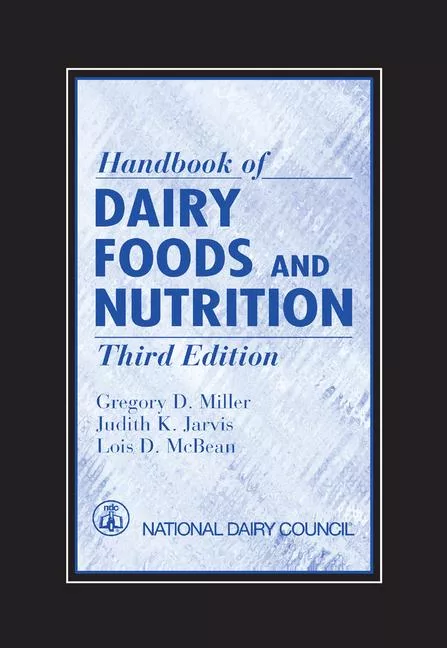
      Handbook of Dairy Foods and Nutrition, 3rd Edition

    See More Products

    Related Directories

    • A&B Ingredients

      A&B Ingredients is a leading developer and distributor of high-quality natural food ingredients. Among the products offered are pea proteins, rice starches, clean-label high-performance starches, dietary fiber and inulin, antioxidants, antimicrobials, CytoGUARD natural preservatives, flavor enhancers, low-sodium sea salts, and plant-based probiotics.
    ×

    Stay ahead of the curve. Unlock a dose of cutting-edge insights.

    Receive our premium content directly to your inbox.

    SIGN-UP TODAY
    • RESOURCES
      • Advertise
      • Contact Us
      • Directories
      • Store
      • Want More
    • SIGN UP TODAY
      • Create Account
      • eMagazine
      • Newsletter
      • Customer Service
      • Manage Preferences
    • SERVICES
      • Marketing Services
      • Reprints
      • Market Research
      • List Rental
      • Survey/Respondent Access
    • STAY CONNECTED
      • LinkedIn
      • Facebook
      • YouTube
      • X (Twitter)
    • PRIVACY
      • PRIVACY POLICY
      • TERMS & CONDITIONS
      • DO NOT SELL MY INFORMATION
      • PRIVACY REQUEST
      • ACCESSIBILITY

    Copyright ©2026. All Rights Reserved BNP Media, Inc. and BNP Media II, LLC.

    Design, CMS, Hosting & Web Development :: ePublishing