Tharp & Young On Ice Cream
What might be some evolving new applications for alternative sweeteners?

Q What might be some evolving new applications for alternative sweeteners?
A Novel no-sugar added ice creams: It is possible to make no-sugar added ice creams without added high-intensity sweeteners. Use of products such as maltitol, maltitol syrups and hydrogenated starch hydrolysates (a.k.a. polyglycitols) can provide the necessary sweetness and bulking functionality. Use rates need to be managed below the laxation threshold of the sugar alcohols used.
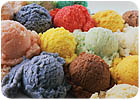 True sugar-free ice cream: The availability of ultra-filtered milks, including milk protein isolates (> 90% total milk protein and < 1% lactose), can be used in combination with polyglycitols and other novel bulking agents to create new categories such as true sugar-free (< 0.5 g "sugars" per serving) ice cream. These sugar-free products may or may not need high-intensity sweeteners. The product would, by definition, be inherently lactose-free as well.
Novel combinations of sweeteners: Of interest might be the use of high-intensity sweeteners and sugar alcohols in regular ice cream products. There is no reason why sugar alcohols and/or high-intensity sweeteners could not be used in combination with more traditional sweeteners.
Novel use of high-intensity sweeteners: Use of high-intensity sweeteners has evolved beyond simple single-sweetener applications to use of blends of one or more high-intensity sweeteners. Blends allow use at levels well below the threshold of disagreeable aftertastes or prolonged sweetness perception of each individual high-intensity sweetener. Further, with care, blends can often offer synergistic opportunities that allow use of levels well below calculated theoretical sweetness, further reducing use rates. Use of novel new bulking agents such as digestion-resistant maltodextrins can improve both functionality of the ice cream mix and create a more true "sucrose-like" eating experience.
Novel applications of bulking agents: To complement any novel sweetener application, selection of an appropriate bulking agent will be necessary. There is no reason to assume that bulking agents such as high-maltose corn syrups, polyglycitols, digestion-resistant maltodextrins, polydextrose, etc., could not be used in more classical ice cream formulas.
Sugar alcohols: Sugar alcohols have been successfully used in no-sugar added ice creams for years. It is quite possible to consider new, novel sugar alcohols in not only no-sugar-added formulas, but in true sugar-free and regular ice creams.
Low glycemic opportunities: Sucrose or sucrose/corn syrup-sweetened ice creams can have surprisingly low glycemic indexes (~ 60 vs. glucose = 100). This is due to the composition, structure, and mastication of ice cream, reducing its overall rate of digestion. Thus, it would be expected that exchange of low or ultra-low glycemic indexed ingredients for more classical ingredients and formula modifications to leverage effects of protein and fat on digestion rates could drive the glycemic indexes even lower.
Reduced calorie opportunities: A goal has always been to formulate ice cream and related products to caloric levels significantly below what is currently available. Achieving caloric levels in ice cream compatible with a "low-calorie" (< 40 calories per serving) claim has been a real challenge of chemistry and physics. Being able to achieve low caloric levels and maintain an ice cream's ability to entrap and hold unusually high levels of air (i.e., overrun) during manufacturing, storage and distribution is daunting. However, there seems to be a rush of new, novel sweeteners with limited digestibility and, thus, lower caloric values that could be used to create ice cream products with caloric levels at or near 40 calories per 4 fl oz serving. Certainly, caloric levels used well below current commercial products should be attainable.
Join Dr. Bruce Tharp and Dr. Steven Young at Tharp & Young On Ice Cream Technical Short Course, Workshop, and Clinics, Nov. 29-Dec. 1, 2006, Las Vegas. Go to www.onicecream.com or call 281/596-9603 or 610/975-4424. Dr. Bruce Tharp is the recipient of the first Lifetime Achievement Award of the International Ice Cream Association.
Q What might be some evolving new applications for alternative sweeteners?
A Novel no-sugar added ice creams: It is possible to make no-sugar added ice creams without added high-intensity sweeteners. Use of products such as maltitol, maltitol syrups and hydrogenated starch hydrolysates (a.k.a. polyglycitols) can provide the necessary sweetness and bulking functionality. Use rates need to be managed below the laxation threshold of the sugar alcohols used.
Novel combinations of sweeteners: Of interest might be the use of high-intensity sweeteners and sugar alcohols in regular ice cream products. There is no reason why sugar alcohols and/or high-intensity sweeteners could not be used in combination with more traditional sweeteners.
Novel use of high-intensity sweeteners: Use of high-intensity sweeteners has evolved beyond simple single-sweetener applications to use of blends of one or more high-intensity sweeteners. Blends allow use at levels well below the threshold of disagreeable aftertastes or prolonged sweetness perception of each individual high-intensity sweetener. Further, with care, blends can often offer synergistic opportunities that allow use of levels well below calculated theoretical sweetness, further reducing use rates. Use of novel new bulking agents such as digestion-resistant maltodextrins can improve both functionality of the ice cream mix and create a more true "sucrose-like" eating experience.
Novel applications of bulking agents: To complement any novel sweetener application, selection of an appropriate bulking agent will be necessary. There is no reason to assume that bulking agents such as high-maltose corn syrups, polyglycitols, digestion-resistant maltodextrins, polydextrose, etc., could not be used in more classical ice cream formulas.
Sugar alcohols: Sugar alcohols have been successfully used in no-sugar added ice creams for years. It is quite possible to consider new, novel sugar alcohols in not only no-sugar-added formulas, but in true sugar-free and regular ice creams.
Low glycemic opportunities: Sucrose or sucrose/corn syrup-sweetened ice creams can have surprisingly low glycemic indexes (~ 60 vs. glucose = 100). This is due to the composition, structure, and mastication of ice cream, reducing its overall rate of digestion. Thus, it would be expected that exchange of low or ultra-low glycemic indexed ingredients for more classical ingredients and formula modifications to leverage effects of protein and fat on digestion rates could drive the glycemic indexes even lower.
Reduced calorie opportunities: A goal has always been to formulate ice cream and related products to caloric levels significantly below what is currently available. Achieving caloric levels in ice cream compatible with a "low-calorie" (< 40 calories per serving) claim has been a real challenge of chemistry and physics. Being able to achieve low caloric levels and maintain an ice cream's ability to entrap and hold unusually high levels of air (i.e., overrun) during manufacturing, storage and distribution is daunting. However, there seems to be a rush of new, novel sweeteners with limited digestibility and, thus, lower caloric values that could be used to create ice cream products with caloric levels at or near 40 calories per 4 fl oz serving. Certainly, caloric levels used well below current commercial products should be attainable.
Join Dr. Bruce Tharp and Dr. Steven Young at Tharp & Young On Ice Cream Technical Short Course, Workshop, and Clinics, Nov. 29-Dec. 1, 2006, Las Vegas. Go to www.onicecream.com or call 281/596-9603 or 610/975-4424. Dr. Bruce Tharp is the recipient of the first Lifetime Achievement Award of the International Ice Cream Association.
Links
Looking for a reprint of this article?
From high-res PDFs to custom plaques, order your copy today!