Lab Talk: Add Chocolate to the List
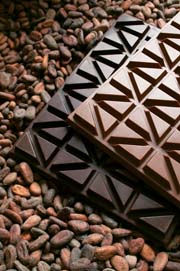
Well, after my visit to Cologne, to attend the ANUGA show just a few weeks ago, I can comfortably add a third item to the list: chocolate. Americans just don't know chocolate. Now, some of you are aware that I am not very fond of chocolate anything, and in wine, I only drink dry Chardonnay...that was until this trip to Germany.
Let's just say, U.S. processors make chocolate-flavored milk. Europeans combine chocolate with milk to make a drink that I could just not get enough of. The quality of the chocolate that Europeans use in their flavored milk is very high, and this is true even in products designed for kids.
I have heard many U.S. chocolate/cocoa suppliers say that processors purchase the lowest quality, least expensive chocolate to put into school milk. It's no wonder kids can't stand the stuff. Cool new packages are great, that's no reason for the stuff inside to not taste great.
The good news is that one cocoa supplier reports that customers are starting to ask about higher-quality chocolate, the stuff packed full catechins (antioxidants). Chocolate- and cocoa-containing dairy products with higher levels of nonfat cocoa solids contain higher levels of these interesting compounds, which may contribute to cardiovascular health and help limit the damage caused by free radicals.
A new study sponsored by The Hershey Company, Hershey, Pa., in conjunction with Cornell University and Brunswick Laboratories, Wareham, Mass., confirms that all products containing natural cocoa have flavanol antioxidants. The study also speaks to the importance of the level of natural cocoa.
"The results are in: the more natural cocoa, the more flavanol antioxidants," says Debra Miller, senior nutrition scientist at Hershey. "This study helps clear up the confusion surrounding flavanols in chocolate by showing the clear link between natural cocoa levels and flavanol antioxidant levels."
In the Hershey study, researchers measured the antioxidant activity of the three top-selling brands of cocoa, baking chocolate, dark chocolate, milk chocolate and chocolate syrup. The highest flavanol levels were found in natural cocoa powder, followed by unsweetened baking chocolate, dark chocolate, milk chocolate and, finally, chocolate syrup. (Bad news: the stuff many of you flavor milk with doesn't even rank!) The results are supported by recently announced USDA results.
Here's the good part. Hershey has introduced a new cocoa label and an antioxidant seal. The label communicates that cocoa is a natural source of flavanol antioxidants. The new seal lists the total percentage of cacao solids in select dark chocolate products. Both steps are designed to help consumers better identify which cocoa and chocolate products offer the most benefits. The dairy industry, too, can communicate similar information on product labels.
Consumer media is getting the message and consumers are becoming more aware of the natural antioxidant benefits of cocoa. The incentive is building for product developers to consider formulations with a higher content of non-fat cocoa solids-to formulate with better chocolate/cocoa ingredients.
Dairy beverages, frozen desserts and even cultured products represent a big area of opportunity. Specific health claims are not yet approved, but consumers are beginning to make a "healthful" association with cocoa.
Oh, by the way, I guess I can add a fourth to the list. Chablis is quite good when it's bottled in France and not sold in a box.
Looking for a reprint of this article?
From high-res PDFs to custom plaques, order your copy today!