Quality on the Line
Improving Quality by Line Sampling and Stress Testing
 An effective quality-management program requires systematic sampling and testing of products during processing and after packaging.
Most dairy plants obtain products for QA testing from fillers at specific frequencies. Some plants focus on “first off” filler samples, while others obtain samples at random during the beginning, middle and end of the production run. This approach may be sufficient for ensuring regulatory compliance and general quality standards, but it may not be sufficient for preventing or correcting quality problems and does not support continuous quality improvement efforts.
There are three basic requirements for an effective quality improvement program: selecting of the proper samples for testing; performing the proper QA tests; and utilizing test results for directing continuous improvement activities.
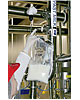
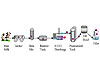
Line samples must be obtained aseptically (line sampling was discussed in my November 2004 column). Samples may be obtained with a 50-100 mL syringe or with a larger sampling assembly (Figure 1). The larger the sample, the more representative it will be of the product to be tested. Also, the sensitivity of stress tests increases as the size of the sample is increased. Suggested in-process sampling points for fluid products are shown in Figure 2.
 A brief discussion of recommended tests for performing on samples obtained at different points throughout the process follows:
Raw milk: Quality starts at the farm. Milk will never be better than when it leaves the cow. Selective quality tests and standards follow:
• Temperature: < 42 degrees F
• Direct microscopic count (DMC): < 50,000 clumps/milliliter. The only test available for evaluating the microbiological quality of raw milk before it is received.
• PI count (raw milk) < 50,000 cfu/milliliter
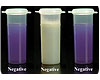
• HR3 at balance tank: Negative at 14 hours (no color change; figure 3). Detects the presence of bacteria that may be capable of surviving pasteurization and growing at refrigerated temperatures.
Discharge of HTST: This is a critical sample point. The integrity of the HTST system must be established. If product is contaminated at this point, it will be contaminated at all subsequent sampling points. Selective quality tests and standards follow:
• HR1– Negative at 18 hours
• HR2– Negative at 60 hours
• HR3– Negative at 14 hours
• Optional: Pasteurized product stress PI < 1,000 cfu/milliliter.
Pasteurized, surge tank and filler bowl: Selective quality tests and standards follow:
• HR1– Negative at 18 hours
HR2– Negative at 60 hours
(Figure 3)
Packaged product:
• HR1– Negative at 18 hours
HR2– Negative at 60 hours
(Figure 3)
• Optional:
- Pasteurized product stress PI < 1,000 cfu/milliliter
- Seven (7) Day Moseley Test < 1,000 cfu/milliliter
• The ultimate quality test– Actual shelf-life at 45 degrees F - acceptable at 14 days or greater
Performing the proper QA tests on representative tank / line samples will provide valuable information needed for trouble-shooting quality issues and supporting continuous quality improvement goals.
Raw and pasteurized stress procedures were discussed in the August and November 2005 columns, respectively. HR protocols were discussed in the March 2006 column.
Join Randolph and Associates in Birmingham, Ala., for an Advanced Sanitation Workshop, May 5-7, 2009. For registration and additional information, contact Kristy Clark at 205/595-6455 or kristy.clark@raiconsult.com.
Figure 1.
Figure 2.
Most dairy plants obtain products for QA testing from fillers at specific frequencies. Some plants focus on “first off” filler samples, while others obtain samples at random during the beginning, middle and end of the production run. This approach may be sufficient for ensuring regulatory compliance and general quality standards, but it may not be sufficient for preventing or correcting quality problems and does not support continuous quality improvement efforts.
There are three basic requirements for an effective quality improvement program: selecting of the proper samples for testing; performing the proper QA tests; and utilizing test results for directing continuous improvement activities.
Line samples must be obtained aseptically (line sampling was discussed in my November 2004 column). Samples may be obtained with a 50-100 mL syringe or with a larger sampling assembly (Figure 1). The larger the sample, the more representative it will be of the product to be tested. Also, the sensitivity of stress tests increases as the size of the sample is increased. Suggested in-process sampling points for fluid products are shown in Figure 2.
Figure 3.
Raw milk: Quality starts at the farm. Milk will never be better than when it leaves the cow. Selective quality tests and standards follow:
• Temperature: < 42 degrees F
• Direct microscopic count (DMC): < 50,000 clumps/milliliter. The only test available for evaluating the microbiological quality of raw milk before it is received.
• PI count (raw milk) < 50,000 cfu/milliliter
• HR3 at balance tank: Negative at 14 hours (no color change; figure 3). Detects the presence of bacteria that may be capable of surviving pasteurization and growing at refrigerated temperatures.
Discharge of HTST: This is a critical sample point. The integrity of the HTST system must be established. If product is contaminated at this point, it will be contaminated at all subsequent sampling points. Selective quality tests and standards follow:
• HR1– Negative at 18 hours
• HR2– Negative at 60 hours
• HR3– Negative at 14 hours
• Optional: Pasteurized product stress PI < 1,000 cfu/milliliter.
Pasteurized, surge tank and filler bowl: Selective quality tests and standards follow:
• HR1– Negative at 18 hours
HR2– Negative at 60 hours
(Figure 3)
Packaged product:
• HR1– Negative at 18 hours
HR2– Negative at 60 hours
(Figure 3)
• Optional:
- Pasteurized product stress PI < 1,000 cfu/milliliter
- Seven (7) Day Moseley Test < 1,000 cfu/milliliter
• The ultimate quality test– Actual shelf-life at 45 degrees F - acceptable at 14 days or greater
Performing the proper QA tests on representative tank / line samples will provide valuable information needed for trouble-shooting quality issues and supporting continuous quality improvement goals.
Raw and pasteurized stress procedures were discussed in the August and November 2005 columns, respectively. HR protocols were discussed in the March 2006 column.
Join Randolph and Associates in Birmingham, Ala., for an Advanced Sanitation Workshop, May 5-7, 2009. For registration and additional information, contact Kristy Clark at 205/595-6455 or kristy.clark@raiconsult.com.
Looking for a reprint of this article?
From high-res PDFs to custom plaques, order your copy today!