Inside the News: Romania's Dairy Industry Emerging
Honoring Romania's past while meeting the demands of the present, a small cheesemaker, LaDorna, produces a sheeps milk cheese, using traditional methods in a thoroughly modern plant.
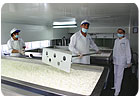
Honoring Romania's past while meeting the demands of the present, a small cheesemaker, LaDorna, produces a sheeps milk cheese, using traditional methods in a thoroughly modern plant. Telemea, a feta-like cheese with a unique flavor, is a specialty from the lands along the Danube near the Black Sea. Sheep rearing and cheese-making are an age-old tradition in this region of vast natural pastures where shepherding is a skill handed down from the Greeks who settled here centuries ago. Making the most of these resources, traditions, and their consumer appeal, LaDorna has been making both organic and conventional Telemea since 2005 in a new plant built to EU food safety standards.
From Danube pasturelands to alpine landscapes, Romania's cultural heritage and natural diversity are an inspiration and a resource for LaDorna. Milk from cows, goats, and sheep yields Romanian specialties such as Cashcaval cheese as well as butter, and organic and conventional fluid milk. LaDorna targets value-added products, particularly organic products, for its growth. The abundance of certified organic pasture in Romania facilitates expansion. Romania, along with France and Spain have the largest area of certified organic pasture in Europe. With a growing export market, the company plans to increase production of organic Telemea and other organic products.
Demand for dairy products is on the rise in Romania, but few could have predicted this in the early 1990s when the dairy industry collapsed along with the rest of the economy during the chaotic years following the overthrow of communism. A half-century of hardship and chronic shortages under communist central planning was followed by a period of turmoil and disorder until restructuring began in the mid 1990s. In the dairy sector, tiny household businesses with informal small-scale production came to prominence during the rebuilding. Unstable conditions made business problematic, but by the late 1990s there were signs of stabilization.
Negotiations for EU accession began a few years later, and investment accelerated. The economy was growing and so was the dairy sector. Pent-up demand from the communist era combined with the rising incomes of growing urban populations to fuel demand for packaged foods, including dairy products. Romania's consumer market of 22 million people emerged as a dynamic force, with adults and children consuming a wide range of dairy products. Per capita consumption in fluid milk equivalent is more than 200 liters per year. While low compared to Western Europe, it is growing. Among the most rapidly-growing categories are yogurt and products designed for particular market segments (children, women, low-fat, and others).
This transformation of Romania's consumer market has its counterpart in the transformation of dairy product manufacturing. EU accession, currently scheduled for 2007, has multiple effects on the industry. For instance, as Romania has gradually adopted EU regulations for food safety and worker safety, many of the tiny household businesses are disappearing, unable to comply.
As they exit they leave their market share up for grabs. The vibrant market and Romania's inherent advantages in milk production have attracted Romanian and foreign companies from Europe, Israel, and elsewhere. EU financing, too, plays a role. The EU has invested heavily to improve Romania's roads and infrastructure, and various programs assist businesses, among them, a financing program that helped LaDorna construct its cheese plant. EU accession will also help dairy farms and milk supplies. As in other Eastern European countries that have joined the EU, private companies and new investment are at the heart of Romania's dairy products industry.
Romania's Dairy Industry Contacts
Honoring Romania's past while meeting the demands of the present, a small cheesemaker, LaDorna, produces a sheeps milk cheese, using traditional methods in a thoroughly modern plant. Telemea, a feta-like cheese with a unique flavor, is a specialty from the lands along the Danube near the Black Sea. Sheep rearing and cheese-making are an age-old tradition in this region of vast natural pastures where shepherding is a skill handed down from the Greeks who settled here centuries ago. Making the most of these resources, traditions, and their consumer appeal, LaDorna has been making both organic and conventional Telemea since 2005 in a new plant built to EU food safety standards.
From Danube pasturelands to alpine landscapes, Romania's cultural heritage and natural diversity are an inspiration and a resource for LaDorna. Milk from cows, goats, and sheep yields Romanian specialties such as Cashcaval cheese as well as butter, and organic and conventional fluid milk. LaDorna targets value-added products, particularly organic products, for its growth. The abundance of certified organic pasture in Romania facilitates expansion. Romania, along with France and Spain have the largest area of certified organic pasture in Europe. With a growing export market, the company plans to increase production of organic Telemea and other organic products.
Demand for dairy products is on the rise in Romania, but few could have predicted this in the early 1990s when the dairy industry collapsed along with the rest of the economy during the chaotic years following the overthrow of communism. A half-century of hardship and chronic shortages under communist central planning was followed by a period of turmoil and disorder until restructuring began in the mid 1990s. In the dairy sector, tiny household businesses with informal small-scale production came to prominence during the rebuilding. Unstable conditions made business problematic, but by the late 1990s there were signs of stabilization.
Negotiations for EU accession began a few years later, and investment accelerated. The economy was growing and so was the dairy sector. Pent-up demand from the communist era combined with the rising incomes of growing urban populations to fuel demand for packaged foods, including dairy products. Romania's consumer market of 22 million people emerged as a dynamic force, with adults and children consuming a wide range of dairy products. Per capita consumption in fluid milk equivalent is more than 200 liters per year. While low compared to Western Europe, it is growing. Among the most rapidly-growing categories are yogurt and products designed for particular market segments (children, women, low-fat, and others).
This transformation of Romania's consumer market has its counterpart in the transformation of dairy product manufacturing. EU accession, currently scheduled for 2007, has multiple effects on the industry. For instance, as Romania has gradually adopted EU regulations for food safety and worker safety, many of the tiny household businesses are disappearing, unable to comply.
As they exit they leave their market share up for grabs. The vibrant market and Romania's inherent advantages in milk production have attracted Romanian and foreign companies from Europe, Israel, and elsewhere. EU financing, too, plays a role. The EU has invested heavily to improve Romania's roads and infrastructure, and various programs assist businesses, among them, a financing program that helped LaDorna construct its cheese plant. EU accession will also help dairy farms and milk supplies. As in other Eastern European countries that have joined the EU, private companies and new investment are at the heart of Romania's dairy products industry.
Romania's Dairy Industry Contacts
- Romania Agribusiness Development Project (RADP)
Tel. +(4 021) 310-6511; email: info@RADP.ro - U.S. Embassy in Romania
(Commercial Attache and Agricultural Attache)
Looking for a reprint of this article?
From high-res PDFs to custom plaques, order your copy today!