Dairy Market Trends: Good News, Bad News For Milk
When it comes to milk sales in the U.S., good news is great news, and finding good news may be a matter of who you ask. Overall milk continued to trend downward in 2005 and there were significant shrinkage in the final quarter of the year, according to Information Resources, Inc. But USDA numbers for January and February indicate that there are some bright spots, particularly when looking at lowfat milk.
When it comes to milk sales in the U.S., good news is great news, and finding good news may be a matter of who you ask. Overall milk continued to trend downward in 2005 and there were significant shrinkage in the final quarter of the year, according to Information Resources, Inc. But USDA numbers for January and February indicate that there are some bright spots, particularly when looking at lowfat milk.
The difference might have something to do with the different reference periods, but it might have more to do with the fact that IRI's F/D/MX numbers are for food, drug and mass merchandisers, but do not include Wal-Mart, or the corner gas station, or the school lunch line. USDA's estimates are intended to represent all milk sold in the U.S.
According to IRI, unit sales lost ground during each of the six reporting periods from the summer of 2004 through Christmas of 2005. Dollar sales were affected by a series of price fluctuations during that period and during comparable periods for each (one year prior).
USDA figures show that all reduced fat level white milk experienced sales gains of about 3.5% in February and, between 1.9% and 3.0% for January and February combined. Again, this is in comparison to the same periods a year ago.
If one is optimistic, a couple of conclusions might be drawn:
No. 1: Milk is being sold in a wider variety of outlets, including some where growth is hard to measure like foodservice and convenience stores. According to the NPD Group Inc., milk units sold at fast food restaurants grew by 18% in 2005.
No. 2: Consumers are gravitating toward lower fat level products, having finally gotten the message that lowfat milk tastes great and is a healthful food.
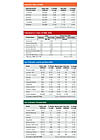
Going back to IRI's numbers and looking at the top 10 brands of lowfat milk, the total subcategory was down nearly 2% by units in the most recent 52 weeks ended March 19.
Flavored milk also continues to slump according to IRI's numbers. Note that USDA shows flavored reduced fat milk gaining some ground in the first two months of 2006.
As for the individual brands, of lowfat and skim, private label is the shrinking 800-lb gorilla, while value-added brands including Lactaid 100, Horizon Organic, and Organic Valley are experiencing the most growth.
The first time Dairy Foods published our monthly Dairy Market Trends in August 2001, the subject was branded vs. private label milk, looking particularly at lowfat and skim. Private label was starting to shrink then and the trend toward branding has continued. But only one organic brand, Horizon Organic was in the top 10 at that point, coming in at No. 9 with 14 million units sold. Now Horizon is joined in the top-ten ranking by Organic Valley which has amassed nearly a 1% share of the total lowfat milk market.
When it comes to milk sales in the U.S., good news is great news, and finding good news may be a matter of who you ask. Overall milk continued to trend downward in 2005 and there were significant shrinkage in the final quarter of the year, according to Information Resources, Inc. But USDA numbers for January and February indicate that there are some bright spots, particularly when looking at lowfat milk.
The difference might have something to do with the different reference periods, but it might have more to do with the fact that IRI's F/D/MX numbers are for food, drug and mass merchandisers, but do not include Wal-Mart, or the corner gas station, or the school lunch line. USDA's estimates are intended to represent all milk sold in the U.S.
According to IRI, unit sales lost ground during each of the six reporting periods from the summer of 2004 through Christmas of 2005. Dollar sales were affected by a series of price fluctuations during that period and during comparable periods for each (one year prior).
USDA figures show that all reduced fat level white milk experienced sales gains of about 3.5% in February and, between 1.9% and 3.0% for January and February combined. Again, this is in comparison to the same periods a year ago.
If one is optimistic, a couple of conclusions might be drawn:
No. 1: Milk is being sold in a wider variety of outlets, including some where growth is hard to measure like foodservice and convenience stores. According to the NPD Group Inc., milk units sold at fast food restaurants grew by 18% in 2005.
No. 2: Consumers are gravitating toward lower fat level products, having finally gotten the message that lowfat milk tastes great and is a healthful food.
Going back to IRI's numbers and looking at the top 10 brands of lowfat milk, the total subcategory was down nearly 2% by units in the most recent 52 weeks ended March 19.
Flavored milk also continues to slump according to IRI's numbers. Note that USDA shows flavored reduced fat milk gaining some ground in the first two months of 2006.
As for the individual brands, of lowfat and skim, private label is the shrinking 800-lb gorilla, while value-added brands including Lactaid 100, Horizon Organic, and Organic Valley are experiencing the most growth.
The first time Dairy Foods published our monthly Dairy Market Trends in August 2001, the subject was branded vs. private label milk, looking particularly at lowfat and skim. Private label was starting to shrink then and the trend toward branding has continued. But only one organic brand, Horizon Organic was in the top 10 at that point, coming in at No. 9 with 14 million units sold. Now Horizon is joined in the top-ten ranking by Organic Valley which has amassed nearly a 1% share of the total lowfat milk market.
Looking for a reprint of this article?
From high-res PDFs to custom plaques, order your copy today!