Lab Talk: Want to Own a Franchise?
Folks in the dairy industry often refer to the franchise we no longer own (calcium), the one we will always own (whey proteins) and the one we still have the chance of owning if we act responsibly, but also aggressively (probiotics). I would like to propose another one: chocolate.

Folks in the dairy industry often refer to the franchise we no longer own (calcium), the one we will always own (whey proteins) and the one we still have the chance of owning if we act responsibly, but also aggressively (probiotics). I would like to propose another one: chocolate.
We would never fully own it; we would have to share it with the confectionery industry. However, when one excludes confections from the edibles arena, as confections are not food, per se, (they are not intended to substitute for a healthful meal), the dairy industry does have the chance to capitalize on all the wonderful health benefits associated with high-quality chocolate and cocoa.
The fact is that high-quality chocolate is being explored for use in a broad range of applications, especially in savory products. It can be combined with a variety of components not traditionally associated with chocolate.
The key here is "high-quality," something historically viewed by many manufacturers as too costly for flavored milk and ice cream. But what the dairy industry needs to realize is that non-dairy manufacturers are jumping on the cocoa craze. What makes the situation really interesting is that many of these products contain a dairy component. That's right, dairy and chocolate are a perfect combination.
For example, this is one of my favorites: Holy Chocolate. Created by a priest, this drinking chocolate carries the tagline "Every Sip Blessed." Made with finely ground premium cocoa and dried milk from pasture cows that are free of added growth hormones, this drinking chocolate is made by adding it to either water or milk. Other all-natural flavoring ingredients enable the premium, strong and sophisticated drinking chocolate to come in seven varieties.
Quality comes with a price: A single-serve sachet costs $1.75, while $35.00 gets one an assortment of 24 single-serve envelopes. There's even a 4.5-lb foodservice size that yields 46 strong servings.
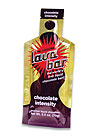 There's also Lava Bar, which is described as "the world's first liquid chocolate bar." Kenneth Berke, president and CEO of Lava Chocolate LLC, Los Angeles, describes Lava Bar as 2.5oz of gourmet liquid chocolate in a flexible film, foil-lined package, which features an easy-open, notch-top that facilitates squeezing the thick liquid into one's mouth. "If you can resist just eating this new liquid chocolate bar directly from its package, it's absolutely great when added to milk shakes, poured over ice cream or served over fresh fruit," Berke says. Whole dry powdered milk is a key ingredient in the Lava Bar.
The concept of high-quality functional chocolate bars-confection and nutrition style-is also active in the marketplace. Mars Inc., Hackettstown, N.J., is aggressively rolling out its CocoaVia® Milk Chocolate, which combines great-tasting milk chocolate with all the heart-healthy benefits of the company's proprietary CocoaVia dark chocolate. The company plans to introduce its highly popular CocoaVia Rich Chocolate Indulgence beverage very soon to the U.S. marketplace. (It is very successful throughout Europe.) This fresh, refrigerated, shot-style drink combines CocoaVia dark chocolate with milk. Each serving is guaranteed to contain at least 100mg cocoa flavanols. Basically, it's concentrated, high-quality chocolate milk.
Indeed, health and indulgence, once thought to behave like oil and water in the sense that they do not mix, is becoming increasingly popular when formulating with chocolate. "Consumers today are searching for new, premium experiences," says Chris Baldwin, senior v.p. with The Hershey Company, Hershey, Pa.
For example, the Häagen-Dazs brand recently rolled out Mayan Chocolate ice cream. Inspired by the original chocolate made by the Mayans more than 2,500 years ago, this rich, creamy product combines the flavors of dark chocolate and cinnamon. The brand touts the use of only the highest-quality cocoa beans to make this rich, dark chocolate ice cream.
The emphasis on dark chocolate is all about the high natural cocoa content, which is a concentrated source of flavanol antioxidants associated with heart health, among other benefits. In general, the higher the cocoa content of a chocolate product, the more flavanols and the greater the antioxidant potential. Research suggests that antioxidant levels are greatest in natural cocoa powder followed by unsweetened baking chocolate, dark chocolate, milk chocolate and chocolate syrup.
With so much interest in cocoa and chocolate, a great deal of investment is being made by growers and suppliers. For example, special care taken during cocoa bean harvesting is contributing to the rising interest in single-origin chocolates-products made from cocoa beans grown in one country, region or local plantation-much like coffee, vanilla and wine. Technological advancements are making it possible to preserve the flavanol content of cocoa that otherwise would be lost during chocolate manufacturing.
If the dairy industry unites to improve the quality of cocoa that goes into its chocolate-flavored milks and ice cream, it may just own a franchise.
Folks in the dairy industry often refer to the franchise we no longer own (calcium), the one we will always own (whey proteins) and the one we still have the chance of owning if we act responsibly, but also aggressively (probiotics). I would like to propose another one: chocolate.
We would never fully own it; we would have to share it with the confectionery industry. However, when one excludes confections from the edibles arena, as confections are not food, per se, (they are not intended to substitute for a healthful meal), the dairy industry does have the chance to capitalize on all the wonderful health benefits associated with high-quality chocolate and cocoa.
The fact is that high-quality chocolate is being explored for use in a broad range of applications, especially in savory products. It can be combined with a variety of components not traditionally associated with chocolate.
The key here is "high-quality," something historically viewed by many manufacturers as too costly for flavored milk and ice cream. But what the dairy industry needs to realize is that non-dairy manufacturers are jumping on the cocoa craze. What makes the situation really interesting is that many of these products contain a dairy component. That's right, dairy and chocolate are a perfect combination.
For example, this is one of my favorites: Holy Chocolate. Created by a priest, this drinking chocolate carries the tagline "Every Sip Blessed." Made with finely ground premium cocoa and dried milk from pasture cows that are free of added growth hormones, this drinking chocolate is made by adding it to either water or milk. Other all-natural flavoring ingredients enable the premium, strong and sophisticated drinking chocolate to come in seven varieties.
Quality comes with a price: A single-serve sachet costs $1.75, while $35.00 gets one an assortment of 24 single-serve envelopes. There's even a 4.5-lb foodservice size that yields 46 strong servings.
The concept of high-quality functional chocolate bars-confection and nutrition style-is also active in the marketplace. Mars Inc., Hackettstown, N.J., is aggressively rolling out its CocoaVia® Milk Chocolate, which combines great-tasting milk chocolate with all the heart-healthy benefits of the company's proprietary CocoaVia dark chocolate. The company plans to introduce its highly popular CocoaVia Rich Chocolate Indulgence beverage very soon to the U.S. marketplace. (It is very successful throughout Europe.) This fresh, refrigerated, shot-style drink combines CocoaVia dark chocolate with milk. Each serving is guaranteed to contain at least 100mg cocoa flavanols. Basically, it's concentrated, high-quality chocolate milk.
Indeed, health and indulgence, once thought to behave like oil and water in the sense that they do not mix, is becoming increasingly popular when formulating with chocolate. "Consumers today are searching for new, premium experiences," says Chris Baldwin, senior v.p. with The Hershey Company, Hershey, Pa.
For example, the Häagen-Dazs brand recently rolled out Mayan Chocolate ice cream. Inspired by the original chocolate made by the Mayans more than 2,500 years ago, this rich, creamy product combines the flavors of dark chocolate and cinnamon. The brand touts the use of only the highest-quality cocoa beans to make this rich, dark chocolate ice cream.
The emphasis on dark chocolate is all about the high natural cocoa content, which is a concentrated source of flavanol antioxidants associated with heart health, among other benefits. In general, the higher the cocoa content of a chocolate product, the more flavanols and the greater the antioxidant potential. Research suggests that antioxidant levels are greatest in natural cocoa powder followed by unsweetened baking chocolate, dark chocolate, milk chocolate and chocolate syrup.
With so much interest in cocoa and chocolate, a great deal of investment is being made by growers and suppliers. For example, special care taken during cocoa bean harvesting is contributing to the rising interest in single-origin chocolates-products made from cocoa beans grown in one country, region or local plantation-much like coffee, vanilla and wine. Technological advancements are making it possible to preserve the flavanol content of cocoa that otherwise would be lost during chocolate manufacturing.
If the dairy industry unites to improve the quality of cocoa that goes into its chocolate-flavored milks and ice cream, it may just own a franchise.
Looking for a reprint of this article?
From high-res PDFs to custom plaques, order your copy today!