Farm to Fork
In this new section we look at the amazing new Atlas of Artisan
American Cheese by Jeffery Roberts, and this month we rollout our own
Artisan Profile with a visit to Willow Hill Farm, Milton, Vt.
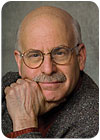

The author is Jeffrey P. Roberts, one of the co-founders of the Vermont Institute for Artisan Cheese, and the publisher is Chelsea Green, White River Junction, Vt. The 436-page atlas has gotten quite a bit of a attention in the consumer media, thanks in part to those impressive numbers noted above.
“Before starting the research I thought that perhaps I would find 200 cheesemakers that fit the definitions I used for artisan cheesmaking,” Roberts says. “I spoke with Allison Hooper (president of the American Cheese Society), and she thought the number would be closer to 300. As it turned out, we were able to identify about 400 and 345 made it into the atlas.
“The other thing that we found really amazing is that more than half of them were not in business before the year 2000, and if you go back another ten years, even less than half of those were making cheese.”
The American Cheese Society itself, with its ever-expanding annual conference and competition provides a similar measure. In fact, Roberts point out in his introduction that there were 941 cheeses in the 2006 competition. The number swelled to more than 1,200 for the August 2007 competition. But for some reason, seeing each individual cheesemaker in this format covering seven regions (including a Pacific Rim region, where Oregon cheesemakers are described along with a couple in Hawaii and Alaska), leaves a different impression altogether.
With nearly each turn of the page, there is another loving description of a different cheesemaker, and loads of beautiful photos of the producers with their animals and cheese. The cumulative effect is almost overwhelming.
Roberts, and reviewers alike, have also noted that while there is a concentration of cheesemakers in states like Vermont, California and the upper Midwest, plenty also reside in places like Texas, Alabama, and even Arizona and New Mexico.
Roberts crunches the numbers a bit in his introduction and some further illumination takes place. A full three-fourths of the cheesemakers are running farmstead operations, which means all the milk that goes into the cheese comes from the farm where that creamery is based. There are more making cheese from goats milk than cows milk, and a much smaller number using sheeps milk. One uses the milk of a herd of water buffalo. All the cheesemakers work from licensed, Grade A facilities-there is no “bathtub cheese” involved.
More than anything, the stories in The Atlas of American Artisan Cheese (and the emphasis that Roberts places in the telling of those stories), illustrates the inseparability of these cheeses and their environment-the concept of terrior, which has become part of the foodie lexicon in the U.S. in recent years. Most of the entries describe what type of pasture and even forest land the animals graze and “browse” along with the way in which this kind of farming impacts the resultant cheeses.
As if caring for animals and making cheese were not enough, many artisans have constructed caves by digging or blasting into the same earth that nourishes the animals so that the affinage, or aging of the cheese, becomes part of the process. Here the native soil, moisture, mold and microorganisms come into play so that the cheese has an even fuller connection to the place where it is made.
The atlas also tells of drastic changes in the way food is produced and perceived in the United States, and of the growing interest from people of all walks of life in being part of those changes. Many of the subjects took up farming accidentally or with a romantic notion, but in trying to find a way to add value to their farm’s produce, they came to cheese. Then there are the well-established farmers who found that producing and selling milk from the family farm had become no longer viable.
There is the oft-repeated line “they acquired two goats” often as part of a 4-H project, with the result being that two goats lead to a herd and then something had to be done with the milk.
While the atlas seems to have captured the essence of the artisan cheese movement as it stands today, Roberts knows that the landscape will change. A website is being established so that the stories can be updated and new artisans can have their stories included. n
For more information about The Atlas of American Artisan Cheese visit www. chelseagreen.com/2007/items/artisancheese.

Recently a half-dozen Dutch Belted and Jersey cows were introduced, and that herd might reach as many as 20. Smart, who grew up on a 170-year-old beef cattle ranch in Hawaii, had thought she would never again tend to cows, but she was convinced to do so for the sake of the cheese.
It’s mostly the cheese she tends to now. Like most farmstead cheesemakers, Smart makes cheese every day, depending on the season. Since last summer, she has done so in a brand new, grade-A creamery adjacent to the milking barn. Smart and Phinney designed and contracted the facility themselves, building it into a natural slope of the hilly terrain. With this design, the milk is handled gently, being gravity-fed to the vats. Cheese load out is also made easy. A few steps from the creamery, cheeses are aged in a small cave dug into a hillside, with exterior constructed of native stones.
Willow Hill Farm’s animals graze on seasonal pasture and the variety of flora in their diet make distinct contributions to the flavors in the cheese. The affinage in the caves allows these flavors to be fully expressed, and the resulting products are spectacular.
Cheeses like Autumn Oak, Vermont Brebis, Summer Tomme and Mountain Tomme are considered among the best examples of artisan cheese in the U.S., and Willow Hill has won numerous awards here and abroad.
Smart’s education in the cheese arts included the Dairy Sheep Education Center program offered in the 1990s by Vermont Shepherd, Putney, Vt.
313
Hardscrable Road Milton Vt.
Cheesemaking
established 1997
www.sheepcheese.com
info@sheepcheese.com
Open
to the public, cheese sold on site
Internet
sales available
Fast Company magazine has selected Organic Valley, the nation’s largest organic farmers cooperative, as a recipient of the fifth annual Social Capitalist Awards. This year’s awards feature 45 organizations that use the tools of business to solve the world’s most pressing social problems-ranging from poor healthcare in developing nations to unequal education access, homelessness, unemployment and substance abuse in the United States - and who have demonstrated a consistent and unusually large impact on society. Organic Valley was selected for its sustainable approach to agriculture, which has helped family farms and rural communities survive.
Stonyfield Farm has helped developed a new not-for-profit venture called Climate Counts. It is a web-based clearinghouse that ranks companies that have made a carbon footprint assessment. Climate Counts’ company scorecard scores major corporations across many sectors-from apparel to electronics to fast food-on their commitment to reversing climate change. The goal is to motivate deeper awareness about climate change among consumers, and empower them to support companies that take climate change seriously-and communicate with those that don’t. “When consumers take action and raise their voices on issues that matter to them, businesses pay attention,” says Stonyfield CEO Gary Hirshberg. “A loud and clear consumer movement that demands more aggressive corporate action on climate change will not fall on deaf ears.”
Kleinpeter Farms Dairy, Montpelier, La., has become the first dairy in the state to receive the “Free Farmed” certification from the American Humane Association, for the humane treatment of cows at its St. Helena Parish dairy. The vertically integrated company sells milk in supermarkets and specialty stores in Baton Rouge and Lafayette.
California’s Artisan Cheese Festival returns to the Sheraton Sonoma County–Petaluma, March 7–10 for four days of fun and unique opportunities to learn about cheese. In its second year, the nonprofit festival celebrates American artisan cheesemakers and their craft, highlighting those who hail from California and the Pacific Northwest. A series of lively educational seminars and tastings with award-winning cheesemakers and internationally renowned experts takes consumers on an exciting journey through the world of artisan cheese, introducing them along the way to all aspects of cheese tasting, buying, serving, and pairing. Festival organizers and participating cheesemakers conceived of the festival as a way to demystify artisan cheeses for consumers and celebrate their extraordinary quality.
Aurora Organic Dairy, the leading U.S. provider of private-label organic milk and butter, has launched a major initiative with the University of Michigan to measure and reduce its carbon footprint across the entire product lifecycle, from cattle feed to cartons in retail dairy cases. This research is believed to be the most comprehensive carbon emissions reduction initiative undertaken in the organic dairy industry, and will be funded by the newly established Aurora Organic Dairy Foundation. The Foundation is a Colorado-based not-for-profit organization that will fund research, market-development initiatives and community-building activities benefitting organic agriculture.
Atlas Brings Artisan Cheese Into Focus
Even those who spend the better part of each day making, selling, or discussing American artisan cheese are dumbfounded by the explosiveness depicted in The Atlas of American Artisan Cheese, an exhaustive new compendium of the stories of 345 cheesemakers, from 43 states.The author is Jeffrey P. Roberts, one of the co-founders of the Vermont Institute for Artisan Cheese, and the publisher is Chelsea Green, White River Junction, Vt. The 436-page atlas has gotten quite a bit of a attention in the consumer media, thanks in part to those impressive numbers noted above.
“Before starting the research I thought that perhaps I would find 200 cheesemakers that fit the definitions I used for artisan cheesmaking,” Roberts says. “I spoke with Allison Hooper (president of the American Cheese Society), and she thought the number would be closer to 300. As it turned out, we were able to identify about 400 and 345 made it into the atlas.
“The other thing that we found really amazing is that more than half of them were not in business before the year 2000, and if you go back another ten years, even less than half of those were making cheese.”
The American Cheese Society itself, with its ever-expanding annual conference and competition provides a similar measure. In fact, Roberts point out in his introduction that there were 941 cheeses in the 2006 competition. The number swelled to more than 1,200 for the August 2007 competition. But for some reason, seeing each individual cheesemaker in this format covering seven regions (including a Pacific Rim region, where Oregon cheesemakers are described along with a couple in Hawaii and Alaska), leaves a different impression altogether.
With nearly each turn of the page, there is another loving description of a different cheesemaker, and loads of beautiful photos of the producers with their animals and cheese. The cumulative effect is almost overwhelming.
Roberts, and reviewers alike, have also noted that while there is a concentration of cheesemakers in states like Vermont, California and the upper Midwest, plenty also reside in places like Texas, Alabama, and even Arizona and New Mexico.
Roberts crunches the numbers a bit in his introduction and some further illumination takes place. A full three-fourths of the cheesemakers are running farmstead operations, which means all the milk that goes into the cheese comes from the farm where that creamery is based. There are more making cheese from goats milk than cows milk, and a much smaller number using sheeps milk. One uses the milk of a herd of water buffalo. All the cheesemakers work from licensed, Grade A facilities-there is no “bathtub cheese” involved.
More than anything, the stories in The Atlas of American Artisan Cheese (and the emphasis that Roberts places in the telling of those stories), illustrates the inseparability of these cheeses and their environment-the concept of terrior, which has become part of the foodie lexicon in the U.S. in recent years. Most of the entries describe what type of pasture and even forest land the animals graze and “browse” along with the way in which this kind of farming impacts the resultant cheeses.
As if caring for animals and making cheese were not enough, many artisans have constructed caves by digging or blasting into the same earth that nourishes the animals so that the affinage, or aging of the cheese, becomes part of the process. Here the native soil, moisture, mold and microorganisms come into play so that the cheese has an even fuller connection to the place where it is made.
The atlas also tells of drastic changes in the way food is produced and perceived in the United States, and of the growing interest from people of all walks of life in being part of those changes. Many of the subjects took up farming accidentally or with a romantic notion, but in trying to find a way to add value to their farm’s produce, they came to cheese. Then there are the well-established farmers who found that producing and selling milk from the family farm had become no longer viable.
There is the oft-repeated line “they acquired two goats” often as part of a 4-H project, with the result being that two goats lead to a herd and then something had to be done with the milk.
While the atlas seems to have captured the essence of the artisan cheese movement as it stands today, Roberts knows that the landscape will change. A website is being established so that the stories can be updated and new artisans can have their stories included. n
For more information about The Atlas of American Artisan Cheese visit www. chelseagreen.com/2007/items/artisancheese.
Artisan Profile: Willow Hill Farm
Willow Hill Farm, is located up a mountain road near the Vermont shore of Lake Champlain, about 20 minutes north of Burlington. Willow Smart and her husband David Phinney run the multifaceted operation centered on a flock of about 100 East Friesian and Icelandic sheep. They sell lamb meat, wool, wool blankets, and of course, cheese. The farm also operates a seasonal u-pick blueberry business. The couple acquired the 400-acre abandoned dairy farm in 1991. Willow Hill currently produces nine cheeses, including six types of sheeps milk products, and three cows milk and mixed milk cheeses, and yogurt. Some of the milk of both types is purchased from outside the farm, so that the company can keep up with demand for its cheeses.Recently a half-dozen Dutch Belted and Jersey cows were introduced, and that herd might reach as many as 20. Smart, who grew up on a 170-year-old beef cattle ranch in Hawaii, had thought she would never again tend to cows, but she was convinced to do so for the sake of the cheese.
It’s mostly the cheese she tends to now. Like most farmstead cheesemakers, Smart makes cheese every day, depending on the season. Since last summer, she has done so in a brand new, grade-A creamery adjacent to the milking barn. Smart and Phinney designed and contracted the facility themselves, building it into a natural slope of the hilly terrain. With this design, the milk is handled gently, being gravity-fed to the vats. Cheese load out is also made easy. A few steps from the creamery, cheeses are aged in a small cave dug into a hillside, with exterior constructed of native stones.
Willow Hill Farm’s animals graze on seasonal pasture and the variety of flora in their diet make distinct contributions to the flavors in the cheese. The affinage in the caves allows these flavors to be fully expressed, and the resulting products are spectacular.
Cheeses like Autumn Oak, Vermont Brebis, Summer Tomme and Mountain Tomme are considered among the best examples of artisan cheese in the U.S., and Willow Hill has won numerous awards here and abroad.
Smart’s education in the cheese arts included the Dairy Sheep Education Center program offered in the 1990s by Vermont Shepherd, Putney, Vt.
Willow Hill Farm
New rBST Certification Program Available
Dairy.com is offering a new solution for rBST-free verification. Many major milk processors have made the decision to source milk only from farms that do not use recombinant bovine somatotropin (rBST), an FDA-approved synthetic hormone, in their milk production. Some of the largest bottlers in the nation have announced that all of their milk would be rBST-free by Feb 1. Regulators have placed responsibility for rBST-free verification on milk processors who must show that every farm they buy from has a signed affidavit stating that they do not use the synthetic hormone. Dairy.com’s rBST CertCheck is a web-based solution providing instant access to electronic affidavits for plants and regulators. Cooperatives and other producers simply provide scanned images of the affidavits to Dairy.com or paper copies which Dairy.com can scan and catalog. Co-ops can be fully implemented in as little as a couple of weeks and processing plants within hours. The information then becomes instantly retrievable by any of their authorized customers.Fast Company magazine has selected Organic Valley, the nation’s largest organic farmers cooperative, as a recipient of the fifth annual Social Capitalist Awards. This year’s awards feature 45 organizations that use the tools of business to solve the world’s most pressing social problems-ranging from poor healthcare in developing nations to unequal education access, homelessness, unemployment and substance abuse in the United States - and who have demonstrated a consistent and unusually large impact on society. Organic Valley was selected for its sustainable approach to agriculture, which has helped family farms and rural communities survive.
Stonyfield Farm has helped developed a new not-for-profit venture called Climate Counts. It is a web-based clearinghouse that ranks companies that have made a carbon footprint assessment. Climate Counts’ company scorecard scores major corporations across many sectors-from apparel to electronics to fast food-on their commitment to reversing climate change. The goal is to motivate deeper awareness about climate change among consumers, and empower them to support companies that take climate change seriously-and communicate with those that don’t. “When consumers take action and raise their voices on issues that matter to them, businesses pay attention,” says Stonyfield CEO Gary Hirshberg. “A loud and clear consumer movement that demands more aggressive corporate action on climate change will not fall on deaf ears.”
Kleinpeter Farms Dairy, Montpelier, La., has become the first dairy in the state to receive the “Free Farmed” certification from the American Humane Association, for the humane treatment of cows at its St. Helena Parish dairy. The vertically integrated company sells milk in supermarkets and specialty stores in Baton Rouge and Lafayette.
California’s Artisan Cheese Festival returns to the Sheraton Sonoma County–Petaluma, March 7–10 for four days of fun and unique opportunities to learn about cheese. In its second year, the nonprofit festival celebrates American artisan cheesemakers and their craft, highlighting those who hail from California and the Pacific Northwest. A series of lively educational seminars and tastings with award-winning cheesemakers and internationally renowned experts takes consumers on an exciting journey through the world of artisan cheese, introducing them along the way to all aspects of cheese tasting, buying, serving, and pairing. Festival organizers and participating cheesemakers conceived of the festival as a way to demystify artisan cheeses for consumers and celebrate their extraordinary quality.
Aurora Organic Dairy, the leading U.S. provider of private-label organic milk and butter, has launched a major initiative with the University of Michigan to measure and reduce its carbon footprint across the entire product lifecycle, from cattle feed to cartons in retail dairy cases. This research is believed to be the most comprehensive carbon emissions reduction initiative undertaken in the organic dairy industry, and will be funded by the newly established Aurora Organic Dairy Foundation. The Foundation is a Colorado-based not-for-profit organization that will fund research, market-development initiatives and community-building activities benefitting organic agriculture.
Looking for a reprint of this article?
From high-res PDFs to custom plaques, order your copy today!