Packaging Technology: Thar They Blow
Blow molding expected to play a more prominent role in processors’ attempts to increase efficiency and save money.
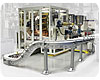
The ubiquitous plastic gallon jug – other than the cow, it has arguably become the universal symbol for milk. Its shape may be changing; some newfangled “green” jugs that can be palleted instead of cased have hit the scene, but so far they seem to be square pegs in dairy’s world of round holes.
Despite the prowess of paperboard and the glitz of glass, the plastic jug is the de facto standard. As such, blow molding remains an important part of fluid dairy operations and may even be gaining prominence in the current economy.
“A number of the on-site blow-molding processors that we deal with are maintaining the status quo while keeping an eye on ways to improve efficiencies,” says Ron Vecchio, global sales project manager for Fitchburg, Mass.-based Rocheleau Blow Molding Systems. “New investments by on-site blow molders are being considered with a higher degree of caution, with an eye on returns. The companies choosing to purchase bottles are seriously looking at the sky-rocketing cost for shipping and concluding it may indeed be the time to invest in self-manufacturing.”
Scott Howland, sales director at Graham Engineering Corp., York, Pa., sees a mixed bag. “Some customers remain committed to external sourcing, while others firmly believe they are cost advantaged by self manufacturing their own containers,” he says. “Still others produce some of their own bottles while purchasing non-strategic or low volume business containers.”
Major players tend to set the trend, with most other processors following their lead of making their HDPE gallons and half gallons in house, says Richard Smith, commercial director at Tecumseh, Mich.-based Uniloy Milacron North America. “However, this strategy is not necessarily used when it comes to smaller sizes like 32 ounces and below,” he explains. “Most of these sizes, especially single-serve 8- and 16-ounce containers, are purchased unless there is existing equipment in plant to produce these sizes or space within a given plant to install the equipment required to self manufacture these smaller sizes.”
But current economic conditions may lead companies to perform more of their supply functions in house. “As the economy tightens, we have seen an increase in the number of dairies inquiring about self manufacturing as a means of reducing costs,” Howland says. “Of particular interest are the light-weighting possibilities that can be achieved due to the consistency of running on rotary-wheel machines. Combined with reduced energy usage and labor costs, this has become a very attractive option that is receiving a hard look by many in the industry, particularly for single-serve packages.”
Vecchio concurs. “There is the initial capital investment, but tangible savings are being seen immediately by eliminating shipping costs,” he says. “Savings are two-fold with the additional savings seen from manufacturing bottles. We have also found that some processors are considering in-plant bottle manufacturing operated by a packaging company as a way to eliminate some of the costs that are related to shipping.”
But energy costs can be a double-edge sword, Smith cautions. “The rising cost of oil has had a huge negative impact on any custom blow molder supplying plastic HDPE containers to the dairy industry in two major areas,” he explains. “HDPE is produced from oil and is at an all-time high in price, and the price is very volatile. So even if a custom molder is allowed to pass on every resin price increase to the dairy, which they’re not, they still can’t keep up with the time lag between getting the price increase and then getting the dairy to acknowledge. Most custom molders are putting clauses in their container contracts which allow them to automatically past to the dairy resin price increases.”
“There is certainly a high interest in sustainability,” says David Yenor, Graham’s vice president of global business development. “While getting an agreement on the definition of sustainability is still difficult, it is widely recognized that rotary-wheel machines can provide processors a big step in the right direction. Weight savings of 8 to 12 percent are often achieved by combining rotary-wheel consistency with good design principles, resulting in lower resin costs. In addition, typically higher production rates and significantly reduced energy consumption can be achieved with rotary-wheel technology.”
Graham’s new Mini Wheel has opened up possibilities for processors in mid-size or emerging markets, Yenor says. “This is especially true in emerging markets such as specialty dairy drinks, which often require barrier performance,” he says. “The Mini Wheel is especially attractive in these co-extrusion applications.”
Vecchio says the issue of automation continues to be addressed. “The idea of manufacturing a bottle while keeping labor costs to a minimum,” he says. “Manufacturing bottles without human intervention, completely trimmed and leak tested in one line.”
In regards to Rocheleau’s products, “size isn’t everything, but substance is,” Vecchio says. “Whether you are a dairy processor or bottle manufacturer, in most cases we have found that space is at a premium. Considering that our blow-molding systems are more compact than our competitors without jeopardizing output is a real win-win. What has to be asked and honestly answered is: If at the end of the day I’m producing the bottle and quantities needed on the smaller, more compact machine, why would I even consider the larger, more expensive blow-molding equipment?”
Uniloy’s Smith says there are three major developments in blow molding commercially available to U.S. dairies today. There’s three-layer (white/black/white) container technology, in which bottles are molded with three distinct layers, the middle layer being post-consumer resin (PCR) with black colorant. The middle layer serves as barrier for the product against light, thereby providing extended shelf life.
Then there’s aseptic or sterile sealed containers, in which bottles are blow molded with sterile air and sealed at the end of the blowing cycle. The top is removed just prior to filling so the bacteria count inside the container is at an absolute minimum. This technology is typically used in conjunction with improved methods handling of the milk from the farm, along with cleaner processing and filling equipment to extend the product’s shelf life. “Our customers can also combine 3L technology with our sealed container technology,” Smith says.
Finally, there’s neck-to-neck (N2N) or tandem-blow technology, in which two containers are made in the same mold, generally used for containers that are 16 ounces or smaller. “However, the lion’s share of the time this technology is used for 8-ounce single-serve or smaller containers,” Smith says. “Essentially you double the output of containers without having to upsize the machine system, the end result being a lower cost to manufacture per container.”
Smith says Uniloy can deliver the advantages of N2N technology. “But beyond that, Uniloy is a full blow-molding system supplier in that we provide the entire blow-molding system – machine, container take-out, container movement, container trimming, container leak detection, container design, molds, tooling and after-market support through the life of these systems,” he says.
“In total, Uniloy provides customized blow-molding systems that utilize container light-weighting technology, cycle time reduction technology, system efficiency technology and energy conservation technology, with the sum of this being the ability to deliver lightest and strongest HDPE dairy containers at the lowest cost per container to manufacture.”
Smith names several things to look for in the next few years, the first of which is continued product differentiation with package and content. “From the packaging side, there will be new plastic container introductions that will differ in shape and size from the traditional 32-, 64- and 128-ounce sizes and shapes we have today,” he says. “The new container designs will require technical enhancements to existing systems or new blow-molding machine systems to cost-effectively produce these new containers.”
Next, Smith predicts, demand for ESL products will grow. “It will continue to be pushed hard, which we will require the 3L or aseptic blow technology,” he says.
Further, Smith says blow-molding machinery systems will become larger and more technically advanced. “The dairy industry will require systems to produce more containers from any single system as a subset of driving container cost as low possible without sacrificing container performance,” he says.
Graham’s Yenor sees plastic bottles continuing to make inroads against paperboard containers for aseptic UHT milk in several key global markets. “This is opening up growth opportunities for blow molding,” he says. “School milk remains a wild card, with good potential. Graham Engineering has completed school milk container design concepts, and we are assisting several companies in pursuing this growth opportunity.”
With the current state of the economy and energy costs, the overall outlook should be good for blow molding, Rocheleau’s Vecchio asserts. “If a company is considering alternatives to save money and add to the bottom line, blow molding their own bottles should become a priority,” he says. “We should also take into consideration the normal process of both packaging companies and processors, adding new product lines that may require new packaging. This, too, should prove to have a positive effect on blow molding over the next several years.”
Rocheleau Blow Molding Systems www.rocheleautool.com
Uniloy Milacron North America www.milacron.com
The ubiquitous plastic gallon jug – other than the cow, it has arguably become the universal symbol for milk. Its shape may be changing; some newfangled “green” jugs that can be palleted instead of cased have hit the scene, but so far they seem to be square pegs in dairy’s world of round holes.
Despite the prowess of paperboard and the glitz of glass, the plastic jug is the de facto standard. As such, blow molding remains an important part of fluid dairy operations and may even be gaining prominence in the current economy.
“A number of the on-site blow-molding processors that we deal with are maintaining the status quo while keeping an eye on ways to improve efficiencies,” says Ron Vecchio, global sales project manager for Fitchburg, Mass.-based Rocheleau Blow Molding Systems. “New investments by on-site blow molders are being considered with a higher degree of caution, with an eye on returns. The companies choosing to purchase bottles are seriously looking at the sky-rocketing cost for shipping and concluding it may indeed be the time to invest in self-manufacturing.”
Scott Howland, sales director at Graham Engineering Corp., York, Pa., sees a mixed bag. “Some customers remain committed to external sourcing, while others firmly believe they are cost advantaged by self manufacturing their own containers,” he says. “Still others produce some of their own bottles while purchasing non-strategic or low volume business containers.”
Major players tend to set the trend, with most other processors following their lead of making their HDPE gallons and half gallons in house, says Richard Smith, commercial director at Tecumseh, Mich.-based Uniloy Milacron North America. “However, this strategy is not necessarily used when it comes to smaller sizes like 32 ounces and below,” he explains. “Most of these sizes, especially single-serve 8- and 16-ounce containers, are purchased unless there is existing equipment in plant to produce these sizes or space within a given plant to install the equipment required to self manufacture these smaller sizes.”
But current economic conditions may lead companies to perform more of their supply functions in house. “As the economy tightens, we have seen an increase in the number of dairies inquiring about self manufacturing as a means of reducing costs,” Howland says. “Of particular interest are the light-weighting possibilities that can be achieved due to the consistency of running on rotary-wheel machines. Combined with reduced energy usage and labor costs, this has become a very attractive option that is receiving a hard look by many in the industry, particularly for single-serve packages.”
Vecchio concurs. “There is the initial capital investment, but tangible savings are being seen immediately by eliminating shipping costs,” he says. “Savings are two-fold with the additional savings seen from manufacturing bottles. We have also found that some processors are considering in-plant bottle manufacturing operated by a packaging company as a way to eliminate some of the costs that are related to shipping.”
But energy costs can be a double-edge sword, Smith cautions. “The rising cost of oil has had a huge negative impact on any custom blow molder supplying plastic HDPE containers to the dairy industry in two major areas,” he explains. “HDPE is produced from oil and is at an all-time high in price, and the price is very volatile. So even if a custom molder is allowed to pass on every resin price increase to the dairy, which they’re not, they still can’t keep up with the time lag between getting the price increase and then getting the dairy to acknowledge. Most custom molders are putting clauses in their container contracts which allow them to automatically past to the dairy resin price increases.”
Advantages
Still, this is not enough to keep manufacturers of blow-molding equipment from continuing to refine and improve their designs to meet the changing demands of dairy processors.“There is certainly a high interest in sustainability,” says David Yenor, Graham’s vice president of global business development. “While getting an agreement on the definition of sustainability is still difficult, it is widely recognized that rotary-wheel machines can provide processors a big step in the right direction. Weight savings of 8 to 12 percent are often achieved by combining rotary-wheel consistency with good design principles, resulting in lower resin costs. In addition, typically higher production rates and significantly reduced energy consumption can be achieved with rotary-wheel technology.”
Graham’s new Mini Wheel has opened up possibilities for processors in mid-size or emerging markets, Yenor says. “This is especially true in emerging markets such as specialty dairy drinks, which often require barrier performance,” he says. “The Mini Wheel is especially attractive in these co-extrusion applications.”
Vecchio says the issue of automation continues to be addressed. “The idea of manufacturing a bottle while keeping labor costs to a minimum,” he says. “Manufacturing bottles without human intervention, completely trimmed and leak tested in one line.”
In regards to Rocheleau’s products, “size isn’t everything, but substance is,” Vecchio says. “Whether you are a dairy processor or bottle manufacturer, in most cases we have found that space is at a premium. Considering that our blow-molding systems are more compact than our competitors without jeopardizing output is a real win-win. What has to be asked and honestly answered is: If at the end of the day I’m producing the bottle and quantities needed on the smaller, more compact machine, why would I even consider the larger, more expensive blow-molding equipment?”
Uniloy’s Smith says there are three major developments in blow molding commercially available to U.S. dairies today. There’s three-layer (white/black/white) container technology, in which bottles are molded with three distinct layers, the middle layer being post-consumer resin (PCR) with black colorant. The middle layer serves as barrier for the product against light, thereby providing extended shelf life.
Then there’s aseptic or sterile sealed containers, in which bottles are blow molded with sterile air and sealed at the end of the blowing cycle. The top is removed just prior to filling so the bacteria count inside the container is at an absolute minimum. This technology is typically used in conjunction with improved methods handling of the milk from the farm, along with cleaner processing and filling equipment to extend the product’s shelf life. “Our customers can also combine 3L technology with our sealed container technology,” Smith says.
Finally, there’s neck-to-neck (N2N) or tandem-blow technology, in which two containers are made in the same mold, generally used for containers that are 16 ounces or smaller. “However, the lion’s share of the time this technology is used for 8-ounce single-serve or smaller containers,” Smith says. “Essentially you double the output of containers without having to upsize the machine system, the end result being a lower cost to manufacture per container.”
Smith says Uniloy can deliver the advantages of N2N technology. “But beyond that, Uniloy is a full blow-molding system supplier in that we provide the entire blow-molding system – machine, container take-out, container movement, container trimming, container leak detection, container design, molds, tooling and after-market support through the life of these systems,” he says.
“In total, Uniloy provides customized blow-molding systems that utilize container light-weighting technology, cycle time reduction technology, system efficiency technology and energy conservation technology, with the sum of this being the ability to deliver lightest and strongest HDPE dairy containers at the lowest cost per container to manufacture.”
The future
What’s coming next from the world of blow molding?Smith names several things to look for in the next few years, the first of which is continued product differentiation with package and content. “From the packaging side, there will be new plastic container introductions that will differ in shape and size from the traditional 32-, 64- and 128-ounce sizes and shapes we have today,” he says. “The new container designs will require technical enhancements to existing systems or new blow-molding machine systems to cost-effectively produce these new containers.”
Next, Smith predicts, demand for ESL products will grow. “It will continue to be pushed hard, which we will require the 3L or aseptic blow technology,” he says.
Further, Smith says blow-molding machinery systems will become larger and more technically advanced. “The dairy industry will require systems to produce more containers from any single system as a subset of driving container cost as low possible without sacrificing container performance,” he says.
Graham’s Yenor sees plastic bottles continuing to make inroads against paperboard containers for aseptic UHT milk in several key global markets. “This is opening up growth opportunities for blow molding,” he says. “School milk remains a wild card, with good potential. Graham Engineering has completed school milk container design concepts, and we are assisting several companies in pursuing this growth opportunity.”
With the current state of the economy and energy costs, the overall outlook should be good for blow molding, Rocheleau’s Vecchio asserts. “If a company is considering alternatives to save money and add to the bottom line, blow molding their own bottles should become a priority,” he says. “We should also take into consideration the normal process of both packaging companies and processors, adding new product lines that may require new packaging. This, too, should prove to have a positive effect on blow molding over the next several years.”
Extras
Graham Engineering Corp. www.grahamengineering.comRocheleau Blow Molding Systems www.rocheleautool.com
Uniloy Milacron North America www.milacron.com
Looking for a reprint of this article?
From high-res PDFs to custom plaques, order your copy today!