Cultured Product Trends 2007: Alive & Well
Live
and active yogurt, in all its many forms-cup, drink, tube and even frozen-continues
to be the glitz and glamour of the cultured dairy products category. Product
developers and marketers both appreciate the versatility yogurt provides in
terms of innovation, as well as the good-for-you reputation it has with
consumers.
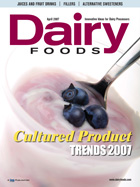
Live and active yogurt, in all its many forms-cup, drink, tube and even frozen-continues to be the glitz and glamour of the cultured dairy products category. Product developers and marketers both appreciate the versatility yogurt provides in terms of innovation, as well as the good-for-you reputation it has with consumers.
It appears as if yogurt’s guardian angel has spread its wings and is sharing its healthful halo with fellow cultured dairy product cottage cheese. That’s right, after years of declining sales, often double digit, cottage cheese dollar sales are booming for the top-10 marketers (see chart and sidebar). These folks are investing R&D and marketing dollars to make this category a bigger chunk of their company’s cultured dairy business.
Number-one cottage cheese marketer Kraft Foods Inc., Northfield, Ill., recognizes that today’s consumers appreciate the convenience benefits of single-serve containers. The company is rolling out a 2% milk low-fat cottage cheese labeled “for Digestive Health.” Available under both the Breakstone’s and Knudsen brands in four-packs of 4-oz cups, the cottage cheese is enhanced with the prebiotic fiber inulin, with each cup claiming to contain 3g of fiber.
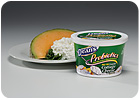
 Dean Foods Co., Dallas, knows that with the right marketing message and
efforts, and with a great product, you can sell cottage cheese. The company is
in the midst of a probiotic cottage cheese roll out in the Upper Midwest under
Dean Foods’ three flagship brands: Dean’s, Country Fresh and Land O Lakes.
Dean Foods Co., Dallas, knows that with the right marketing message and
efforts, and with a great product, you can sell cottage cheese. The company is
in the midst of a probiotic cottage cheese roll out in the Upper Midwest under
Dean Foods’ three flagship brands: Dean’s, Country Fresh and Land O Lakes.
The new probiotic cottage cheese contains Lactobacillus acidophilus, Bifidobacterium and Lactobacillus casei. “Our research revealed that probiotics are one of the major new trends emerging in the food industry. We are excited about a great-tasting cottage cheese that also delivers specific health benefits,” says Dave Haley, regional director of marketing, Dean Dairy Group. “Our product development team developed a product that is on-target for today’s consumer that has an ever-increasing preference for healthy food products, especially those that taste great.”
Indeed, many in the cottage cheese business are investing in order to grow. For example, Smith Dairy Products Co., Orrville, Ohio, has implemented a slow-cooking technique to craft its Smith’s Fat Free Cottage Cheese. “The slow-cooking method gives the fat-free cottage cheese the same flavor, consistency and quality as our regular and low-fat cottage cheeses,” says Penny Baker, marketing manager.
Now all Smith’s cottage cheese products take about 18 hours to process from fresh milk to finished product, in contrast to a more common industry practice of quick-setting. “The quick-set process often produces cottage cheese with a grainier texture and less natural flavor,” Baker says. “Our slow-cooking technique assures that the cheese is clean, creamy and slightly salty, with a mild cultured or buttery flavor.”
Smith’s spends a lot of marketing efforts educating consumers that cottage cheese is a great-tasting, nutritional ingredient with application in a variety of recipes. For example, during the first quarter of 2007, the company conducted the Cash Cow Cottage Cheese Recipe Contest. Home cooks competed for various cash prizes by submitting original recipes using Smith’s cottage cheese. “We hope our customers will have fun cooking up something delicious,” says Baker. “But we also hope that they get the message that our cottage cheese doesn’t just taste great on its own for a meal but also adds a rich, creamy touch to recipes. Because it’s surprisingly versatile, our cottage cheese is a staple in the cook’s kitchen.”
And, rumor has it that Daisy Brand L.P., Dallas, dedicated sour cream manufacturers for more than 75 years, is getting into the cottage cheese business. The company is building a new manufacturing facility in Casa Grande, Ariz., which is scheduled to open in 2008.
Owning the number-one brand of sour cream-Daisy-and marketing it as being “pure & natural,” it will be interesting to see what the privately owned company does for cottage cheese’s future in the United States. Its track record with sour cream is impressive. The company initially sold its sour cream only in the central part of the United States. With a growth in sales of about 20% annually during the past decade, the company’s products are now shipped to third-party warehouses and sold in all major U.S. grocery retail chains, as well as at stores in Europe and Mexico.

In the one year since Dannon introduced Activia, which is marketed as “an aid to help regulate the digestive system by helping reduce transit time,” sales in U.S. stores soared well past the $100 million mark. This is a major milestone since less than 0.1% of all new foods and beverages ever reach this point during their first year in the marketplace.
In fact, the head of France’s Groupe Danone’s North American dairy business recently told Reuters that he has become more convinced yogurt consumption in the United States could eventually bridge the gap with consumption in Europe. Activia’s positive reception helped foster these expectations, according to Juan Carlos Dalto, Dannon’s CEO. Dalto declined to say how long it would take to catch up: American’s eat about 1/7th the amount of yogurt consumed by the French annually. Dalto says that in order to assist with getting Americans to eat more yogurt, Dannon plans on doubling production by 2011 via expansions at its factories in Minster, Ohio, and West Jordan, Utah.
 Indeed, Dannon believes the future of cultured dairy
products in America is all about probiotics. This is exemplified by some recent
additions and modifications to the company’s product mix. For example, in order
to appeal to consumers who want fewer calories and less sugar in their yogurt,
Dannon began rolling out Activia Light in February. Around the same time the
company also launched an all-natural yogurt, which taps into the growing market
for natural products. And, the company decided to go national with its
DanActive probiotic drink.
Indeed, Dannon believes the future of cultured dairy
products in America is all about probiotics. This is exemplified by some recent
additions and modifications to the company’s product mix. For example, in order
to appeal to consumers who want fewer calories and less sugar in their yogurt,
Dannon began rolling out Activia Light in February. Around the same time the
company also launched an all-natural yogurt, which taps into the growing market
for natural products. And, the company decided to go national with its
DanActive probiotic drink.
 DanActive is clinically proven to help strengthen the body’s
defenses when enjoyed daily thanks to the inclusion of the proprietary
probiotic Lactobacillus casei Immunitas culture. In many countries, probiotic
drinks are a part of daily routines. Each serving of DanActive contains 10 billion
active cultures of L. casei Immunitas. DanActive comes in four flavors:
Strawberry, Vanilla, Blueberry and Cranberry Raspberry, and contains no
artificial flavors or preservatives. Across Europe and Asia, DanActive has been
enjoyed for years under the brand name Actimel. More than 6 million bottles are
consumed daily around the world.
DanActive is clinically proven to help strengthen the body’s
defenses when enjoyed daily thanks to the inclusion of the proprietary
probiotic Lactobacillus casei Immunitas culture. In many countries, probiotic
drinks are a part of daily routines. Each serving of DanActive contains 10 billion
active cultures of L. casei Immunitas. DanActive comes in four flavors:
Strawberry, Vanilla, Blueberry and Cranberry Raspberry, and contains no
artificial flavors or preservatives. Across Europe and Asia, DanActive has been
enjoyed for years under the brand name Actimel. More than 6 million bottles are
consumed daily around the world.
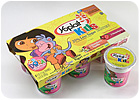
Also at the beginning of the year, Dannon started adding the world’s most researched probiotic culture in children, Lactobacillus GG (LGG), to its Danimals line of drinkable kids’ yogurts.
LGG is a natural probiotic culture that has been researched extensively and consumed safely since its identification in 1985. “More than 150 clinical trials, including more than 50 studies specifically performed in children, have evaluated the benefits of LGG on a variety of parameters, including how this probiotic culture helps maintain the normal function of the body,” says Miguel Freitas, scientific affairs manager for Dannon. Clinically proven to survive passage through the digestive tract, LGG has been shown to positively influence the balance of friendly bacteria.
Dannon does its homework. The company’s marketers spoke to thousands of parents to determine what ingredients they consider to be nutritious and beneficial and what ingredients they steer away from when considering what to feed their kids. As a result, Danimals yogurt products no longer contain artificial colors, artificial flavors or high-fructose corn syrup. These reformulated products provide twice the calcium than leading kids’ yogurts and are a good source of protein, vitamin D and riboflavin. In addition, Danimals Cups now contain 25% less sugar.
 Danimals’ competitor-Yoplait Kids-from General Mills Inc.,
Minneapolis, has also taken its sugar content down 25%. But more excitingly,
Yoplait Kids is the first kids’ yogurt to contain the omega-3 fatty acid
docosahexaenoic acid (DHA), which is an important nutrient that supports brain
growth during early childhood developmental stages.
Danimals’ competitor-Yoplait Kids-from General Mills Inc.,
Minneapolis, has also taken its sugar content down 25%. But more excitingly,
Yoplait Kids is the first kids’ yogurt to contain the omega-3 fatty acid
docosahexaenoic acid (DHA), which is an important nutrient that supports brain
growth during early childhood developmental stages.
Yoplait Kids provides 16mg of naturally sourced DHA per serving. Yoplait Kids comes in a two-flavor, six-pack of 4-oz cups. Flavors include Strawberry/Strawberry Vanilla, Peach/Strawberry Banana and Banana/Vanilla.
It has also been announced that Dean Foods plans to bring its Rachel’s yogurt brand from the United Kingdom to the States. The yogurt will be formulated to contain DHA.
Wells’ Dairy Inc., LeMars, Iowa, introduces an improved version of its Blue Bunny Lite 85 yogurt. Already a good source of calcium and protein, Lite 85 products now contain probiotic cultures. The brand also has a new line of Lite 85 yogurt called Lite 85 Superfruit yogurt.
“Lite 85 Superfruit yogurt contains unique fruit combinations that are natural sources of antioxidants,” says Kent McCuddin, manager of consumer communications. “This feature appeals to consumers who want the hottest new flavor combinations in a light yogurt, with the added benefits of antioxidants.”
The six flavors of Lite 85 Superfruit yogurt are Black Currant, Pomegranate Blueberry, Pomegranate Cherry, Raspberry Açai, Raspberry Cranberry and White Cranberry Strawberry.
Always the innovator, Stonyfield Farm, Londonderry, N.H., the world’s leading organic yogurt maker, enters the energy drink market with an alternative to the caffeine-fueled energy drinks now crowding store shelves. Branded Shift, this dairy-based probiotic drink provides a sustainable energy source with a combination of protein, vitamins, açai and ginseng, and doesn’t contain caffeine or guarana. That means Shift drinkers have none of the negative side effects-among them rapid heart rate, anxiety and gastrointestinal problems-associated with traditional energy drinks.
“As the father of three teenagers, and as a soccer coach, I know that energy drinks promise a lot, but only give you a temporary, artificial energy spike followed by a quick low,” says Gary Hirshberg, Stonyfield’s president and CE-Yo. “For teens and young adults who want to maintain a healthy and sustainable energy level, Shift is the only organic alternative. Drink it anytime of day and you’ll benefit from vitamins, protein and calcium, things your body needs for peak performance and recovery.”
Made with milk and other ingredients from organic farms, the drink is also 100% natural. With only 200 calories in each 10-oz serving, low-fat Shift has a third less sugar than regular yogurt smoothies. Flavors include Berry Boost, Power Punch and Strawberry Banana.
Another innovation from Stonyfield goes one up on the 3-a-Day of Dairy campaign. The name says it all. Eat two cups daily of Stonyfield’s “2-a-Day” yogurt, and one gets 100% of the recommended Daily Value (DV) of calcium. With 50% DV of calcium, 2-a-Day contains more than twice the calcium of other leading yogurts. And since calcium absorption is a key follow-up to adequate calcium intake, 2-a-Day also contains 20% of the recommended DV of vitamin D, as well as the dietary fiber inulin, both of which are proven to help boost calcium absorption.
The newly created Breyers Yogurt Co. unit of Healthy Foods now includes the YoCrunch and YoFarm brands, and the Breyers and Creme Savers brands.
“We are delighted to have the opportunity to build the Breyers brand by adding innovative new products and expanding retail distribution in all major channels,” says Chuck Marcy, CEO of Healthy Food Holdings.
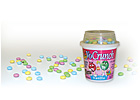
The ink on these deals is barely dry, and already the innovation is showing. For starters, YoCrunch rolled out what is likely the first seasonal springtime yogurt, which contains pastel colored M&Ms in the dome inclusion cup (see opening image).
In March, YoCrunch went all-natural with new YoCrunch Naturals. The line features nutritious, all-natural smooth yogurt topped with all-natural toppings such as Back to Nature Granola, Grape-Nuts Cereal and SunSpire baking chips. The yogurt comes in five flavors: Blueberry, Mixed Berry, Strawberry, Strawberry Banana and Vanilla.
Meanwhile, in New Zealand, dairy group Fronterra has identified a natural process that can increase the shelflife of yogurt up to 90 days by killing spoilage yeast and mold, while selectively preserving live and active cultures, including probiotics. The company has four patents granted or pending in more than 30 countries to do with the technology, including one for the selective inactivation of spoilage organisms and pathogens in cultured foods.
The process reportedly retains the fresh characteristics of refrigerated yogurt with no compromise to flavor, color or nutritional characteristics. “It is a natural process that uses no additives or preservatives, and can be used on a variety of cultured foods and beverages,” according to the company. “The technology does not require significant disruption to existing manufacturing processes and existing formulation and packaging can be used in most cases.”
Most other cultured dairy products categories continue to thrive. This is particularly true for sour cream, a frequently-used condiment in the burgeoning Hispanic market. Other categories such as cream cheese and sour cream-based dips keep consumers coming back for more through trendy flavor offerings.
The next few years are sure to be exciting for the cultured dairy category. Consumers are once again embracing cottage cheese. They have welcomed probiotics and other functional ingredients. And, processors continue to aggressively roll out flavors and formulations to tantalize all taste buds.
Number-one cottage cheese marketer Kraft Foods Inc., Northfield, Ill., with more than one-fourth share of the cottage business, owns three leading brands: Breakstone’s, Knudsen and Light ‘n Lively. Both the Breakstone’s and Knudsen brands have a sub-brand line of single-serve, side-by-side cottage cheese and fruit products called Cottage Doubles. While these innovations have driven growth, traditional multi-serving tubs of cottage cheese in all fat levels are also selling well for Kraft.
Dean Foods Co., Dallas, owns more brands of cottage cheese than any other marketer, and many of its brands have shown double-digit dollar sales growth during the past few years. For the Land O’ Lakes (LOL) cottage cheese brand, it has been triple-digit growth. Dean Foods has been licensing the LOL cottage cheese brand from Land O’Lakes, Arden Hills, Minn., since 2000 and has grown it more than 300% from 2002 to 2006.
Number-three cottage cheese marketer HP Hood LLC, Chelsea, Mass., which markets cottage cheese under its namesake brand, as well as brands acquired through acquisitions (Axelrod, Crowley, Kemps and Penn Maid) and through a licensing agreement (Lactaid), has a very solid cottage cheese business and has shown the greatest growth among the top-three marketers during the past five-year period. One of the company’s most impressive strengths, as compared to many of its competitors, is its extensive variety of flavors offered, such as Pineapple & Cherry and new Peaches.
Traditional Greek yogurt is a strained yogurt made from either cows milk or goats milk and contains 9% to 10% milkfat. The higher milkfat and straining process makes for an exceptionally smooth body and rich, creamy mouthfeel, as compared to American yogurts.
Greek Gods Greek Yogurts from 3 Greek Gods LLC, Mountlake Terrace, Wash., makes five varieties of this cultured ethnic delight: Fig, Honey, Nonfat Plain, Pomegranate and Traditional Plain.
Greek dairy FAGE, which has been importing its Total brand Greek yogurts into the States since 1998, is building its first U.S. yogurt plant in Johnstown, N.Y. The $70 million facility, which is expected to turn 31 million gallons of milk every year into Greek yogurt, plans to be running initial trials by the end of the year and be fully operational in early 2008.
FAGE is serious about getting Americans to be Greek yogurt lovers. In February, the company named Ogilvy North America, New York, as its U.S. agency of record. Ogilvy was awarded FAGE’s fully integrated marketing account based on the agency’s proven success in building brands across multiple channels. “Our goal is to make FAGE one of the world’s favorite brands and we are counting on Ogilvy’s expertise to help us build on our great heritage here in the United States,” says FAGE’s Antonios Maridakis.
Opaa!
Developed by DSM Food Specialties, also of the Netherlands, Fabuless’ microstructure prevents the digestion of the palm oil droplets until relatively deep in the small intestine. Because undigested fat arriving in the ileum (the latter part of the small intestine) triggers an “appetite satisfied” signal to the brain, consumers feel no need to take in more calories, can eat less and still feel satisfied.
Dairy products containing Fabuless are already available in Italy (ActifControl by Latteria Merano) and in Portugal (by Lactogal, as part of its Adagio range of healthy dairy concepts).
Live and active yogurt, in all its many forms-cup, drink, tube and even frozen-continues to be the glitz and glamour of the cultured dairy products category. Product developers and marketers both appreciate the versatility yogurt provides in terms of innovation, as well as the good-for-you reputation it has with consumers.
It appears as if yogurt’s guardian angel has spread its wings and is sharing its healthful halo with fellow cultured dairy product cottage cheese. That’s right, after years of declining sales, often double digit, cottage cheese dollar sales are booming for the top-10 marketers (see chart and sidebar). These folks are investing R&D and marketing dollars to make this category a bigger chunk of their company’s cultured dairy business.
Number-one cottage cheese marketer Kraft Foods Inc., Northfield, Ill., recognizes that today’s consumers appreciate the convenience benefits of single-serve containers. The company is rolling out a 2% milk low-fat cottage cheese labeled “for Digestive Health.” Available under both the Breakstone’s and Knudsen brands in four-packs of 4-oz cups, the cottage cheese is enhanced with the prebiotic fiber inulin, with each cup claiming to contain 3g of fiber.
The new probiotic cottage cheese contains Lactobacillus acidophilus, Bifidobacterium and Lactobacillus casei. “Our research revealed that probiotics are one of the major new trends emerging in the food industry. We are excited about a great-tasting cottage cheese that also delivers specific health benefits,” says Dave Haley, regional director of marketing, Dean Dairy Group. “Our product development team developed a product that is on-target for today’s consumer that has an ever-increasing preference for healthy food products, especially those that taste great.”
Indeed, many in the cottage cheese business are investing in order to grow. For example, Smith Dairy Products Co., Orrville, Ohio, has implemented a slow-cooking technique to craft its Smith’s Fat Free Cottage Cheese. “The slow-cooking method gives the fat-free cottage cheese the same flavor, consistency and quality as our regular and low-fat cottage cheeses,” says Penny Baker, marketing manager.
Now all Smith’s cottage cheese products take about 18 hours to process from fresh milk to finished product, in contrast to a more common industry practice of quick-setting. “The quick-set process often produces cottage cheese with a grainier texture and less natural flavor,” Baker says. “Our slow-cooking technique assures that the cheese is clean, creamy and slightly salty, with a mild cultured or buttery flavor.”
Smith’s spends a lot of marketing efforts educating consumers that cottage cheese is a great-tasting, nutritional ingredient with application in a variety of recipes. For example, during the first quarter of 2007, the company conducted the Cash Cow Cottage Cheese Recipe Contest. Home cooks competed for various cash prizes by submitting original recipes using Smith’s cottage cheese. “We hope our customers will have fun cooking up something delicious,” says Baker. “But we also hope that they get the message that our cottage cheese doesn’t just taste great on its own for a meal but also adds a rich, creamy touch to recipes. Because it’s surprisingly versatile, our cottage cheese is a staple in the cook’s kitchen.”
And, rumor has it that Daisy Brand L.P., Dallas, dedicated sour cream manufacturers for more than 75 years, is getting into the cottage cheese business. The company is building a new manufacturing facility in Casa Grande, Ariz., which is scheduled to open in 2008.
Owning the number-one brand of sour cream-Daisy-and marketing it as being “pure & natural,” it will be interesting to see what the privately owned company does for cottage cheese’s future in the United States. Its track record with sour cream is impressive. The company initially sold its sour cream only in the central part of the United States. With a growth in sales of about 20% annually during the past decade, the company’s products are now shipped to third-party warehouses and sold in all major U.S. grocery retail chains, as well as at stores in Europe and Mexico.
Recent cottage cheese innovations include the addition of either probiotics or fiber.
The golden child
Americans might be rediscovering cottage cheese, but when it comes to yogurt . . . this is a solid relationship that gets stronger by the day thanks to numerous innovations by marketers, many of which center on those beneficial bacteria we call probiotics. In fact, in late January, The New York Times proclaimed that the time is finally right for probiotic dairy foods in the United States. Much of this is due to White Plains, N.Y.-based The Dannon Company’s highly successful launch of Activia.In the one year since Dannon introduced Activia, which is marketed as “an aid to help regulate the digestive system by helping reduce transit time,” sales in U.S. stores soared well past the $100 million mark. This is a major milestone since less than 0.1% of all new foods and beverages ever reach this point during their first year in the marketplace.
In fact, the head of France’s Groupe Danone’s North American dairy business recently told Reuters that he has become more convinced yogurt consumption in the United States could eventually bridge the gap with consumption in Europe. Activia’s positive reception helped foster these expectations, according to Juan Carlos Dalto, Dannon’s CEO. Dalto declined to say how long it would take to catch up: American’s eat about 1/7th the amount of yogurt consumed by the French annually. Dalto says that in order to assist with getting Americans to eat more yogurt, Dannon plans on doubling production by 2011 via expansions at its factories in Minster, Ohio, and West Jordan, Utah.
Adding
omega-3s to yogurt, particularly kids’ yogurt, is the current trend.
Also at the beginning of the year, Dannon started adding the world’s most researched probiotic culture in children, Lactobacillus GG (LGG), to its Danimals line of drinkable kids’ yogurts.
LGG is a natural probiotic culture that has been researched extensively and consumed safely since its identification in 1985. “More than 150 clinical trials, including more than 50 studies specifically performed in children, have evaluated the benefits of LGG on a variety of parameters, including how this probiotic culture helps maintain the normal function of the body,” says Miguel Freitas, scientific affairs manager for Dannon. Clinically proven to survive passage through the digestive tract, LGG has been shown to positively influence the balance of friendly bacteria.
Dannon does its homework. The company’s marketers spoke to thousands of parents to determine what ingredients they consider to be nutritious and beneficial and what ingredients they steer away from when considering what to feed their kids. As a result, Danimals yogurt products no longer contain artificial colors, artificial flavors or high-fructose corn syrup. These reformulated products provide twice the calcium than leading kids’ yogurts and are a good source of protein, vitamin D and riboflavin. In addition, Danimals Cups now contain 25% less sugar.
Philadelphia
cream cheese positions itself as a dip. Consumers simply invert the cup onto a
plate. The salsa pours over the cream cheese and is ready for dipping or
spreading.
Yoplait Kids provides 16mg of naturally sourced DHA per serving. Yoplait Kids comes in a two-flavor, six-pack of 4-oz cups. Flavors include Strawberry/Strawberry Vanilla, Peach/Strawberry Banana and Banana/Vanilla.
It has also been announced that Dean Foods plans to bring its Rachel’s yogurt brand from the United Kingdom to the States. The yogurt will be formulated to contain DHA.
Wells’ Dairy Inc., LeMars, Iowa, introduces an improved version of its Blue Bunny Lite 85 yogurt. Already a good source of calcium and protein, Lite 85 products now contain probiotic cultures. The brand also has a new line of Lite 85 yogurt called Lite 85 Superfruit yogurt.
“Lite 85 Superfruit yogurt contains unique fruit combinations that are natural sources of antioxidants,” says Kent McCuddin, manager of consumer communications. “This feature appeals to consumers who want the hottest new flavor combinations in a light yogurt, with the added benefits of antioxidants.”
The six flavors of Lite 85 Superfruit yogurt are Black Currant, Pomegranate Blueberry, Pomegranate Cherry, Raspberry Açai, Raspberry Cranberry and White Cranberry Strawberry.
Always the innovator, Stonyfield Farm, Londonderry, N.H., the world’s leading organic yogurt maker, enters the energy drink market with an alternative to the caffeine-fueled energy drinks now crowding store shelves. Branded Shift, this dairy-based probiotic drink provides a sustainable energy source with a combination of protein, vitamins, açai and ginseng, and doesn’t contain caffeine or guarana. That means Shift drinkers have none of the negative side effects-among them rapid heart rate, anxiety and gastrointestinal problems-associated with traditional energy drinks.
“As the father of three teenagers, and as a soccer coach, I know that energy drinks promise a lot, but only give you a temporary, artificial energy spike followed by a quick low,” says Gary Hirshberg, Stonyfield’s president and CE-Yo. “For teens and young adults who want to maintain a healthy and sustainable energy level, Shift is the only organic alternative. Drink it anytime of day and you’ll benefit from vitamins, protein and calcium, things your body needs for peak performance and recovery.”
Made with milk and other ingredients from organic farms, the drink is also 100% natural. With only 200 calories in each 10-oz serving, low-fat Shift has a third less sugar than regular yogurt smoothies. Flavors include Berry Boost, Power Punch and Strawberry Banana.
Another innovation from Stonyfield goes one up on the 3-a-Day of Dairy campaign. The name says it all. Eat two cups daily of Stonyfield’s “2-a-Day” yogurt, and one gets 100% of the recommended Daily Value (DV) of calcium. With 50% DV of calcium, 2-a-Day contains more than twice the calcium of other leading yogurts. And since calcium absorption is a key follow-up to adequate calcium intake, 2-a-Day also contains 20% of the recommended DV of vitamin D, as well as the dietary fiber inulin, both of which are proven to help boost calcium absorption.
Ready to move ahead
There’s a new name in yogurt that you will be hearing more about: Healthy Food Holdings LLC, Boulder Colo., a portfolio company of Greenwich, Conn.-based private equity firm Catterton Partners. As a management holding company for branded, better-for-you foods, Healthy Food Holdings makes strategic investments in high-quality food and beverage companies focused on healthy, natural and organic products. Its first cultured dairy products acquisition was YoCrunch yogurts back in September 2005. More recently, Healthy Food Holdings completed the acquisition of CoolBrands Dairy Inc., a subsidiary of CoolBrands International Inc., Toronto, Canada.The newly created Breyers Yogurt Co. unit of Healthy Foods now includes the YoCrunch and YoFarm brands, and the Breyers and Creme Savers brands.
“We are delighted to have the opportunity to build the Breyers brand by adding innovative new products and expanding retail distribution in all major channels,” says Chuck Marcy, CEO of Healthy Food Holdings.
The ink on these deals is barely dry, and already the innovation is showing. For starters, YoCrunch rolled out what is likely the first seasonal springtime yogurt, which contains pastel colored M&Ms in the dome inclusion cup (see opening image).
In March, YoCrunch went all-natural with new YoCrunch Naturals. The line features nutritious, all-natural smooth yogurt topped with all-natural toppings such as Back to Nature Granola, Grape-Nuts Cereal and SunSpire baking chips. The yogurt comes in five flavors: Blueberry, Mixed Berry, Strawberry, Strawberry Banana and Vanilla.
Meanwhile, in New Zealand, dairy group Fronterra has identified a natural process that can increase the shelflife of yogurt up to 90 days by killing spoilage yeast and mold, while selectively preserving live and active cultures, including probiotics. The company has four patents granted or pending in more than 30 countries to do with the technology, including one for the selective inactivation of spoilage organisms and pathogens in cultured foods.
The process reportedly retains the fresh characteristics of refrigerated yogurt with no compromise to flavor, color or nutritional characteristics. “It is a natural process that uses no additives or preservatives, and can be used on a variety of cultured foods and beverages,” according to the company. “The technology does not require significant disruption to existing manufacturing processes and existing formulation and packaging can be used in most cases.”
Most other cultured dairy products categories continue to thrive. This is particularly true for sour cream, a frequently-used condiment in the burgeoning Hispanic market. Other categories such as cream cheese and sour cream-based dips keep consumers coming back for more through trendy flavor offerings.
The next few years are sure to be exciting for the cultured dairy category. Consumers are once again embracing cottage cheese. They have welcomed probiotics and other functional ingredients. And, processors continue to aggressively roll out flavors and formulations to tantalize all taste buds.
Sidebar: Cottage Cheese Finds New Life
After years of neglecting curds and cream, dairy processors once again embrace cottage cheese by allocating dollars towards marketing efforts, as well as research and development.Number-one cottage cheese marketer Kraft Foods Inc., Northfield, Ill., with more than one-fourth share of the cottage business, owns three leading brands: Breakstone’s, Knudsen and Light ‘n Lively. Both the Breakstone’s and Knudsen brands have a sub-brand line of single-serve, side-by-side cottage cheese and fruit products called Cottage Doubles. While these innovations have driven growth, traditional multi-serving tubs of cottage cheese in all fat levels are also selling well for Kraft.
Dean Foods Co., Dallas, owns more brands of cottage cheese than any other marketer, and many of its brands have shown double-digit dollar sales growth during the past few years. For the Land O’ Lakes (LOL) cottage cheese brand, it has been triple-digit growth. Dean Foods has been licensing the LOL cottage cheese brand from Land O’Lakes, Arden Hills, Minn., since 2000 and has grown it more than 300% from 2002 to 2006.
Number-three cottage cheese marketer HP Hood LLC, Chelsea, Mass., which markets cottage cheese under its namesake brand, as well as brands acquired through acquisitions (Axelrod, Crowley, Kemps and Penn Maid) and through a licensing agreement (Lactaid), has a very solid cottage cheese business and has shown the greatest growth among the top-three marketers during the past five-year period. One of the company’s most impressive strengths, as compared to many of its competitors, is its extensive variety of flavors offered, such as Pineapple & Cherry and new Peaches.
Sidebar: Greek Yogurt Takes America
Yogurt is regarded as one of the oldest foods known to the human race. Flavors and consistencies vary by country, with Americans historically preferring overly sweet, fruit-flavored yogurts. Tastes are changing, and Americans are embracing the various Greek yogurts invading retail dairy cases across the country. Often Greek yogurts are used in recipes for dips and salad dressings. They can garnish soups, as well as add a creamy taste and texture to sauces and curries. Even Martha Stewart keeps some on hand for all her culinary needs.Traditional Greek yogurt is a strained yogurt made from either cows milk or goats milk and contains 9% to 10% milkfat. The higher milkfat and straining process makes for an exceptionally smooth body and rich, creamy mouthfeel, as compared to American yogurts.
Greek Gods Greek Yogurts from 3 Greek Gods LLC, Mountlake Terrace, Wash., makes five varieties of this cultured ethnic delight: Fig, Honey, Nonfat Plain, Pomegranate and Traditional Plain.
Greek dairy FAGE, which has been importing its Total brand Greek yogurts into the States since 1998, is building its first U.S. yogurt plant in Johnstown, N.Y. The $70 million facility, which is expected to turn 31 million gallons of milk every year into Greek yogurt, plans to be running initial trials by the end of the year and be fully operational in early 2008.
FAGE is serious about getting Americans to be Greek yogurt lovers. In February, the company named Ogilvy North America, New York, as its U.S. agency of record. Ogilvy was awarded FAGE’s fully integrated marketing account based on the agency’s proven success in building brands across multiple channels. “Our goal is to make FAGE one of the world’s favorite brands and we are counting on Ogilvy’s expertise to help us build on our great heritage here in the United States,” says FAGE’s Antonios Maridakis.
Opaa!
Eat Yogurt to Fill Up
On the heels of the highly successful introduction of Optimel Control in the Netherlands, Optiwell Control from Campina, is rolling out into the German retail marketplace. What makes this cultured dairy drink unique is the inclusion of Fabuless, an innovative combination of oat and palm oils that is formulated in a novel emulsion.Developed by DSM Food Specialties, also of the Netherlands, Fabuless’ microstructure prevents the digestion of the palm oil droplets until relatively deep in the small intestine. Because undigested fat arriving in the ileum (the latter part of the small intestine) triggers an “appetite satisfied” signal to the brain, consumers feel no need to take in more calories, can eat less and still feel satisfied.
Dairy products containing Fabuless are already available in Italy (ActifControl by Latteria Merano) and in Portugal (by Lactogal, as part of its Adagio range of healthy dairy concepts).
Looking for a reprint of this article?
From high-res PDFs to custom plaques, order your copy today!