Seeing the Light
An innovative water treatment device has taken center stage at BGC Manufacturing’s ice cream plant in East Texas.
Most times you visit an ice cream plant, the folks who run it can’t wait to tell you how their ice cream is the best.
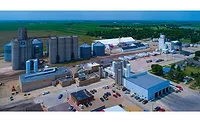
And make no mistake, the crew at BGC Manufacturing’s facility in Tyler, Texas, doesn’t beat around the bush when arguing their Goldenbrook Farms Homemade Vanilla is superior to a certain other Lone Star State company’s vanilla ice cream.
But what they really step over themselves to talk about is a light – 1,000 watts, with 254 nanometers of ultraviolet light and 185 nm of ozone, to be exact – that the BGC team is positive represents the future of cost savings and environmental responsibility for the dairy industry.
“It saves us over three-quarters of a million dollars a year,” Jim Pitner, BGC’s vice president of manufacturing, says of PIOx, or photo initiated oxidation, which was put in regular use after a test period and approval by regulatory agencies. Introduced to the company by Analytical Environmental Laboratories in 1999, the system zaps biodegradable particles from CIP solution, allowing most of the chemicals and water to be reclaimed and reused for weeks.
In addition, wastewater released to the municipal sewer system is cleaner and thus less of a burden on the local infrastructure. “Before we used the PIOx, the dairy had [municipal] water usage and surcharges of $20,000 a month,” Pitner says, noting that PIOx has helped drop those monthly fees to less than $5,000.
BGC Manufacturing has installed PIOx units on the CIP systems at its ice cream plant, milk plant, baking facility and water bottling plant. BGC, which also uses PIOx to pretreat sewage before releasing it to city sewers, has even designed its own chemicals that work better with the system.
“It’s a great initiative for becoming green,” says ice cream plant director Hugo Fraga. “You save water, save energy and save chemicals.”
PIOx is a good fit for BGC Manufacturing’s parent Brookshire Grocery Co.’s overall green initiatives being launched at its manufacturing sites in and around Tyler, and its grocery stores in four states. “Green efforts to save money make a lot of sense,” says Mike Giles, director of BGC’s milk plant. “We’ve probably cut our waste usage in half over the past seven or eight years.”
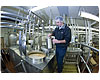
The plant received as many as nine tankers a week, more during high demand periods. Arriving trucks unhitch their trailers and leave them in the closed bay to be offloaded, which proceeds after the milk passes routine lab tests.
The next step strays from the routine of most plants. “Tankers are commonly rinsed, but 90% of the solids go down the drain,” Pitner explains. “So we don’t rinse our tanks.”
Wash water is run through the PIOx system, which eliminates dairy residue and allows up to 80% of the wash chemicals to be reused. “It destroys anything organic,” Pitner reinforces. “The chemicals stay in the water. We use them over and over again.”
After incoming ingredients are green-lighted by the lab, they go to the batch room where the ice cream mix is created in two 1,000-gallon batch tanks. The mix used for every product made in the plant is created here by the computer-controlled system. “You put your recipe in and it pulls all the ingredients in,” says plant manager Mark Bowen.
Next, the mix is pasteurized on an HTST system that handles 3,000 gallons per hour. Processed mix goes to pasteurized holding tanks, then to the flavor vats and finally onto the three freezers. Inclusions are added or not as per recipe through an ingredient feeder setting on load cells to ensure accurate, consistent amounts. The plant goes through 8,000 gallons of mix daily, enough for about 25,000 units of the aforementioned Homemade Vanilla.
 Ice cream is packaged on a rotary filler; a single line handles round and square half gallons, pints and quarts. “We just swap the fillers out,” Bowen says.
The BGC team is also quick to point out that they still put their ice cream in full half gallons, bucking the industry trend toward downsized cartons. “Our primary competition here is Blue Bell, so we have to have a half gallon,” Bowen notes of the other Texas-based company that still offers half gallons. Fraga adds: “Everything in Texas is bigger and better. People want the value in a half gallon.”
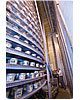
Lidded cartons are coded with the fill date and operator information for quality assurance and tracking purposes. They’re shrink-wrapped in bundles of three and pass through a metal detector on their way to the spiral hardener. It takes each carton of ice cream more than 200 minutes to travel from the bottom of the spiral to the top as they’re tempered at -30 degrees F amid a 30 mph wind. There’s up to 9,400 units in the hardener at any given time.
Packaged ice cream exits the hardener at the top and travels down a conveyor to be palletized and whisked away to the storage freezer to await shipment to Brookshire supermarkets and other clients.
Pitner points out a new line on the floor of the ice cream filling room, explaining how a confidential national client needed a co-packer on short notice for an equally confidential product. Shroud of mystery aside, the new line demonstrates the nimble plant’s ability to seize such opportunities, Pitner says. “Fourteen days from the time we received the call, we were in full production,” he says, lauding the plant’s maintenance team that can custom build equipment when needed. “We can react to a customer’s need very quickly.”
Adjacent to the ice cream plant is BGC’s cultured products plant, which the company added to the facility in 2004. With an annual output of some 200,000 gallons of yogurt, sour cream and dips, the cultured plant has been honored with several awards for its products by the All Star Dairy Association and World Dairy Expo.
Mirroring the flexibility of the ice cream filling room, the cultured facility handles all products on a single line. Cultured processing occurs four days a week, yielding about 3,000 gallons of yogurt and 2,000 gallons of sour cream. The cultured line fills 4-, 6- and 32-ounce yogurt in 14 varieties, including light and low-fat; 8- and 16-ounce sour cream; and 16-ounce dip in ranch, French onion and spinach varieties. The system is fed by two 2,000-gallon culture tanks.
The ice cream and cultured sides of the business have joined forces on a new product, Supreme Blend, a frozen dessert expected to be launched nationally in 2009. Containing 20% yogurt with probiotics, the product is low in fat and is enhanced with calcium and other nutrients.
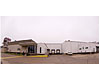
Certified kosher and the only organic ice cream plant in Texas, the facility has placed first in the All-Star program through Randolph & Associates as the best ice cream manufacturing facility in seven of the past eight years. The BGC team says these honors are confirmation of the quality standards in place to ensure customer satisfaction.
Pushing those standards along is BGC’s Top Gun program, begun in 2005 as a way to promote both quality assurance and safety. Each plant holds monthly safety meetings at which employees take written tests to bone up on safety and quality standards. Good scores earn them gift cards good at Brookshire stores.
Each plant competes for the highest scores over the course of a year. “They’re usually no more than two-tenths of a percent apart,” Pitner says.
The top scorer from among the company’s 200-plus employees wins the yearly prize, a $2,400 vacation package including spending money and extra time off beyond their accrued days to take the trip. “Everybody takes ownership,” Pitner says. “They’re all proactive; they test each other to be the winning plant.”
The result: BGC reports zero lost-time accidents for 2008. “That’s unheard of,” Pitner declares.
An added benefit is a sharp, unified work force when auditors pay a visit and quiz employees. “Everybody gives them the same answers and they’re the correct ones,” Pitner says.
Monthly inspections of each plant also contribute to scores, all toward a goal of continuous improvement. “It is information we have to go over anyway,” says Brian Miller, manufacturing QA manager. “It’s expected by third-party auditors.”
The bottom line enjoys a benefit as well. The company had been spending upwards of $300,000 to remediate safety- or accident-related issues; the Top Gun program has brought that down to about $15,000. “The Top Gun program has made everyone’s lives easier because it’s always on our minds,” Pitner says. Mark Morris, environmental health and safety coordinator, adds: “Our people go home safe and we produce quality products in the process.”
And with milk plant manager Toby Breland currently serving as president of the Texas Association of Food Protection, food safety is always paramount. “We have a unique relationship with the health department,” Miller explains. “Our inspector comes by every week to 10 days. Most plants would find that traumatic. We like it.”
The plant and its state-certified lab are often used for federal certification training of health inspectors. “That speaks highly of what we do,” Pitner says.
Meanwhile, Pitner has toured the country with the inventor of PIOx, extolling its virtues to food processors and local health departments. The first company to use the technology, BGC has since seen a handful of other dairies employ it as well.
As far as Pitner is concerned, no food plant should be without it: “This is technology the rest of the world needs.”
Location: Tyler, Texas
Year opened: 1997
Size: 100,000 square feet
Number of employees: 48
Products made: Premium, light and no-sugar-added, reduced-fat ice cream, sherbet and frozen desserts.
Total processing capacity: 100,000 gallons of ice cream weekly.
Processing: HTST, one unit @ 3,000 gallons per hour; two 1,000-gallon batch tanks; three ice cream freezers.
Packaging lines: Single line handles round and square half gallons, pints and multi-quart pails.
Storage capacity: 40,000 square feet frozen.
extras
The following are among BGC Manufacturing’s key suppliers:
ABB
AGC Engineering
Alfa Laval Hoyer
Anderson Instruments
Berkshire Dairy
Berry Plastics
Breddo Likwifier
Cannon Equipment
CEM
Chr. Hansen
Cryovac
DCI
Great Lakes Corp.
Huhtamaki
Johnson-Diversey
Lyon’s Magnus
Ramsey
Safeline
Sensient
Tate & Lyle
TIC Gums
VanTone
Videojet
Walker Stainless
West One
Most times you visit an ice cream plant, the folks who run it can’t wait to tell you how their ice cream is the best.
And make no mistake, the crew at BGC Manufacturing’s facility in Tyler, Texas, doesn’t beat around the bush when arguing their Goldenbrook Farms Homemade Vanilla is superior to a certain other Lone Star State company’s vanilla ice cream.
But what they really step over themselves to talk about is a light – 1,000 watts, with 254 nanometers of ultraviolet light and 185 nm of ozone, to be exact – that the BGC team is positive represents the future of cost savings and environmental responsibility for the dairy industry.
“It saves us over three-quarters of a million dollars a year,” Jim Pitner, BGC’s vice president of manufacturing, says of PIOx, or photo initiated oxidation, which was put in regular use after a test period and approval by regulatory agencies. Introduced to the company by Analytical Environmental Laboratories in 1999, the system zaps biodegradable particles from CIP solution, allowing most of the chemicals and water to be reclaimed and reused for weeks.
In addition, wastewater released to the municipal sewer system is cleaner and thus less of a burden on the local infrastructure. “Before we used the PIOx, the dairy had [municipal] water usage and surcharges of $20,000 a month,” Pitner says, noting that PIOx has helped drop those monthly fees to less than $5,000.
BGC Manufacturing has installed PIOx units on the CIP systems at its ice cream plant, milk plant, baking facility and water bottling plant. BGC, which also uses PIOx to pretreat sewage before releasing it to city sewers, has even designed its own chemicals that work better with the system.
“It’s a great initiative for becoming green,” says ice cream plant director Hugo Fraga. “You save water, save energy and save chemicals.”
PIOx is a good fit for BGC Manufacturing’s parent Brookshire Grocery Co.’s overall green initiatives being launched at its manufacturing sites in and around Tyler, and its grocery stores in four states. “Green efforts to save money make a lot of sense,” says Mike Giles, director of BGC’s milk plant. “We’ve probably cut our waste usage in half over the past seven or eight years.”
Cold and cultured
Those efforts are apparent right from the start, in the ice cream plant’s single-bay receiving area, where the facility takes in cream and skim from the Tyler milk plant, along with raw milk from the Lone Star cooperative.The plant received as many as nine tankers a week, more during high demand periods. Arriving trucks unhitch their trailers and leave them in the closed bay to be offloaded, which proceeds after the milk passes routine lab tests.
The next step strays from the routine of most plants. “Tankers are commonly rinsed, but 90% of the solids go down the drain,” Pitner explains. “So we don’t rinse our tanks.”
Wash water is run through the PIOx system, which eliminates dairy residue and allows up to 80% of the wash chemicals to be reused. “It destroys anything organic,” Pitner reinforces. “The chemicals stay in the water. We use them over and over again.”
After incoming ingredients are green-lighted by the lab, they go to the batch room where the ice cream mix is created in two 1,000-gallon batch tanks. The mix used for every product made in the plant is created here by the computer-controlled system. “You put your recipe in and it pulls all the ingredients in,” says plant manager Mark Bowen.
Next, the mix is pasteurized on an HTST system that handles 3,000 gallons per hour. Processed mix goes to pasteurized holding tanks, then to the flavor vats and finally onto the three freezers. Inclusions are added or not as per recipe through an ingredient feeder setting on load cells to ensure accurate, consistent amounts. The plant goes through 8,000 gallons of mix daily, enough for about 25,000 units of the aforementioned Homemade Vanilla.
The BGC team is also quick to point out that they still put their ice cream in full half gallons, bucking the industry trend toward downsized cartons. “Our primary competition here is Blue Bell, so we have to have a half gallon,” Bowen notes of the other Texas-based company that still offers half gallons. Fraga adds: “Everything in Texas is bigger and better. People want the value in a half gallon.”
Lidded cartons are coded with the fill date and operator information for quality assurance and tracking purposes. They’re shrink-wrapped in bundles of three and pass through a metal detector on their way to the spiral hardener. It takes each carton of ice cream more than 200 minutes to travel from the bottom of the spiral to the top as they’re tempered at -30 degrees F amid a 30 mph wind. There’s up to 9,400 units in the hardener at any given time.
Packaged ice cream exits the hardener at the top and travels down a conveyor to be palletized and whisked away to the storage freezer to await shipment to Brookshire supermarkets and other clients.
Pitner points out a new line on the floor of the ice cream filling room, explaining how a confidential national client needed a co-packer on short notice for an equally confidential product. Shroud of mystery aside, the new line demonstrates the nimble plant’s ability to seize such opportunities, Pitner says. “Fourteen days from the time we received the call, we were in full production,” he says, lauding the plant’s maintenance team that can custom build equipment when needed. “We can react to a customer’s need very quickly.”
Adjacent to the ice cream plant is BGC’s cultured products plant, which the company added to the facility in 2004. With an annual output of some 200,000 gallons of yogurt, sour cream and dips, the cultured plant has been honored with several awards for its products by the All Star Dairy Association and World Dairy Expo.
Mirroring the flexibility of the ice cream filling room, the cultured facility handles all products on a single line. Cultured processing occurs four days a week, yielding about 3,000 gallons of yogurt and 2,000 gallons of sour cream. The cultured line fills 4-, 6- and 32-ounce yogurt in 14 varieties, including light and low-fat; 8- and 16-ounce sour cream; and 16-ounce dip in ranch, French onion and spinach varieties. The system is fed by two 2,000-gallon culture tanks.
The ice cream and cultured sides of the business have joined forces on a new product, Supreme Blend, a frozen dessert expected to be launched nationally in 2009. Containing 20% yogurt with probiotics, the product is low in fat and is enhanced with calcium and other nutrients.
Top guns
Brookshire began construction on its ice cream plant in May 1996 at a site north of Tyler on Highway 271. The first container of ice cream rolled off the line the following January and a full line of flavors came shortly thereafter. The ice cream and cultured plants share a campus with BGC’s bakery and fresh-cut facility. The site was formerly owned by the Southland Corp., parent company of the 7-Eleven convenience store chain.Certified kosher and the only organic ice cream plant in Texas, the facility has placed first in the All-Star program through Randolph & Associates as the best ice cream manufacturing facility in seven of the past eight years. The BGC team says these honors are confirmation of the quality standards in place to ensure customer satisfaction.
Pushing those standards along is BGC’s Top Gun program, begun in 2005 as a way to promote both quality assurance and safety. Each plant holds monthly safety meetings at which employees take written tests to bone up on safety and quality standards. Good scores earn them gift cards good at Brookshire stores.
Each plant competes for the highest scores over the course of a year. “They’re usually no more than two-tenths of a percent apart,” Pitner says.
The top scorer from among the company’s 200-plus employees wins the yearly prize, a $2,400 vacation package including spending money and extra time off beyond their accrued days to take the trip. “Everybody takes ownership,” Pitner says. “They’re all proactive; they test each other to be the winning plant.”
The result: BGC reports zero lost-time accidents for 2008. “That’s unheard of,” Pitner declares.
An added benefit is a sharp, unified work force when auditors pay a visit and quiz employees. “Everybody gives them the same answers and they’re the correct ones,” Pitner says.
Monthly inspections of each plant also contribute to scores, all toward a goal of continuous improvement. “It is information we have to go over anyway,” says Brian Miller, manufacturing QA manager. “It’s expected by third-party auditors.”
The bottom line enjoys a benefit as well. The company had been spending upwards of $300,000 to remediate safety- or accident-related issues; the Top Gun program has brought that down to about $15,000. “The Top Gun program has made everyone’s lives easier because it’s always on our minds,” Pitner says. Mark Morris, environmental health and safety coordinator, adds: “Our people go home safe and we produce quality products in the process.”
And with milk plant manager Toby Breland currently serving as president of the Texas Association of Food Protection, food safety is always paramount. “We have a unique relationship with the health department,” Miller explains. “Our inspector comes by every week to 10 days. Most plants would find that traumatic. We like it.”
The plant and its state-certified lab are often used for federal certification training of health inspectors. “That speaks highly of what we do,” Pitner says.
Meanwhile, Pitner has toured the country with the inventor of PIOx, extolling its virtues to food processors and local health departments. The first company to use the technology, BGC has since seen a handful of other dairies employ it as well.
As far as Pitner is concerned, no food plant should be without it: “This is technology the rest of the world needs.”
AT a glance
BGC Manufacturing Ice Cream PlantLocation: Tyler, Texas
Year opened: 1997
Size: 100,000 square feet
Number of employees: 48
Products made: Premium, light and no-sugar-added, reduced-fat ice cream, sherbet and frozen desserts.
Total processing capacity: 100,000 gallons of ice cream weekly.
Processing: HTST, one unit @ 3,000 gallons per hour; two 1,000-gallon batch tanks; three ice cream freezers.
Packaging lines: Single line handles round and square half gallons, pints and multi-quart pails.
Storage capacity: 40,000 square feet frozen.
extras
The following are among BGC Manufacturing’s key suppliers:
ABB
AGC Engineering
Alfa Laval Hoyer
Anderson Instruments
Berkshire Dairy
Berry Plastics
Breddo Likwifier
Cannon Equipment
CEM
Chr. Hansen
Cryovac
DCI
Great Lakes Corp.
Huhtamaki
Johnson-Diversey
Lyon’s Magnus
Ramsey
Safeline
Sensient
Tate & Lyle
TIC Gums
VanTone
Videojet
Walker Stainless
West One
Looking for a reprint of this article?
From high-res PDFs to custom plaques, order your copy today!