New Study Validates Light Blocking Efforts

This article originally appeared in the September 2002 issue of Dairy Foods.
Teens influence food purchases...and food bills. They have a great deal
of dollar influence and spending power. Although teens spend about $94
billion annually, with more than 10% of this amount directed toward food
(mostly soft drinks, snacks, cookies, candy, and fast food), youth exert
significant influence on spending across virtually all food categories.
This figure does not include the billions of dollars parents spend under
the influence of youth. A glitzy image may get youth to buy a product
in the first place, but flavor influences repeat performances. If it doesn't
taste good, they won't want it again. One mechanism for increasing
milk consumption is to provide dairy products that have an appealing taste.
According to Dr. Joseph Hotchkiss, packaging specialist from Cornell University,
Ithaca N.Y., "if you want to increase milk sales, make sure the milk
appeals to children. If they like milk when they are young they are more
apt to drink it as an adult." One way to have good-tasting milk is
to protect it from light.
To ensure that the highest quality products are on the market, parameters for protecting product quality must be established. To this end, Milk Quality Improvement Program (MQIP) scientists at Cornell University, Ithaca, N.Y. measured the amount of time it took to get noticeable flavor changes. Reduced fat (2%) milk in high-density polyethylene (HDPE) containers were exposed to lighting similar to the retail dairy case (2000 lux), where the average light exposure is 8 hours. The study was conducted from 1999 to 2001. The conclusions? Half of the teen and adult consumers could detect an off-flavor with less than 2 hours of light exposure. Also, the teens were asked how much they liked the milk. They thought that the light-oxidized milk was objectionable. The longer the milk was exposed to light, the less they liked the milk.
Light not only degrades flavor, but also vitamins. Since vitamins are
essential nutrients, their loss by photodegradation decreases the nutritional
value of food. Vitamins A, C, and B2 (riboflavin) are of particular concern
with milk. MQIP found measurable vitamin A losses occurred increasingly
at 2, 4, and 16 hours for nonfat, reduced fat, and whole milk, respectively.
Moderate light-oxidized flavors were detected after 4 hours of light exposure
in the whole and reduced fat milk and after 8 hours in nonfat milk. The
presence of increased levels of milk fat adversely affects the flavor
quality of the products following exposure to light. On the other hand,
higher fat levels do appear to provide some protection against vitamin
A degradation, the studies have shown. (Journal of Dairy Science 85:351-354).
Anecdotal evidence shows why light can hurt milk sales.
Researchers at Cornell recently presented light-oxidized milk to students in an Introduction to Sensory Analysis Course. One of the students, who is also a mother, said, "That's what the milk tastes like that I serve to my children at home. Now I understand why my children don't want to drink milk."
Preventing light-oxidized flavors in milk involves simply protecting milk from light. Gabletop paperboard containers usually provide sufficient light barrier, but light-oxidation is more common in light transmissible plastic containers, so extra care is needed during transport, storage, and display.
To avoid photodegradation, milk should not be exposed at all to direct sunlight. Since sunlight is even more damaging than artificial light, a few minutes exposure to the sun on a loading dock or during consumer transport has profound results. In storage areas, milk crates should not be stacked in close proximity to lights. In dairy plants and stores, milk handling areas, storage coolers and display cases should be designed with minimum lighting and to facilitate product rotation. When selecting lighting, "cool white" fluorescent lights with wavelengths ranging from 420 to 520 nm, should not be used. If lighting is necessary, "warm white" lights are preferred in the dairy display case. Yellow shielding of the light can be used to reduce the intensity of light. Unnecessary lighting in coolers and display cases should be turned off when milk turn over rate is low.
According to Hotchkiss, three ways that plastics can be modified to protect their products from light-oxidized off-flavors and vitamin degradation are: (1), adding opaque pigment that blocks harmful wavelengths, (2), adding ultraviolet (UV) light blocking agents to clear plastic or (3) modifying the white pigment (titanium dioxide), so that it is translucent, but still blocks the UV light.
High-density polyethylene (HDPE) dominates the jug business because of
its low cost, durability and light weight. However, standard HDPE resin
produces a translucent container, which offers little protection against
UV light. Adding pigments blocks light, therefore protects against harmful
UV rays. Yellow or white are the most popular colors. While objection
to this solution may be that consumers can't see how much milk is
in the container, consumers can't see the milk in paperboard containers
either. One solution is to put a "see-through strip" in the
opaque jug; the milk will still have some light protection, especially
if the strip is placed away from the light.

Many dairy processors are investing in packaging to make sure that their product is protected from the harmful effects of light. Despite the increased packaging cost, sales have increased and so have profits. Dairy processors should not be intimidated by the additional cost of light blocking bottles. It is a financial risk that is worth taking. In fact, most dairies that have made these packaging changes don't view it as risk, but rather, as a step in the right direction. Here are a few success stories:
The dairy industry leader Dean Foods Co., Dallas, has several processors that use protective packaging. Mayfield Dairy Farms, Athens, Tenn., is well-known in its marketing areas for its distinctive yellow pigmented Flavor Tight™ jugs. Mayfield is one of the first dairies to switch to an opaque jug, more than 3 years ago. Through a partnership with Land O'Lakes, Arden Hills, Minn., Dean manufactures Land O Lakes brand milk, which is packaged in white opaque HDPE jugs, made with opaque resin. Dean's subsidiary Morningstar Foods bottles Hershey's milk in Mt. Crawford, Va., in HDPE single-serve bottles. The bottles have three layers including a carbon black layer that helps prevent light damage.
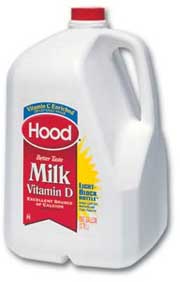
H. P. Hood, Chelsea, Mass., developed the LightBlock Bottle™ in 1997 to protect its milk from the harmful effects of light. Providing consumers with the best tasting and most nutritious milk possible is consistent with Hood's brand equity, according to Lynne Bohan, director of public relations.
"Sales have definitely increased," Bohan said. "Since the launch of the LightBlock Bottle in Oct. 1997, Hood's market share has more than doubled, because of consumer confidence in the product. Consumers have been happy."
Crowley Foods, Binghamton, N.Y., rolled out a Flavor Savor™ bottle for its PenSupreme brand in the fall of 2001. Sales of the brand have been up 40% since its introduction and Jerry Gaube, special projects manager, expects further growth. Crowley blow molds its own bottles using a resin pebble titanium dioxide.
|
"We have won them back by promoting the benefits of the package," - Stephen Schmid, president - Smith Dairy Products, Orrville, Ohio |
Smith Dairy Products, Orrville, Ohio, has used the yellow pigmented, Super Jug™ for two years, with gradual success. Initially, consumers resisted the new package according to Stephen Schmid, president. They wanted to see the milk, and the yellow colored jug had some consumers confusing it with orange juice. Now sales are building. "We have won them back by promoting the benefits of the package," Schmid says. "One consumer I spoke with said, ‘I hate the yellow jug, but love the product that comes from it.'"
Retailers love the product because it sells for an extra 25 cents a gal.
Cheryl Bell, public relations manager, for Schroeder Milk Co. Inc, Maplewood, Minn., says Schroeder has used the white pigmented bottles across its entire line of fluid milk for several months.
Labels, such as full-body stretch sleeves or shrink sleeves, are not only attractive, but help block light. Dean Foods' Milk Chug™ and the Land O Lakes Grip-N-Go™, single serve HDPE containers both use shrink sleeves. Smith is one of a number of processors who also use shrink sleeves on bottles.
Even a brief, moderate light exposure of 2 hours at 2000 lux can reduce
the nutritional value and can produce detectable off- flavor of milk.
Approximately half of the plastic containers in a given dairy case remain
under lights for at least eight hours. Thus, the majority of milk in light-transmissible
containers could have detectable light-oxidized flavor defects. There
are many ways to block light. Processors have found that despite the increased
packaging cost, sales and profits have increased due to the protection
of milk's flavor and nutrients. For milk to be competitive in the
beverage market, it must be protected from light exposure.
Sensory Threshold of Light-Oxidized Flavor Defects in Milk by Kathryn
Chapman, Lynn Whited and Kathryn Boor, Journal of Food Science (in press)
Vitamin A Degradation and Light-Oxidized Flavor Defects in Milk by Lynn Whited, Barb Hammond, Kathryn Chapman and Kathryn Boor was published in vol. 85, No. 2, 2002 of the Journal of Dairy Science.
For more information about the study contact Cornell University: 607/255-7643.
Looking for a reprint of this article?
From high-res PDFs to custom plaques, order your copy today!