Dairy Foods logo
search
cart
facebook twitter linkedin youtube
  • Sign In
  • Create Account
  • Sign Out
  • My Account
Dairy Foods logo
  • NEWS
    • DAIRY REGULATIONS
  • PRODUCTS
    • New Products
    • Butter
    • Cheese
    • Cultured Dairy
    • Frozen Desserts
    • Ice Cream/Novelties
    • Milk
    • Non-Dairy Beverages
    • Sales Data
    • Whey, Milk Powder
    • Dairy Alternatives
  • INGREDIENTS
    • Cocoa
    • Colors/Flavors
    • Cultures/Enzymes
    • Fiber
    • Gums, Stabilizers, and Texturants
    • Inclusions
    • Omegas/Lipids
    • Prebiotics
    • Probiotics
    • Sweeteners
    • Other
  • OPERATIONS
    • SUSTAINABILITY
    • Equipment
    • Processing
    • Packaging
    • Food Safety & Sanitation
    • Membrane Technology
  • MEDIA
    • Dairy Foods TV
    • Podcasts
    • Webinars
  • DIRECTORIES
    • Buyers Guide
    • Dairy Plants USA
  • MEMBRANE FORUM
  • MORE
    • Associations
    • Dairy Foods' News & Views Newsletter
    • Blogs
    • Case Studies
    • Classifieds
    • Custom Content & Marketing Services
    • Dairy Foods Store
    • Market Research
    • Supplier Spotlights
    • Tradeshows and Events
    • Strategy Guides
  • AWARDS
    • Dairy Plant of the Year Award
    • Breakthrough Award
    • Dairy Processor of the Year
  • EMAGAZINE
    • eMagazines
    • Archive Issues
    • Contact
    • Advertise
    • SIGN UP!
    • Columnists
    • Dairy 100
    • State of the Industry Report
    Ingredients for Dairy Processors

    Lab Talk: Language that Sells
    By D. Berry
    June 1, 2005
    Soon after I started walking the floor of the Food Marketing Institute (FMI) show in early May, two themes stood out-convenience and indulgence-with indulgence not necessarily meaning high calorie and high fat, rather delicious and pleasurable.

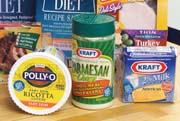
    A variety of Kraft products have a “South Beach Diet Recommended” button, including Kraft 2% Milk and Fat Free Singles, as well as Light N’ Lively Cottage Cheese.
    Soon after I started walking the floor of the Food Marketing Institute (FMI) show in early May, two themes stood out-convenience and indulgence-with indulgence not necessarily meaning high calorie and high fat, rather delicious and pleasurable.

    Also apparent was the absence of "low-carb," even though carbohydrates continue to be a buzz, according to Lawrence Shiman, v.p., Opinion Dynamics Corp., Cambridge, Ma. What has changed is carb language. Shiman told FMI attendees that despite the demise of the low-carb diet, the phenomenon is still one that every food industry organization must address. "Carb-conscious consumers still make up one-third of all U.S. consumers," he said.

    The key here is the term "carb-consciousness," which has taken two directions. One is low-/no-calorie. Here's where traditional sugar-(carb-)sweetened products are out and non-nutritive sweetened ones are in.

    The other direction, which is new to many consumers, is the evolution of "low-carbs" to "slow carbs," or "low-glycemic carbs." Indeed, at FMI, there was a great deal of low-glycemic talk. However, marketers are approaching this trend a bit more cautiously than they did with low carb just a year ago.

    Low-glycemic carbs are those carbohydrates that are digested slower than other carbs. They do not cause peaks in blood sugar immediately after consumption.

    Many of the past year's low-carb foods and beverages are based on the principles of low-glycemic carbs. However, today's low-glycemic approach, rather than the low-carb approach, is considered more balanced, as it takes into account components other than just carbohydrates in a food system. It factors in the effect these other components have on carbohydrate metabolism and weight loss. For example, research shows that when low-glycemic carbs are coupled with high-quality protein, weight loss diets can be more successful.

    In a clinical trial, the weight loss of overweight/obese men and women ages 18 to 65 was evaluated for 12 weeks. One group was on a traditional low-fat diet and decreased portion sizes to shave off at least 500 calories a day. The second group was told simply to eat until hunger was satisfied. They were instructed to follow a "modified-carbohydrate diet," which was consistent with the recommendations outlined in The South Beach Diet™ (whole grains and lean protein). The dieters on the modified-carbohydrate eating plan lost significantly more weight and body fat compared to their counterparts. They also experienced significant improvements in triglycerides and the ratio of total to high-density lipoprotein (HDL) or "good" cholesterol. Research suggests improving these factors are linked to a reduced risk of heart disease.

    Sales data confirms that consumers are recognizing that not all carbs are created equal. At FMI, analysts from ACNielsen, New York, showed that products labeled "for your low-carb lifestyle" actually topped the list of 11 good-for-you segments tracked by the company for generating the highest growth in the first 12 weeks of 2005. In fact, this segment showed an increase of 20.2% as compared to the same period in 2004. But, one must look beyond that first 12 weeks, as many low-carb foods were just debuting during that period in 2004. The reality is that low-carb sales have been slowing steadily ever since the segment's one-week peak in mid-June of 2004 when sales were 200+% up from the same week in 2003. The most current data available-for the one-week period ending March 19, 2005-shows that sales of low-carb products were down 2.5%, as compared to the same week in 2004. This was the first one-week sales loss for the segment since ACNielsen began tracking it in 2000.

    Some of this may be the result of low-carb product marketers changing their strategy and focusing on sugar and calories. Indeed, the category of good-for-you foods that ACNielsen analysts identify as standing out from the others in terms of ability to generate especially strong and sustained growth is no-/low-sugar.

    "Clearly, many consumers want to lose weight and eat more healthily overall," said Alice Fawver, senior v.p. of marketing at ACNielsen to FMI attendees. "The sales numbers show that people will flock toward diets that promise results. However, keeping people on such diets has proven more challenging. The good-for-you product segments that are enjoying the most sustained success are those that offer health benefits without requiring a whole new way of eating."

    Share This Story

    Looking for a reprint of this article?
    From high-res PDFs to custom plaques, order your copy today!

    D. Berry is a former freelance contributor to Dairy Foods.

    Recommended Content

    JOIN TODAY
    to unlock your recommendations.

    Already have an account? Sign In

    • Lifeway Organic Kefir in different flavors inside a refrigerated grocery shelf.

      Dairy Foods names Lifeway Foods 2025 Processor of the Year

      Lifeway Foods donates $10,000 to wildfire victims,...
      Innovation
      By: Brian Berk
    • Two female farmers are standing in a field, holding a large milk canister, looking at several cows at dairy farm.

      Honoring Women Leaders Shaping the Dairy Industry

      For the fourth consecutive year, Dairy Foods is proud to...
      Innovation
      By: Barbara Harfmann
    • Main feature for State of the Industry with dairy products album cover with a gradient circular--patterned backgorund.

      2025 State of the Dairy Industry

      Welcome to the 2025 State of the Industry report. For...
      Sales Data
    Manage My Account
    • eMagazine Subscription
    • Dairy Foods News & Views Newsletter
    • Online Registration
    • Manage My Preferences
    • Subscription Customer Service
    • Connect with Dairy Foods

    More Videos

    Popular Stories

    Close up of a whipped frozen dessert with a light green color.

    The keys to high-protein dairy formulations

    A row of Frios Gourmet Pops with a tie dye pattern as a background.

    How Frios Gourmet Pops delivers happiness

    Grilling foods

    Dairy’s Enduring Moment: Why Resilience and Renewal Define Today’s Dairy Story

    Outlook Report: Women in Dairy

    Products

    Probiotic Ice Cream: Science and Technology

    Probiotic Ice Cream: Science and Technology

    See More Products
    Let's Talk Dairy podcast promo

    Related Articles

    • Packaging That Sells Conference

      'Packaging That Sells' conference provides insights and solutions

      See More
    • Lab Talk: My Tea Party

      See More
    • Lab Talk: "Standard" Barriers to Fortification

      See More

    Related Products

    See More Products
    • Handbook of Antioxidants for Food Preservation, 1st Edition

    See More Products
    ×

    Stay ahead of the curve. Unlock a dose of cutting-edge insights.

    Receive our premium content directly to your inbox.

    SIGN-UP TODAY
    • RESOURCES
      • Advertise
      • Contact Us
      • Directories
      • Store
      • Want More
    • SIGN UP TODAY
      • Create Account
      • eMagazine
      • Newsletter
      • Customer Service
      • Manage Preferences
    • SERVICES
      • Marketing Services
      • Reprints
      • Market Research
      • List Rental
      • Survey/Respondent Access
    • STAY CONNECTED
      • LinkedIn
      • Facebook
      • YouTube
      • X (Twitter)
    • PRIVACY
      • PRIVACY POLICY
      • TERMS & CONDITIONS
      • DO NOT SELL MY INFORMATION
      • PRIVACY REQUEST
      • ACCESSIBILITY

    Copyright ©2026. All Rights Reserved BNP Media, Inc. and BNP Media II, LLC.

    Design, CMS, Hosting & Web Development :: ePublishing