Krafting Chocolate Dairy Foods
From milk chocolate to chocolate milk, cocoa has strong ties to the dairy industry. Some think the pending acquisition of U.K.-based Cadbury plc by process cheese inventor Kraft Foods Inc., Northfield, Ill., might further reinforce this relationship.

From milk chocolate to chocolate milk, cocoa has strong ties to the dairy industry. Some think the pending acquisition of U.K.-based Cadbury plc by process cheese inventor Kraft Foods Inc., Northfield, Ill., might further reinforce this relationship. After all, New Zealand’s Fonterra Cooperative Group Ltd., developed Chesdale Chocolate Cheese slices to encourage Asians, who typically consume very little cheese, to eat cheese as part of their daily diet.
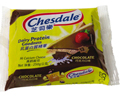 The product was first launched in Taiwan in early 2005, and immediately made an impact on Asian consumers who traditionally shun cheese. Within six months Fonterra had grabbed a 10% share of the overall cheese market, earning Fonterra more than $1 million. The product is now making in-roads in Indonesia, Malaysia, Singapore and Thailand.
“Chesdale chocolate cheese slices are favored by parents of young children, as it offers protein and calcium with less sugar than other similar products in the spreads category,” says Achyut Reddy, Fonterra Brands Singapore country manager. “Its chocolate taste makes it all the more appealing for children and adults alike.”
 But maybe Kraft has no intentions of staying in the commodity cheese business…after all, Kraft did sever some ties to dairy when the company divested its highly profitable frozen pizza business to free up cash to woo Cadbury shareholders. Indeed, many are confused by Kraft’s intentions, and some are blatantly unsupportive, including Kraft’s largest shareholder, multi-billionaire Warren Buffet, who made the following public statement: “She (Kraft CEO Irene Rosenfeld) thinks this is a good deal. I think it’s a bad deal. If I had a chance to vote on this, I’d vote no.”
Nevertheless, the cocoa industry is curious to the opportunities that await it once the Kraft-Cadbury deal is finalized. After all, cocoa, and the chocolate made from it, has received a great deal of positive press in the health and wellness community thanks to cocoa’s flavonoid antioxidants, which are widely believed to have beneficial cardiovascular effects, among other benefits.
Indeed, the health benefits of antioxidant-rich chocolate continue to make headlines, as an increasing number of studies get published in peer-reviewed journals across the world.
A study published in the November 2009 issue of the American Journal of Clinical Nutrition shows that regular consumption of skim milk with flavonoid-rich cocoa may reduce inflammation, potentially slowing or preventing development of atherosclerosis. Researchers noted, however, that the effect was not as pronounced as that seen with red wine.
The researchers recruited 47 volunteers, 55 years and older, who were at risk for heart disease. All subjects received 40 grams of cocoa powder with 500 milliliters of skim milk per day or only 500 milliliters of skim milk per day for four weeks. Before and after each intervention period, cellular and serum inflammatory biomarkers related to atherosclerosis were evaluated.
Blood tests found that after participants drank chocolate milk twice a day for four weeks, they had significantly lower levels of several inflammatory biomarkers, though some markers of cellular inflammation remained unchanged. Participants also had significantly higher levels of high-density lipoprotein (HDL) cholesterol (also known as good cholesterol), after completing the chocolate milk regimen. Although more studies are needed, the researchers concluded that “since atherosclerosis is a low-grade inflammatory disease of the arteries, regular cocoa intake seems to prevent or reduce it.”
A new study presented at the International Headache Society’s 14th International Headache Congress this past September in Philadelphia, provided the first evidence for the value of cocoa in repressing inflammatory responses within the trigeminal ganglia, which are thought to play a role in migraine.
“It appears that a cocoa-enriched diet in rats can repress the proteins that are associated with the promotion and maintenance of inflammatory responses such as migraine,” said the study’s author, Paul Durham, professor of biology at Missouri State University and researcher with the Missouri State University’s Center for Biomedical and Life Sciences.
Researchers in Sweden have found evidence that people who eat chocolate have increased survival rates after a heart attack. Even better, the study’s results, which were published in the September 2009 issue of The Journal of Internal Medicine suggest that the more chocolate consumed, the better the outcome.
Swedish scientists followed 1,169 non-diabetic men and women who had been hospitalized for a first heart attack. Each filled out a standardized health questionnaire, which included questions about chocolate consumption during the past year. The subjects were examined three months after their hospital discharge and were tracked during the subsequent eight years using Swedish national registries of hospitalizations and deaths. After controlling for age, sex, obesity, physical inactivity, smoking, education and other variables, the scientists found that the more chocolate people consumed, the more likely they survived after their heart attack.
Compared with subjects who consumed no chocolate, results showed that those who ate chocolate less than once a month had a 27% reduction in their risk for cardiac death. Subjects who ate chocolate up to once a week had a 44% reduction while those who indulged twice or more a week had a 66% reduced risk of dying from a subsequent heart event.
Like most studies, this one had some shortcomings, including that the scientists did not identify the type of chocolate consumed (i.e., milk, dark, white, etc.). Further, the study was observational; still, the results do support the belief that the flavonoid antioxidants in cocoa have beneficial cardiovascular effects.
Here’s a rather new chocolate benefit under investigation: providing skin protection from damaging sun light. The study was published in the September 2009 issue of the Journal of Cosmetic Dermatology.
Thirty subjects were given either a high-flavanol chocolate manufactured using a patented technology that preserves an extremely high amount of flavanols or a low-flavanol chocolate, manufactured using an identical recipe but using a standard process. The subjects were given a 20-gram portion of their allotted chocolate daily and after 12 weeks the minimal erythema dose (MED), which is the dose of ultraviolet light needed to make the skin go red, of those in the high-flavanol group was more than double that of the low-flavanol group. The results suggest that the increased MED is a result of the antioxidative properties of the flavanols.
A different study suggests that cocoa polyphenols possess a mood-elevating effect. Published in the December 2008 issue of Nutritional Neuroscience, the research results suggest that cocoa polyphenols help reduce the symptoms of depression.
The antidepressant-like effect of cocoa extract was tested at two doses in an internationally recognized, validated ethical and ethological behavioral animal test, which mirrors depressive feelings in humans. Already with the lowest dose of cocoa extract given during two weeks, a clear and significant antidepressant-like effect was seen regarding the specific activity during this behavioral test, which was comparable with the effect obtained with a standard reference antidepressant product included in this test, and without any side effects.
Cocoa extract, as a natural source of several possible mood-lifting components, seems to be a promising alternative for existing antidepressant agents. This positive behavior seems to be mediated by the reversal of brain oxidative damage, which is often associated with depression in human.
According to consumer research, Americans are already aware of some of the documented benefits of cocoa. According to the 2009 Functional Foods/Foods for Health Consumer Trending Survey from the International Food Information Council (IFIC), Washington, D.C., the majority of consumers understand that the right cocoa-containing foods can exert a positive effect on health and wellness. In early 2009, consumers were asked, on an aided basis, whether they are aware of certain food components, their corresponding food sources and their associated health benefits. Of the 81% of consumers aware of the relationship of “antioxidants, found for example in fruits and vegetables, whole grains, dark chocolate, coffee and certain teas, for protection against free-radical damage implicated in aging and various chronic diseases,” 54% said they are already consuming antioxidant-rich foods for this reason, while 38% are likely or somewhat likely to consume.
In order to market chocolate dairy products as being high in flavanols, many dairy foods contain high-cocoa contents, origin-specific cocoas and high-flavanol cocoa ingredients. A number of cocoa suppliers are investing in technologies to preserve the cocoa bean’s flavanols, which are readily destroyed during normal chocolate processing. Such technologies include processes that reduce the cocoa bean’s exposure to high temperatures, helping protect the flavanols inside.
Crafting cocoa flavanol-rich dairy foods will increasingly be a product development endeavor for many dairies. Will Kraft be crafty enough to marry chocolate and dairy to create a powerhouse food that tastes great and is loaded with good-for-you nutrients?
General Mills Inc.
From milk chocolate to chocolate milk, cocoa has strong ties to the dairy industry. Some think the pending acquisition of U.K.-based Cadbury plc by process cheese inventor Kraft Foods Inc., Northfield, Ill., might further reinforce this relationship. After all, New Zealand’s Fonterra Cooperative Group Ltd., developed Chesdale Chocolate Cheese slices to encourage Asians, who typically consume very little cheese, to eat cheese as part of their daily diet.
“Chesdale chocolate cheese slices are favored by parents of young children, as it offers protein and calcium with less sugar than other similar products in the spreads category,” says Achyut Reddy, Fonterra Brands Singapore country manager. “Its chocolate taste makes it all the more appealing for children and adults alike.”
Gertrude Hawk Ingredients
Nevertheless, the cocoa industry is curious to the opportunities that await it once the Kraft-Cadbury deal is finalized. After all, cocoa, and the chocolate made from it, has received a great deal of positive press in the health and wellness community thanks to cocoa’s flavonoid antioxidants, which are widely believed to have beneficial cardiovascular effects, among other benefits.
Indeed, the health benefits of antioxidant-rich chocolate continue to make headlines, as an increasing number of studies get published in peer-reviewed journals across the world.
A study published in the November 2009 issue of the American Journal of Clinical Nutrition shows that regular consumption of skim milk with flavonoid-rich cocoa may reduce inflammation, potentially slowing or preventing development of atherosclerosis. Researchers noted, however, that the effect was not as pronounced as that seen with red wine.
The researchers recruited 47 volunteers, 55 years and older, who were at risk for heart disease. All subjects received 40 grams of cocoa powder with 500 milliliters of skim milk per day or only 500 milliliters of skim milk per day for four weeks. Before and after each intervention period, cellular and serum inflammatory biomarkers related to atherosclerosis were evaluated.
Blood tests found that after participants drank chocolate milk twice a day for four weeks, they had significantly lower levels of several inflammatory biomarkers, though some markers of cellular inflammation remained unchanged. Participants also had significantly higher levels of high-density lipoprotein (HDL) cholesterol (also known as good cholesterol), after completing the chocolate milk regimen. Although more studies are needed, the researchers concluded that “since atherosclerosis is a low-grade inflammatory disease of the arteries, regular cocoa intake seems to prevent or reduce it.”
A new study presented at the International Headache Society’s 14th International Headache Congress this past September in Philadelphia, provided the first evidence for the value of cocoa in repressing inflammatory responses within the trigeminal ganglia, which are thought to play a role in migraine.
“It appears that a cocoa-enriched diet in rats can repress the proteins that are associated with the promotion and maintenance of inflammatory responses such as migraine,” said the study’s author, Paul Durham, professor of biology at Missouri State University and researcher with the Missouri State University’s Center for Biomedical and Life Sciences.
Researchers in Sweden have found evidence that people who eat chocolate have increased survival rates after a heart attack. Even better, the study’s results, which were published in the September 2009 issue of The Journal of Internal Medicine suggest that the more chocolate consumed, the better the outcome.
Swedish scientists followed 1,169 non-diabetic men and women who had been hospitalized for a first heart attack. Each filled out a standardized health questionnaire, which included questions about chocolate consumption during the past year. The subjects were examined three months after their hospital discharge and were tracked during the subsequent eight years using Swedish national registries of hospitalizations and deaths. After controlling for age, sex, obesity, physical inactivity, smoking, education and other variables, the scientists found that the more chocolate people consumed, the more likely they survived after their heart attack.
Compared with subjects who consumed no chocolate, results showed that those who ate chocolate less than once a month had a 27% reduction in their risk for cardiac death. Subjects who ate chocolate up to once a week had a 44% reduction while those who indulged twice or more a week had a 66% reduced risk of dying from a subsequent heart event.
Like most studies, this one had some shortcomings, including that the scientists did not identify the type of chocolate consumed (i.e., milk, dark, white, etc.). Further, the study was observational; still, the results do support the belief that the flavonoid antioxidants in cocoa have beneficial cardiovascular effects.
Here’s a rather new chocolate benefit under investigation: providing skin protection from damaging sun light. The study was published in the September 2009 issue of the Journal of Cosmetic Dermatology.
Thirty subjects were given either a high-flavanol chocolate manufactured using a patented technology that preserves an extremely high amount of flavanols or a low-flavanol chocolate, manufactured using an identical recipe but using a standard process. The subjects were given a 20-gram portion of their allotted chocolate daily and after 12 weeks the minimal erythema dose (MED), which is the dose of ultraviolet light needed to make the skin go red, of those in the high-flavanol group was more than double that of the low-flavanol group. The results suggest that the increased MED is a result of the antioxidative properties of the flavanols.
A different study suggests that cocoa polyphenols possess a mood-elevating effect. Published in the December 2008 issue of Nutritional Neuroscience, the research results suggest that cocoa polyphenols help reduce the symptoms of depression.
The antidepressant-like effect of cocoa extract was tested at two doses in an internationally recognized, validated ethical and ethological behavioral animal test, which mirrors depressive feelings in humans. Already with the lowest dose of cocoa extract given during two weeks, a clear and significant antidepressant-like effect was seen regarding the specific activity during this behavioral test, which was comparable with the effect obtained with a standard reference antidepressant product included in this test, and without any side effects.
Cocoa extract, as a natural source of several possible mood-lifting components, seems to be a promising alternative for existing antidepressant agents. This positive behavior seems to be mediated by the reversal of brain oxidative damage, which is often associated with depression in human.
According to consumer research, Americans are already aware of some of the documented benefits of cocoa. According to the 2009 Functional Foods/Foods for Health Consumer Trending Survey from the International Food Information Council (IFIC), Washington, D.C., the majority of consumers understand that the right cocoa-containing foods can exert a positive effect on health and wellness. In early 2009, consumers were asked, on an aided basis, whether they are aware of certain food components, their corresponding food sources and their associated health benefits. Of the 81% of consumers aware of the relationship of “antioxidants, found for example in fruits and vegetables, whole grains, dark chocolate, coffee and certain teas, for protection against free-radical damage implicated in aging and various chronic diseases,” 54% said they are already consuming antioxidant-rich foods for this reason, while 38% are likely or somewhat likely to consume.
In order to market chocolate dairy products as being high in flavanols, many dairy foods contain high-cocoa contents, origin-specific cocoas and high-flavanol cocoa ingredients. A number of cocoa suppliers are investing in technologies to preserve the cocoa bean’s flavanols, which are readily destroyed during normal chocolate processing. Such technologies include processes that reduce the cocoa bean’s exposure to high temperatures, helping protect the flavanols inside.
Crafting cocoa flavanol-rich dairy foods will increasingly be a product development endeavor for many dairies. Will Kraft be crafty enough to marry chocolate and dairy to create a powerhouse food that tastes great and is loaded with good-for-you nutrients?
Looking for a reprint of this article?
From high-res PDFs to custom plaques, order your copy today!