Aseptic Acceptance

Aseptic Acceptance
by Shonda Talerico Dudlicek
Industry interested in selling, but will
cold-conscious consumers buy?
We Americans like our milk
chilled, our ice cream frozen and our yogurt cold. Dairy products belong in
the refrigerator. Period. That’s what we know and we’re used
to. That’s how we like it.
Realizing consumer preferences, most U.S. retailers
sell aseptic milk in the dairy case, even though refrigeration is
unnecessary.
But in other parts of the world, consumers with small
iceboxes chug their milk from a rectangular drink box kept in the pantry.
And places with poor refrigeration or contaminated water sources rely
on aseptically packaged milk for nourishment.
Needless to say, the U.S. road to aseptic packaging is
wide open. There’s lots of room to pass and move ahead. American
consumers need to be educated and warm up to the fact that milk out of a
drink box can be just as good and tasty as milk from a frosty single serve
or chilly gallon.
Industry insiders say schools are the next best hope
for aseptic dairy packaging in the United States. And, sadly, bioterrorism
and Hurricane Katrina may have given consumers even more compelling reasons
to purchase aseptically packaged food and beverages.
The Drink Box
Like drying fruit, salting meat or canning vegetables
to keep them from going bad, aseptic packaging is a way to preserve food.
Aseptic packaging involves filling a sterilized package with a sterile food
under a confined hygienic environment, as defined by the Washington,
D.C.-based Aseptic Packaging Council (APC). Shelf stability is achieved
without preservatives or refrigeration.
The multi-layer, high-performance aseptic package
— commonly known as a “drink box” — combines the
best attributes of paper, plastic and aluminum, locks out light and air,
seals in nutrients and flavor and allows contents to remain at room
temperature for months, the APC explains on its Web site. Aseptic packaging
is consumer friendly because it’s shatterproof, tamper evident and
offers safety, nutrition and ease of handling, the association says.
Because aseptic packaging can deliver whole milk and
100-percent juices to areas with little or no refrigeration, disaster
agencies like the American Red Cross routinely request the drink box, the
APC says. Vulnerable populations in less-developed countries rely on drink
boxes to fight hunger and malnutrition.
Aseptically packaged milk is vital in places where
water supplies are inadequate or contaminated, whether that place is a
Third World country or the hurricane-ravaged U.S. Gulf Coast. With sources
of potable water impaired, powdered milk is unusable in these
circumstances, leaving the drink box the only source of milk for children
and pregnant women.
In the United States, aseptically packaged milk and
juice concentrates are a staple of the federally sponsored Women, Infants
and Children program aimed at improving nutrition among poor and homeless
families.
The Package
The Chicago-based Institute of Food Technologists (IFT)
named aseptic processing and packaging technology the most significant food
science innovation of the last 50 years.
“Compared with traditional canning techniques,
the aseptic process allows a substantial reduction in the time and
temperature necessary for sterilization,” IFT says on its home page.
“That, in turn, increases nutrient retention and flavor while
ensuring safety.”
The drink box is one of the best examples of minimal
packaging, according to the APC. It uses less energy to manufacture, fill,
ship and store than almost any other package. The aseptic package won the
Presidential Award for Sustainable Development in 1996, an environmental
award.
Packaging experts cite aseptic packaging as
environmentally responsible because it uses fewer materials, is lightweight
and energy efficient and easy to recycle, says the APC.
Box-shaped aseptic packages contain six layers in a
laminate of three materials: 70 percent high-quality paperboard; 24 percent
polyethylene; and 6 percent aluminum. Paper provides stiffness, strength
and the efficient brick shape to the package; polyethylene on the innermost
layer forms the seals that make the package liquid-tight and a protective
coating on the exterior keeps the package dry; and an ultra-thin aluminum
layer forms a barrier against light and oxygen, eliminating the need for
refrigeration and prevents spoilage without preservatives.
Aseptic packaging was introduced to the United States
in the early 1980s. Products once considered perishable could be
distributed and stored without refrigeration for at least six months. The
key to achieving room-temperature shelf stability is by filling a
sterilized package with a sterile food product within the confines of a
hygienic environment. Most other package types and systems use
preservatives or refrigeration to achieve a long shelf life.
Aseptically processed liquid foods and beverages are
sterilized outside the package using an ultra-high-temperature (UHT)
process that rapidly heats and cools the product before filling. Processing
equipment allows the time — 3 to 15 seconds — and temperature
— 195 to 285 degrees F — to be tailored to place the least
amount of thermal stress on the product while ensuring safety.
The flash-heating-and-cooling aseptic process reduces
the energy use and nutrient loss found in conventional sterilization.
Aseptically packaged products retain more nutritional value and exhibit
more natural texture, color and taste, the APC says.
Aseptic packaging is popular in Canada, Europe and
Asia, where milk can also be found in aseptic pouches, notes Andrew
Mykytiuk, editor in chief of Flexible Packaging magazine.
The Players
A discussion about aseptic packaging would not be
complete without Tetra Pak, the Swedish company founded in 1951 that
pioneered the technology in the 1960s. Tetra Pak was founded to develop and
commercialize tetrahedron-shaped packages for fresh milk and other dairy
products.
Its aseptic process is based on the assurance that both
food and packaging materials are bacteria-free at the moment the food is
packaged, the company explains on its Web site. Not only are the food and
packaging materials commercially sterile, but so are the machinery and the
environment.
Roll-fed packaging material is sterilized and shaped
into a tube, which is filled with product. Packages are shaped and sealed
below the surface of the liquid to lock out air space in the package.
During the aseptic packaging process, the product passes from UHT treatment
in a closed system to the packaging machine, where it is packed under
aseptic conditions in a sterile packaging material that keeps out light and
air. Packaging material is sterilized in a heated hydrogen peroxide bath.
Residue is removed by pressure rollers or hot air, leaving the packaging
material dry and sterile.
Tetra Pak’s parent company is Switzerland-based
Tetra Laval. Tetra Pak, with headquarters in Switzerland and Vernon Hills,
Ill., is a sister company to Sidel Inc. of Norcross, Ga., and Octeville Sur
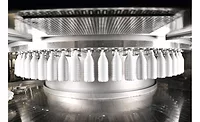
Mer, France; and De Laval of Sweden. Sidel builds machinery for aseptic
packaging of plastic bottles, with a focus on high-speed rotary machines.
Christopher Hoemeke, North American product manager for
business development at Sidel, points to growth in aseptic processing and
packaging in the United States. “It used to be that 20 percent of all
inquiries came from the United States, and now 90 percent of inquiries are
from the United States,” he says.
Aseptic packaging is the next big thing in the dairy
industry, Hoemeke says, noting that schools districts across the country
are the next battleground. As carbonated soft drinks are shut out of
cafeterias, schools are seeking alternatives to cold milk storage.
Because aseptic packaging doesn’t require
refrigeration, it’s the perfect alternative, Hoemeke says. He points
to the new Quaker Milk Chillers as a good example of aseptic packaging in a
plastic bottle.
“The market dynamics have to shift,”
Hoemeke says. “There’s really not a market demand. But
consumers prefer bottles over other packaging, every time.”
Extended-shelf-life (ESL) products, which have a
120-day life, are growing, Hoemeke says. “With the school systems
banning soft drinks, there’s greater evidence for ESL and aseptic
packaging potential,” he says. “Now there’s a demand for
it. It’s basic economics. Everyone talks about the future of aseptic
packaging, but now it’s ‘What is the pace?’”
Hoemeke says he thinks aseptic packaging will
eventually replace retort can packaging because of its convenience.
“Consumers want the resealability that they can get from
bottles,” he says.
Federal Mfg. Co. recently rolled out its N-W Series
designed especially for non-contact ultra-clean filling. Optional machine
features include an aseptic package design.
Federal also offers its “E” series filler
bowl as a component of systems that provide extended product shelf life.
The bowl is ASME pressure-rated for 50 psi steam or temperatures to 295
degrees. The “E” series spring-loaded filling valve is designed
with a bypass to ensure that all valve surfaces and seal rings will be
thoroughly cleaned and sanitized using the company’s automated
circulating system. The filling valve is completely encapsulated for
cleaning and sanitizing. When the filler bowl is properly cleaned and
sanitized, a sterile product contact is achieved.
Milwaukee-based Federal has been designing and
manufacturing fillers for glass and plastic bottles for the dairy industry
for 60 years.
Modern Packaging, Inc., Deer Park, N.Y., designs and
manufactures precision packaging systems for the dairy industry. All units
are 24-hour production machines that are servo or cam driven, have
stainless steel construction and can be either aseptic or positive clean
air pressure filling systems. Modern Packaging builds a variety of systems
in either straight line or rotary with custom features that best fit dairy
processing requirements. All systems are easy to operate, maintain and
fulfill all USDA and 3-A dairy standards.
Raleigh, N.C.-based MicroThermics’ equipment and
miniature plant trial services bring plant processes into the lab. Using a
small amount of product, UHT/aseptic, HTST/pasteurization, hot-fill and
continuous cooking are performed quickly and conveniently in
MicroThermics’ lab or on site in a plant lab.
Got Challenges?
Aseptic packaging for milk has a lot to overcome in the
United States. “I don’t think any consumer will buy it if
it’s not chilled,” Hoemeke says. “Ambient products must
be marketed as chilled for now. The market has to change. They’ll
have to be in the cold chain for a while.”
Fluid milk works best in aseptic packaging. Drinkable
yogurt, one of the industry’s newer innovations, is not a good
candidate for 90-day ESL packaging because of its active cultures which
require cold temperatures for survival.
Flavored milks, on the other hand, are ideal to bring
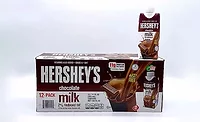
consumers over to aseptic packaging. One example is Bravo Foods’
Slammers, available in traditional flavors as well as co-branded
confectionary varieties such as 3 Musketeers and Milky Way.
“I don’t see white UHT milk being a
consumer’s choice yet,” Hoemeke says. “It would take a
well-educated consumer. But they’re not there; they’re not
ready for it.”
Because refrigeration is not required, soy milk is a
perfect choice for aseptic packaging,” Hoemeke says. “I think
soy will make great inroads,” he says.
Hoemeke predicts the industry will accept aseptic
packaging. “There’s no doubt it will move forward, but
it’s never fast enough for the people who make machinery,” he
says. “It’s just a matter of time before retort and glass
makers switch to aseptic.” m
Aseptic To the Rescue
Visit the Washington, D.C.-based Aseptic Packaging
Council’s Web site at www.aseptic.org and you’ll find a link
for branded products in aseptic packaging that are best to be included in
an emergency kit:
Milk: Parmalat, Gossner
Foods, Horizon Organic, Raging Cow.
Soy/non-dairy: Westsoy,
Silk, EAS AdvantEdge, Myoplex, Soy Dream, Rice Dream, Power Dream, Pacific
Soy, Pacific Rice, New Moon Chai.
Other beverages: Hi-C,
Minute Maid, Juicy Juice, Motts, SoBe Liz Packs.
Benefits of Aseptic Packaging
•Protection: Packages protect contents from light, microorganisms,
air and the environment.
•Preservation: Good packages help preserve food and prolong its shelf
life during storage, transport, retailing and consumption.
•Communication: Packages carry important product information about
ingredients, quantities, nutritional value, use, sell-by dates, etc.
•Convenience: Packages provide convenience for consumers by enabling
the food to be transported easily and stored until served.
Source: Tetra Pak
Aseptic Products Available in the United States
Milk
Instant ice cream mix
Instant breakfast drinks
Dietetic products
Whipping cream
Non-dairy creamers
Infant nutritional beverages
Hot chocolate concentrate
Scrambled egg mix, liquid eggs
Sports drinks
Chopped tomatoes and tomato sauce
Wine
Tofu
Vegetable and fruit juices
Cocktail mixes (margarita, daiquiri, etc.)
100-percent juices and juice drinks
Soy beverages
Juice and drink concentrates
Pancake syrup
Soups and broths
Fortified children’s juices
Liquid meal replacements
Rice beverages
Almond beverages
Chai
Oat beverages
Whey-based drink
Iced teas and tea concentrates
Thickened juices
Source: Aseptic Packaging
Council
Looking for a reprint of this article?
From high-res PDFs to custom plaques, order your copy today!