Inside the News: Is Grass-fed Milk the New Organic?
MEDFORD, Wis.-It's a warm afternoon in June and Mike Tomandl guides a pasture walk through the lush grassy fields of his family's farm while describing one of the attractions of grazing.
MEDFORD, Wis.-It's a warm afternoon in June and Mike Tomandl guides a pasture walk through the lush grassy fields of his family's farm while describing one of the attractions of grazing.
"The cows do all the work," Tomandl says. "And it's nice to hear them pulling that grass."
The ripping and crunching is quite noticeable, as is the presence of song birds and grasshoppers on the 143-acre spread.
When the Tomandls began managed rotational grazing more than a decade ago, they did so in the belief that it would be less costly, and make farming (and farm life) more enjoyable. Like most of their contemporaries, they had been educated to strive for higher production by keeping their cows in a cow shed and feeding them a scientific diet made up mostly of grain.
Now they are among a growing number unlearning those lessons and reverting to a way of farming they say is more natural, and more sustainable and one that they say produces a better product. Still, the idea of marketing those benefits to consumers, was just a dream. Until recently, that is.
Among those on the walk are representatives from Organic Farm Marketing, (OFM) a Wisconsin company introducing a line of "pasture-raised" milk. OFM organized the visit for farmers, media and retailers to help introduce its Grass Point Farms milk.
The company says grass-fed milk could be the latest value-added dairy product to be embraced by health and wellness-oriented consumers. The benefits are similar to those touted for grass-fed beef, for which a small market has already been established. And it doesn't have to be organic.
Grass Point Farm's packaging notes that it is from farms certified humane, and that evidence indicates cows fed primarily on grass give milk with a better balance of fatty acids.
"The healthful and natural foods consumer is looking for a few things from dairy products," says Pawlak, pres. of OFM. "They want great taste, products from family farms, free of artificial growth hormones, and they think the cows are just out on the grass."
But lately, debate over the varying application of organic pasture standards has reached the consumers, who may now ask where the cows are. And if grass-fed offers what they want, it might fill a hole left by the lag in the organic milk supply.
For farmers in places with adequate rainfall, converting from conventional dairying to grazing is faster and less costly than going organic. To a degree, it offers some of the same environmental benefits.
While there are no approved standards for products, grazing standards are designed to prevent soil erosion and encourage a balanced ecosystem. Grass Point has adopted these and is developing more. Included is a requirement to minimize the use of pesticides and other chemicals. Also, antibiotics are allowed for animals, but are not used routinely, so these restrictions are less rigid than with organic. And that may be the rub.
In May OFM exhibited at the All Things Organic trade show in Chicago. OFM has a line of organic dairy products under the brand Wisconsin Organics. Grass Point has been selling butter and other product since 2004 and is rolling out its milk line nationally this month. The company uses three co-packers with UHT processing for an extended shelf life.
Around the corner at the exhibit hall was Natural Dairy Products Corp., a cooperative- linked company based in Pennsylvania that sells organic grass-fed milk under the brand Natural by Nature. These products are HTST pasteurized, which the company markets as an added value. A spokesman for Natural Dairy Products questions why grazing farmers would not go the extra step to become organic, and of course, OFM has answers ready if anyone wants to listen to the full argument.
Meanwhile, a new cooperative has been formed between a small group of Wisconsin grazing farmers and the Edelweiss Creamery. It will launch a line of cheese made by former Roth Käse master cheesemaker Bruce Workman who is now at Edelweiss.
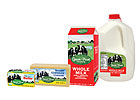
Grass Point Farms offers a line of products from cows that are grass-fed and treated humanely, but the products are not organic.
MEDFORD, Wis.-It's a warm afternoon in June and Mike Tomandl guides a pasture walk through the lush grassy fields of his family's farm while describing one of the attractions of grazing.
"The cows do all the work," Tomandl says. "And it's nice to hear them pulling that grass."
The ripping and crunching is quite noticeable, as is the presence of song birds and grasshoppers on the 143-acre spread.
When the Tomandls began managed rotational grazing more than a decade ago, they did so in the belief that it would be less costly, and make farming (and farm life) more enjoyable. Like most of their contemporaries, they had been educated to strive for higher production by keeping their cows in a cow shed and feeding them a scientific diet made up mostly of grain.
Now they are among a growing number unlearning those lessons and reverting to a way of farming they say is more natural, and more sustainable and one that they say produces a better product. Still, the idea of marketing those benefits to consumers, was just a dream. Until recently, that is.
Among those on the walk are representatives from Organic Farm Marketing, (OFM) a Wisconsin company introducing a line of "pasture-raised" milk. OFM organized the visit for farmers, media and retailers to help introduce its Grass Point Farms milk.
The company says grass-fed milk could be the latest value-added dairy product to be embraced by health and wellness-oriented consumers. The benefits are similar to those touted for grass-fed beef, for which a small market has already been established. And it doesn't have to be organic.
Grass Point Farm's packaging notes that it is from farms certified humane, and that evidence indicates cows fed primarily on grass give milk with a better balance of fatty acids.
"The healthful and natural foods consumer is looking for a few things from dairy products," says Pawlak, pres. of OFM. "They want great taste, products from family farms, free of artificial growth hormones, and they think the cows are just out on the grass."
But lately, debate over the varying application of organic pasture standards has reached the consumers, who may now ask where the cows are. And if grass-fed offers what they want, it might fill a hole left by the lag in the organic milk supply.
For farmers in places with adequate rainfall, converting from conventional dairying to grazing is faster and less costly than going organic. To a degree, it offers some of the same environmental benefits.
While there are no approved standards for products, grazing standards are designed to prevent soil erosion and encourage a balanced ecosystem. Grass Point has adopted these and is developing more. Included is a requirement to minimize the use of pesticides and other chemicals. Also, antibiotics are allowed for animals, but are not used routinely, so these restrictions are less rigid than with organic. And that may be the rub.
In May OFM exhibited at the All Things Organic trade show in Chicago. OFM has a line of organic dairy products under the brand Wisconsin Organics. Grass Point has been selling butter and other product since 2004 and is rolling out its milk line nationally this month. The company uses three co-packers with UHT processing for an extended shelf life.
Around the corner at the exhibit hall was Natural Dairy Products Corp., a cooperative- linked company based in Pennsylvania that sells organic grass-fed milk under the brand Natural by Nature. These products are HTST pasteurized, which the company markets as an added value. A spokesman for Natural Dairy Products questions why grazing farmers would not go the extra step to become organic, and of course, OFM has answers ready if anyone wants to listen to the full argument.
Meanwhile, a new cooperative has been formed between a small group of Wisconsin grazing farmers and the Edelweiss Creamery. It will launch a line of cheese made by former Roth Käse master cheesemaker Bruce Workman who is now at Edelweiss.
Looking for a reprint of this article?
From high-res PDFs to custom plaques, order your copy today!