Processing & Operations: Safety is Good Business
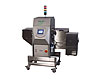
They may consolidate plants. They may trim work forces. They may even reformulate products. But when it comes to cutting costs in a troubled economy, dairy processors aren’t cutting corners on food safety.
That’s the word from several key suppliers of X-ray and metal detection equipment to the dairy industry, who continue to see investment in their technology as insurance for long-term brand security. “The food industry is not affected so much, compared to other types of industries,” says Joey Reed, product manager for metal detection, Bunting Magnetics Co., Newton, Kans. “People still have to eat and regulations for food safety will always remain.”
In fact, Reed says his company has seen a spike in quote requests and sales this past year compared to previous years. “I foresee it to continue growing,” he says.
Likewise at Eriez Manufacturing Co., says Ray Spurgeon Jr., manager-inspection systems at the Erie, Pa.-based firm. “Processors continue to invest in our technology as they want to minimize their exposure to foreign objects and protect their brand name,” Spurgeon says. “We have seen steady growth in our inspection and separation products and expect this will continue.”
Steve Gidman, president of Toronto’s Fortress Technology Inc., says processors have expressed continuing interest in higher performance of metal detection and rejection of contaminated product, as well as automated record keeping for statistical and tracking purposes. “The purchase of a metal detector is not an economically based decision,” Gidman says. “Metal detectors are essential to the production process of food safety.”
So the business of food safety appears to be secure, and suppliers continue to pursue new innovations.
Inspection equipment has become an important focus at Hayward, Calif.-based Heat and Control Inc., says Kevin Jesch, product manager for inspection systems. “We now offer a wide range of equipment, including a full line of both Ishida X-ray and CEIA metal detection solutions. We also offer a complete range of Ishida checkweighers,” Jesch says. “This has definitely been a growth area for our business and promises to continue to be important in the coming years. Our ongoing commitment to the inspection business insures great customer support and continued innovation with these technologies.”
The primary business of Tampa, Fla.-based Mettler-Toledo Safeline has long been helping customers keep their products safe. “Consumers are more aware of food safety and demand that the products they purchase are safe, in turn demanding food manufacturers take all measures to ensure their products’ safety,” says Sarrina Crowley, the company’s market communications specialist. “Demand has increased for all types of inspection requiring both metal detectors and X-ray inspection systems.”

The basics
What are dairy processors demanding from their detection equipment?It’s a simple recipe, all seem to agree: stainless steel, continuous welds, ability to withstand rigorous washdown, easy disassembly, easy to operate and capable of collecting data and networking with mainframes.
“Performance is most often cited as the number-one requirement,” Spurgeon says. “Secondly, reliability and repeatability are a must. Next, safety is paramount and emissions need to be minimized. Also, service and support round out the top concerns; a well-supported system must have 24/7 support in terms of service and spare parts.”
Jesch adds: “Processors are looking for improved sensitivity, as their distributors and final customers demand greater food safety.” To that end, Heat and Control offers CEIA horizontal metal detectors with conveyors for packaged products as well as pipeline metal detectors with integrated valves (sanitary valves designed for tool-free removal) for pumpable products such as yogurt, cottage cheese or other fluid products.
“For processors that must inspect for metal and non-metallic contamination – glass or stone, for example – we supply Ishida X-ray inspection systems, which are available in models for IP69K washdown, large cartons, individual packages and entry-level applications,” Jesch says. “Ishida X-ray systems are easy to operate, require no custom software, and offer superior sensitivity for many different types of contaminants.”
Crowley says a primary concern is finding stainless-steel contaminants, which can come from broken machine parts from the production line. Stainless steel is the most difficult metal to detect, she says, noting that her company’s offerings meet that demand.
“Safeline metal detectors are extremely sensitive to all types of metal contaminants,” Crowley says, “Our X-ray inspection systems detect and reject not only all types of metal contaminants, but can inspect for product and package integrity and over-fill or under-fill, reducing costly product giveaway.”
Reed says Bunting offers a wide variety of metal-detection equipment. “We have a solution for liquid or dry products in free fall, pumped, pneumatic lines or conveyor belts,” he notes.
Meanwhile, in addition to meeting processors’ basic demands, Fortress also provides custom solutions, such as incorporating the conveyor/reject systems into small spaces to fit into existing production lines, Gidman explains. Fortress equipment features reporting capability via Contact communication software that provides accurate, automated record-keeping and the opportunity for easy connection via Ethernet along with wireless options.
Waltham, Mass.-based Thermo Fisher Scientific Inc. has launched its new line of Apex 300 metal detectors, available in complete drop-through and pipeline systems. Specifically designed for food and beverage applications, the compact Apex 300 is offered in combination with the Thermo Scientific VersaWeigh checkweigher, creating an integrated weighing and contaminant detection system.
“This is a significant expansion of the Apex line,” says Bob Ries, product manager. “We’ve integrated the accuracy and reliability of our metal detectors for conveyors into many different models designed for the challenging drop-through and pipeline applications.”
Spurgeon recommends processors have their supplier visit the plant to better understand the full scope of the required application. “To determine whether or not a cabinet X-ray system is right for an application, we first have to explain to our prospects the technology’s capabilities and limitations,” he says. “Accordingly, manufacturers such as Eriez offer customer presentation to help them gain a better grasp of how the technology works.” Other factors influencing the selection are price, whether the product is packaged in foil, what type of foreign object will be detected and how much floor space is available.
The future
What’s the next big thing coming in X-ray and metal detection technology?“We will continue to make our systems easier to use and compatible with mainframes,” Spurgeon says. “Additionally, we are working with plastic manufacturers that produce items used in the production of food (i.e., modular plastic belting, flights and liners) and have developed an additive to make these items X-ray detectable. This will make x-ray machines even more valuable to food processors.”
Gidman says Fortress is continuously improving performance and precision detection capabilities, including data collection through a USB connection in conjunction with Contact software, enabling the user to retrieve important information at the touch of a button.
Jesch says CEIA has developed new multi-spectrum metal-detection technology that allows the metal detector to filter out product effect better than other detectors. “This results in markedly improved sensitivity,” he says, explaining this is particularly useful for cheese, which can be a difficult product for metal detection because varied amounts of salt and moisture can cause a wide range of conductivity and a strong product effect.
Mettler-Toledo Safeline is focusing on continually improving performance reliability and customer support, Crowley says. “We have also introduced several new systems, including the Compact metal detector and the SmartChek X-ray inspection system,” she says. “Both offer Mettler-Toledo Safeline’s hallmark qualities of high sensitivity and ease of use in a cost-effective package.”
Extras
Bunting Magnetics Co. www.buntingmagnetics.com
Eriez Manufacturing Co. www.eriez.com
Fortress Technology Inc. www.fortresstechnology.com
Heat and Control Inc. www.heatandcontrol.com
Mettler-Toledo Safeline www.mt.com/safelineus
Thermo Fisher Scientific Inc. www.thermo.com/apex
Looking for a reprint of this article?
From high-res PDFs to custom plaques, order your copy today!