
Membrane Technology Forum positions membranes as a tool for innovation and efficiency
Educational sessions from the 2026 Membrane Technology Forum explore how membrane technologies are advancing dairy innovation, plant efficiency, water management and product development.
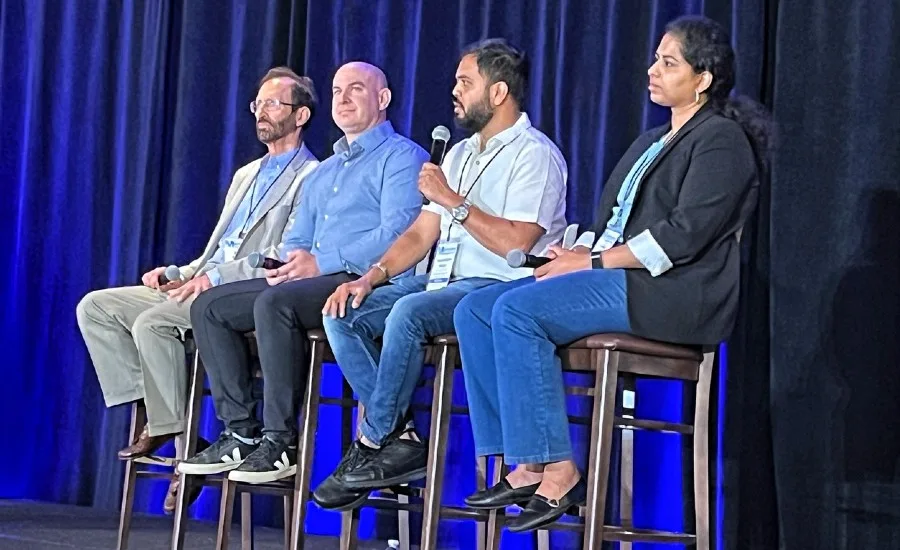
MINNEAPOLIS, Minn. — For decades, membrane technology has been central to dairy separation and concentration, but the conversations at the 2026 Membrane Technology Forum highlight a larger role for membrane filtration in dairy processors' business strategies.
Across sessions on ultrafiltered (UF) milk, protein fractionation, cheese, fermented dairy, wastewater treatment and membrane cleaning, speakers emphasized membrane filtration's role in helping processors develop higher-value products, improve plant performance and respond to rising pressures around water, energy and chemical use.
The event, held June 15-17 in Minneapolis, Minn., brought together dairy processors, researchers, suppliers and technology providers for a program focused on both product innovation and plant operations. New for 2026, the forum offered an expanded focus on beverage innovation and wastewater treatment.
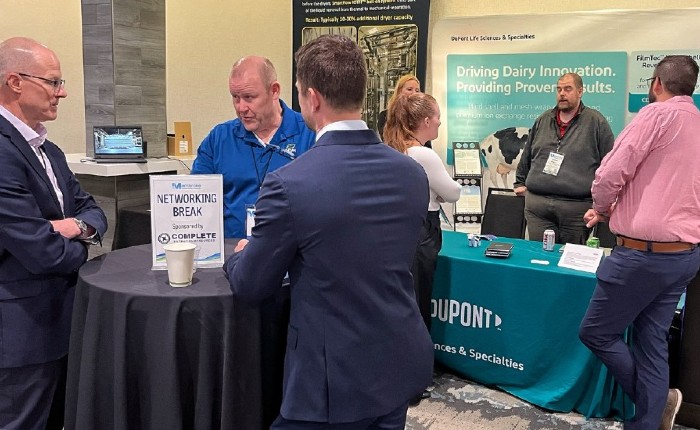 Membrane Technology Forum 2026 networking break. Courtesy of Robert Levy
While topics throughout the forum varied, a common theme emerged: membrane systems are becoming crucial to how dairy processors manage functionality, throughput, sanitation and resource efficiency. That shift was evident in the forum's keynote on ultrafiltered milk. Poonkodi Tamilmani, director of innovation at Darigold, discussed UF milk as a platform for consumer-driven dairy innovation, noting its role in concentrating protein while reducing lactose, minerals and water. For dairy processors, that capability is significant because it enables product developers to adjust composition while maintaining dairy's nutritional positioning in categories like fluid milk, ready-to-drink beverages, cultured dairy and nutritional products.
The focus on UF also reflects larger changes in the marketplace; demand for high-protein, reduced-sugar and clean-label dairy products has made composition control a crucial part of dairy innovation. Sessions from Tamilmani and Jayendra Amamcharla, professor at the University of Minnesota and director of the Midwest Dairy Foods Research Center, connected membrane processing to the development of dairy ingredients for targeted applications, including yogurt and high-protein beverages. Those discussions moved beyond basic concentration to address texture, stability, heat resistance, protein incorporation and consumer acceptance.
Brian Sudano, founder and CEO of S&D Insights, added beverage market context, discussing how quickly product formats and consumer expectations are changing. Hydration is dominating the beverage market overall; Sudano says sports drinks are becoming the new soda, while seltzer and flavored waters become the new diet soda. His session explored RTD formats and implied functionality, emphasizing that the overall beverage market is leaning into premiumization as health, wellness and functionality trends gain attention among consumers. The premiumization trend is impacting every segment of the beverage market, from water to sports drinks and alcohol. Light and craft beers, as well as nonalcoholic brews, continue to gain traction.
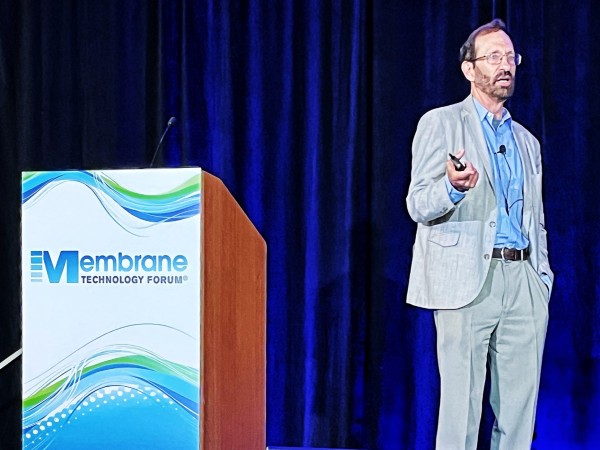 Brian Sudano presenting at the 2026 Membrane Technology Forum. Courtesy of Robert Levy
Beyond beverage market trends, the forum also explored membrane degassing technologies for beverage applications, with Nick Dotzenrod, business development manager for filtration and separations at Thermo Fisher Scientific, presenting on dissolved gas control, flavor stability and process consistency in beer and wine production.
The forum also positioned membrane technology as a tool for moving dairy solids into higher-value applications. Derik Robinson, CEO of High Desert Milk, and Jordan Oakes, plant manager at High Desert Milk, discussed how processors can move dairy solids up the ingredient value chain. Their session included examples like the evolution of nonfat dry milk into milk protein concentrates and isolates, as well as potential opportunities for buttermilk beyond powder applications.
That value-chain discussion is critical for dairy processors facing margin pressure and increased competition in ingredient markets. Membrane systems can help processors recover, concentrate and refine dairy components in ways that support more specialized ingredient portfolios. Rather than treating solids primarily as commodity outputs, processors can use membrane-based processes to create ingredients with more targeted functionality and higher market value.
Several technical sessions reinforced that value creation depends on plant-level execution. Alexis Sanchez, applications engineer at Mann+Hummel, discussed factors affecting UF performance, including throughput, selectivity, element design and spiral membrane selection for protein fractionation. Jeff Campbell, owner, founder and CEO of Campbell Membrane Cos., addressed the commercialization of novel membrane technology for dairy, including improved flux, enhanced separation, enrichment specificity, thermal and chemical stability and regulatory considerations. Together, these two sessions emphasize that membrane-enabled innovation depends on whether the technology can perform reliably under real production conditions.
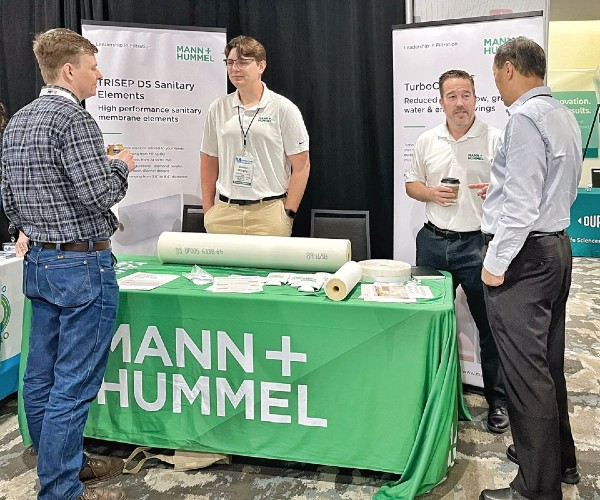 Mann+Hummel booth at MTF 2026. Courtesy of Robert Levy
Plant efficiency was another recurring theme throughout the forum. Jie Song, lead research scientist at DuPont, discussed advancements in reverse osmosis (RO) for dairy processing, including developments intended to reduce energy use, improve performance and extend operating life. Jason Bell, chief application scientist at SmartFlow Technologies, focused on UF system limitations tied to higher solids and viscosity. His presentation addressed how pressure drop, uneven flow distribution and reduced system stability can limit water removal ahead of spray drying, affecting dryer throughput and plant capacity utilization. These issues are crucial to dairy plants trying to increase output without adding major new drying capacity or absorbing unnecessary energy costs.
Cheese and fermented dairy applications gave the forum additional processing context. Satyendrasinh Mahida, senior principal process engineer at Great Lakes Cheese, discussed filtration technologies in aged cheddar production, including applications in cheesemaking and downstream whey processing. The session covered milk composition variability, cheese vat throughput, whey coproduct value, fat content management and protein processing implications.
Klaus Christensen, business manager at Alfa Laval, discussed plate-and-frame membrane technology for fermented milk products like yogurt, skyr and kefir. The session focused on open-channel module design for high-viscosity feeds and suspended solids, as well as sanitary operation, product purity and cleaning. For processors pursuing growth in cultured and fermented dairy, those considerations are central to scaling products that can be challenging from a viscosity, sanitation and consistency standpoint.
The forum's focus on cleaning, sanitation and wastewater treatment showed how membrane performance is tied to overall plant management. Leighton Butler, membrane specialist at IXOM, discussed surfactants and lipase enzymes in dairy membrane cleaning, including enzyme deactivation and post-clean-in-place (CIP) detection. AJ Bogan, director of technical services at Pure Bioscience, discussed advanced chemistry solutions designed to restore membrane flux, reduce cleaning time and extend membrane lifecycle.
Derek Pitman, consultant at Realco, addressed biofilm control and cold enzymatic cleaning, framing biofilm-driven fouling as a persistent barrier to membrane efficiency. Ronni Rasmussen, application specialist membranes and CIP at Novadan ApS, discussed data-driven membrane cleaning using real-time CIP data, including flow, temperature, conductivity, pH, energy use and wastewater. Together, these sessions highlighted cleaning as not just a sanitation requirement, but also as a tool for process efficiency and resource management.
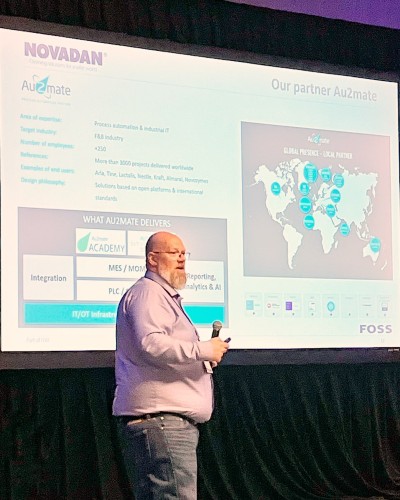 Ronni Rasmussen, application specialist membranes and CIP at Novadan ApS. Courtesy of Robert Levy
Water management was another key thread throughout the forum. Kyle Jenson, vice president of growth and innovation at BIOIONIX, discussed chemical elimination and water reuse for sustainable dairy processing, including applications in cheese brine treatment, CIP and COP. Jon Goodman, vice president of food processing and specialty at ZwitterCo, and Christopher Drover, chief technology officer at ZwitterCo, discussed lower-cost treatment of food, dairy and beverage wastewater, including anti-fouling membrane materials, total treatment cost and case studies involving dairy effluent and other food and beverage wastewater streams.
Those discussions reflected mounting pressures around water stress, regulatory requirements and treatment costs. For dairy processors, membrane technology's role in wastewater treatment and reuse may become increasingly important as companies evaluate how to meet environmental obligations while controlling operating costs.
The top takeaway from this year's Membrane Technology Forum is that membrane technology is no longer limited to a single processing step. For dairy processors, membrane filtration is increasingly sitting at the intersection of production innovation, ingredient strategy, plant capacity, sanitation, water management and sustainability goals.
As demand for functional dairy products grows and processors continue facing pressure to improve overall efficiency, reduce resource use and create more value from existing dairy streams, membrane systems are likely to remain central to product and process innovation.
Looking for a reprint of this article?
From high-res PDFs to custom plaques, order your copy today!


