The dairy processing industry is evolving, leading to advances in packaging. According to Future Market Insights Inc., the global dairy packaging market is projected to grow from $25.9 billion in 2025 to $39.2 billion by 2035, with a compound annual growth rate of 4.2%.
As dairy processors continue to set sustainability goals, sustainable packaging is a big part of the solution to achieve these directives. Many dairy processors have pinpointed 2030 as a date to significantly reduce greenhouse gas emissions in their products.
The dairy industry is on the cusp of a new era of packaging innovation, driven largely by sustainability and Environmental, Social, and Governance (ESG) targets that require investment in new packaging solutions to limit food waste, reduce greenhouse gas emissions, and reduce landfilling.
Dairy processors’ sustainability goals require many aspects, as are discussed throughout this issue. One important stop on the path to climate and carbon neutrality is sustainable packaging.
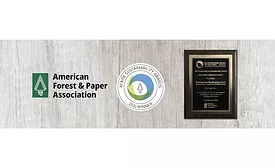
The award recognizes the packaging company’s commitment to responsible forestry.
November 23, 2020
Memphis, Tenn.-based Evergreen Packaging said it is the recipient of the American Forest & Paper Association’s (AF&PA) 2020 Leadership in Sustainability Award for Sustainable Forest Management for its submission, “Family Forests— The Key to Certified Success.”
Sustainability touches every aspect of the dairy industry. Consumer demand for more environmentally friendly products is a driving force, prompting changes to packaging materials that are more easily recycled, contain recycled content, are source-reduced and/or are derived from renewable sources.
3 ways to a slimmer jug are: light-weighting through container design; adding calcium carbonate as a filler to replace virgin HDPE; and light-weighting plus optimizing for calcium carbonate filler.
An integrated design approach appears to be the next frontier for the fluid milk market, where the minimum input is used to get the maximum use of materials at the end. This can only come about by the value chain working together, namely raw materials suppliers, equipment manufacturers, e.g. of blow molding equipment, distribution equipment manufacturers, e.g. of crate packing equipment, processors/brand owners and retailers.