Trends in Lab Equipment
Have you poked your head into the dairy lab lately? Now might be the time. Because the market and regulatory forces buffeting the dairy industry are driving immense change in this critical link between cow and consumer.
The most important change agent impacting the lab is the decline in milk consumption and the rise of specialty dairy products. One of our colleagues compares milk to crude oil. "When it was discovered in Pennsylvania during the 19th Century, oil was burned in kerosene lamps as a light source. But when electric incandescent bulbs were developed, we learned to use oil in different ways - for gasoline, jet fuel, and petrochemicals." Milk is moving in the same direction. As consumption declines, companies are developing specialty dairy products, such as gourmet ice cream, yogurt, and specialty drinks, which appeal to a more sophisticated consumer palate.
Dairy labs also are facing stricter government health and safety regulations. Product specifications are tighter as consumers place a higher value on taste, consistency, and appearance. Milk producers want clean, bacteria-free milk for long shelf life. And pricing pressures, coupled with the need to meet profit expectations, make cost reduction a never-ending journey.
These business drivers are placing new and greater demands on laboratory testing procedures and analytical instrumentation. The explosion in specialty dairy products means test instruments must be increasingly more versatile and precise. Complex product formulas require analyzers that can consistently (and continuously) decompose wide varieties of ingredients. Government proof-of-formula and bacteria count regulations require new levels of instrument accuracy. And cost reduction pressures drive demands for higher lab productivity, less equipment maintenance, and exact measurement of fat and water content.
For example, productivity improvement is driving laboratories toward fewer manual processes. Instruments are incorporating technology to offer walk-up and push-button automation. Today, technicians can place samples in the equipment, push a button, and receive instant analysis of complex products. And the results are recorded automatically in the laboratory's information management system. Instruments are incorporating modular designs that are easily modified for quality assurance testing, such as analysis for fat, added water, completeness of pasteurization, and bacteria detection applications. And reliability is improving dramatically as processors demand higher asset availability and reduced maintenance and calibration.
There are four common tests that represent the bulk of the work in most cooperative, regulatory, and dairy company laboratories. They include Cryoscopy Testing, Pasteurization Testing, Chemical Component Analysis, and Microbiological Profiling. All are in transition as they incorporate new technology to meet tomorrow's business demands.

Cryoscopy
When raw milk is delivered to a processing plant, a cryoscope is used to determine water content. Since milk is sold by weight, processors abhor paying for excess water. In addition, water can harbor bacteria. Present cryoscope technology is semi-automated and utilizes the Freezing Point depression method. Samples are tested before raw milk is unloaded into storage. Finished products also are tested for water content for quality assurance purposes. Producers judge cryoscope performance on the basis of equipment reliability, up time, and throughput.
In the future, cryoscopes could be developed to perform real-time, in-line testing, both for incoming raw milk and finished products. In-line equipment will speed up flow and reduce cost. In addition, data will be fed directly into the plant information system allowing more efficient batch validation and real-time adjustment of ingredient levels.
Pasteurization Testing
Pasteurization is one of the most important steps in processing milk and is essential for food safety. It greatly improves milk's "keeping" quality by effectively destroying virtually all disease-producing (and most other) bacteria. (Source: The Food and Agriculture Organization web site, www.fao.org).Over the past 60 years, the industry has used colorimetric tests to determine proper pasteurization. This manual inspection method is based primarily on a technician's subjective interpretation of the results. In 1990, a new Rapid Enzymatic Assay (test) was designed to confirm pasteurization. This test involved the use of an automated instrument and a fluoremetric assay. Known as Alkaline Phosphatase testing (ALP), the instrument interprets the results instead of a technician, dramatically reducing the evaluation process from 90 minutes to three minutes. ALP testing, unlike the colorimetric method, can be used to confirm pasteurization of many different products including bovine, sheep, and goat milk, flavored and cultured products, and cheeses. (Source: Milk Industry International - December 2000)
This test is revolutionizing the way the industry checks for pasteurization. Dairy processors are enjoying higher precision and reproducibility and a ten-fold sensitivity improvement. This enhances process improvement and troubleshooting while allowing immediate process validation following maintenance. The ALP method has been accepted in Europe as a reference method and dairy producers are beginning to implement the equipment. In the U.S., the test's accuracy and sensitivity resulted in the FDA lowering its pasteurization acceptance criteria from 500 to 350 mU/l of ALP activity. By lowering the criteria with better technology, plants are able to improve HACCP programs and advance the cause of food safety to protect consumers.
Component Analysis Testing
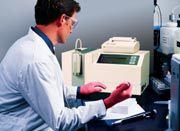
Component Analysis Testing determines the chemical makeup of milk and other dairy products. While fat content typically is the most important element tested, protein, lactose, and total solids, among others, are also frequently measured. Many dairy plants do component testing for payment purposes, herd health and improvement, somatic cells, and even proof of correct formula - a key quality assurance factor. They must be confident of producing the right formula, every time. Chemical content variability can have dramatic affect on quality and cost. For example, during ice cream manufacturing, if the fat content is not correct, the freezing temperature will change, resulting in poor product consistency. Since fat (cream) is milk's high value component, processors keep its level as close to the minimum government requirement as possible to control cost.Dairy labs use two types of instruments to perform these tests. An analyzer, which utilizes optical filters, is a cost-effective way to test the chemical makeup of fluid milk and simple dairy products. A Fourier Transform Infrared (FTIR) analyzer can evaluate a much wider range of products, including complex recipes such as yogurt drinks, multi-flavored ice creams, and cottage cheeses.
The filter analyzer is accurate and reliable, but cannot test as wide a variety of products. It does a great job determining the basic composition of milk and is used by hundreds of labs. In the future, technology and innovative design will allow higher signal-to-noise ratio providing even more accurate results.
However with the explosion in specialty dairy products, labs are moving to highly versatile FTIR technology. The FTIR analyzer, with its sensitive infrared spectrometer, is accurate enough to evaluate the most complex products and compounds. But these systems are complicated and have required significant service contracts and frequent calibration. In the future, we will see instruments with higher optical and bench stability. Already, some systems are incorporating highly robust commercial benches that are built for rigorous aerospace applications. These optical systems require little maintenance and much less calibration. Tomorrow's FTIR analyzers will be easier to use, generate higher throughput, and significantly reduce the total cost of ownership.
Microbiological Profile
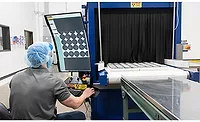
Government regulations require raw milk and finished dairy products to be tested for bacteria levels. Microbiological content has become a major concern in foods for its impact on safety, taste, and shelf life. Milk buyers will pay a premium to producers for clean milk, making bacterial content measurement a critical business issue. Currently, laboratory technicians conduct this analysis by pipetting product samples on growth media such as Petrifilm[tm]. Bacterial colonies are counted visually to determine the microbiological profile. But with this manual visual assessment, lab technicians can process only about one plate per minute -- tedious, painstaking work that is highly susceptible to error.
In the near future, manual visual assessment will be replaced with automated colony counting technology. With inspection rates of up to four plates in 40 seconds, these high-throughput units will slash inspection time by more than 400%. And test results will be instantly recorded in the lab's information system, eliminating the chance for transcription errors and maintaining virtually 100% data integrity.

The End of the Lab?
As we consider the dairy lab of the future, we see dramatic changes in the nature of its work. Testing equipment will move off the bench and onto the factory floor. Analyzers will be inserted into the production line, continuously measuring bacteria, water and chemical content on a real-time basis. This data will flow into the plant's information and control systems, allowing real-time adjustment of production streams based on variations in raw material and product content. The new in-line systems will be highly stable and reliable, requiring much less service, maintenance, and calibration.
Each day, dairy labs around the globe are testing continuously to meet content, quality, health, and recipe standards throughout the production process - from the time the truck unloads raw milk to the packing of the finished product. Failure to perform these analyses quickly and accurately can mean production disruptions, poor quality, or even consumer injury. As profit targets, government regulations, and consumer tastes continue to change, keep your eye on the dairy lab and watch it respond to tomorrow's business challenges.
Equipment Showcase
The new 3300 series single column texture analyzers are available from Instron. Designed to evaluate the texture of dairy products, cheeses and other solid and semi-solid foods, the 3300 series is a cost-effective solution for QC/QA and R&D labs. Instron's 3300 series includes a precision load frame with integrated digital control electronics, a load cell, and Series IX[tm] Testing Software. The system provides automatic recognition and calibration of load cells. This feature eliminates the need for calibration weights. A range of test fixtures and software allows food texture and food packaging testing to be performed on the same system. Instron's 3300 series delivers performance that meets or exceeds measurement accuracy requirements of ASTM, EN, BS, ISO, JIS and other various testing standards. The 3300's high torque DC motor with digital position control enables the system to provide the excellent speed control necessary for testing strain rate sensitive foods. In addition to constant speed tests, the 3300 Series can perform true strain rate and load rate tests using Instron's Merlin software. The 3300 series' user-friendly design allows for quick test set-up and versatility. Column covers are fitted with T-slots for mounting test area lighting and various accessories. An optional drip tray attaches to the base of the 3300 to contain liquids or food particles extruded during testing. Test fixtures for shear, deformation, puncture, stickiness, hardness and many other texture tests are available. In addition, the 3300 series texture analyzers are available in four colors: teal green, cobalt blue, charcoal gray and scarlet red.Instron
800/564-8378
Write in 450
www.instron.com
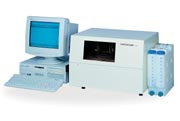
The LactoScope' FTIR premium analyzer, from Delta Instruments, an Advanced Instruments company, provides rapid, ultra-precise determination of the chemical composition of even the most complex milk and dairy products. Based on Fourier transform infrared (FTIR) technology, its advanced yet stable design incorporates a patented new interferometer needing far less recalibration and fewer repairs than any comparable analyzer. The result is the best performance and lowest cost of ownership in its class. The Lactoscope FTIR utilizes optical technology proven in aerospace applications for exceptional stability and reliability. This essential processing instrument tests a broad spectrum of applications, and provides fast, accurate determinations. It analyzes cold samples, so that there is no need for preheating of low-viscosity samples. The LactoScope FTIR has automated cleaning and calibration control, transferability through patented FTIR technology, proven reliability, low operation costs, and easy maintenance through modular design. Typical applications for the LactoScope FTIR include component analysis for fat, protein, carbohydrates, sugars, and total solids. The instrument measures 80-120 samples per hour. The measuring ranges for samples are: Fat in cream (0-55%); Protein in concentrated milk (0-15%); Carbohydrate in ice cream mix (0-25%); and Total Solids in concentrated milk (0-50%). The system dimensions are (H x W x D): 40 x 80 x 50* cm. For more information contact Anthony Pappas, Product Manager.
Delta Instruments
800/364-8860
Write in 451
www.deltainstruments.com
Dairy plants now have the opportunity to save time and money in process and quality control by implementing the new FoodScan for compositional analysis of solid and semi-solid products. FoodScan can be placed at the production line to make immediate adjustments to the manufacturing process. By measuring a complete range of parameters dairy plants are able to control and optimize yield and product consistency. In the quality control lab, FoodScan analyses raw materials and finished products to ensure product quality and detect possible faults before product ships to
the customer.
FOSS North America
800/547-6275
Write in 452
www.foss.dk
Looking for a reprint of this article?
From high-res PDFs to custom plaques, order your copy today!