Dairy's Healthy Fat
High fat, trans fat, saturated fat. Consumers hear news about fat all of the time. While the advice is sometimes about limiting certain fats, consumers are also learning about necessary and beneficial fats for their health. Today's healthful fats include omega-3 fatty acids, omega-6 fatty acids and dairy-derived conjugated linoleic acid (CLA). While some of these nutritious fats are associated with specific health benefits, such as omega-3 for heart health, emerging research indicates that milk-derived CLA might hold anti-cancer properties as well as offer potential positive effects on cardiovascular health.
CLA is a fatty acid naturally present in cows milk and certain animal meats. Milkfat, in particular, is the richest natural dietary source of CLA in the cis-9, trans-11 (c9, t11) configuration.
"Milk has 20 different CLA isomers in it, but they are present in trace levels, except for the c9, t11 isomer, which is present in up to 90% of the total CLA content," says Dale Bauman, professor, department of animal science and division of nutritional sciences, Cornell University, Ithaca, N.Y. And, it is the c9, t11 configuration of CLA that is believed to provide potential health benefits, specifically in the areas of cancer and coronary heart disease (CHD).
CLA and cancer
Biomedical studies using animal models and cell cultures have consistently shown that CLA is a potent, naturally occurring anti-carcinogen. For this reason, the National Academy of Science, in 1996, stated that "CLA was the only fatty acid shown unequivocally to inhibit carcinogenesis in experimental animals."Evidence now suggests that different isomers of CLA have very different biological effects. Research has shown that the c9, t11 isomer found in dairy fat is preferentially taken up and accumulated in mammary tissue and is a potent anti-carcinogen. Of special importance, dairy milkfat enriched in CLA and incorporated into the diet was effective as an anti-carcinogen in animal models of mammary cancer. This series of studies are among the first to show that a naturally occurring anticarcinogen (c9, t11 CLA) supplied as a natural food (milkfat from dairy products) has beneficial effects in preventing cancer in biomedical animal models.
Consumption of cheese and other dairy products has been found to increase the CLA content in both the blood and breast milk of humans. In addition, some epidemiological evidence indicates that consumption of dairy foods may decrease the risk of breast cancer in humans. For example, a study in Finland indicated that a diet high in CLA and trans-vaccenic acid (VA) from dairy, especially cheese, was associated with a reduced risk of breast cancer in post-menopausal women.
"Breast cancer has a long latency period, and until there are consensus biomarkers for breast cancer, it will be difficult to conduct solid scientific studies that evaluate the role of CLA in the prevention of the disease," says Bauman. Although conclusive clinical research is difficult to produce, these and other animal and epidemiological studies indicate that the c9, t11 CLA levels in the diet may have benefits for the prevention of breast cancer.
The heart health connection
Several animal studies and some clinical studies suggest that CLA, in levels up to 3g a day, may provide heart health benefits. Human clinical studies assessing the effect of diets containing CLA on atherosclerosis are essential for understanding what role CLA may play. However, to date, these studies are very limited.The first investigation to utilize relatively pure CLA isomers observed that c9, t11 CLA supplementation had favorable effects on blood lipids in healthy humans. Compared to starting baseline levels, plasma triglicerides, total cholesterol, LDL-cholesterol and LDL:HDL-cholesterol were all lower during supplementation with c9, t11 CLA.
This same group has also shown that the c9, t11 isomer is readily incorporated in plasma and cellular lipids in a dose-dependent manner. Thus, while data are limited, these two studies provide support that some of the cardio-protective effects of CLA reported in animal models can extend to humans, notes Bauman.
"In humans, it is difficult to conduct dietary intervention studies examining the preventative effect of CLA on atherosclerosis," says Bauman. "As with cancer, it is a tremendous challenge because these diseases are chronic and caused by many factors."

Functional future for CLA
Despite challenges in conducting human clinical studies, research continues to explore ways of producing dairy foods with higher CLA contents. Work is under way to produce milk with higher levels of CLA by modifying dairy cow feeding.Scientists at the dairy-farmer-funded Northeast Dairy Center at Cornell University have recently tested milk with naturally enhanced levels of CLA to determine sensory characteristics such as appearance, flavor, aroma and texture, and found it comparable to standard milk in all regards.
In addition to milkfat that has been naturally enhanced with CLA by controlling the diet of dairy cows, there is evidence to indicate that the CLA content of cheese and yogurt could be enhanced by bacterial starter cultures, including several strains of Lactobacillus, Propionibacterium, Bifidobacterium and Enterococcus. These bacterial strains have the ability to convert linoleic acid to CLA, but further testing is required to determine if this conversion actually occurs in cheese and yogurt production.
Bauman's research group at Cornell is examining the control of CLA synthesis. "We are working to understand how CLA is made in a dairy cow and how we can influence the level of CLA in milkfat," explains Bauman. The team's efforts range from molecular studies on its biosynthetic pathways to studies of dairy nutrition and feeding practices that allow production of milkfat with naturally enhanced levels of CLA.
Another objective of Bauman's research is to produce dairy products such as butter, with naturally enhanced CLA levels that can be used in biomedical studies with animal models of human disease. This has included the production of a natural CLA-enriched butter that has a CLA content about 800% greater than average butter. In a rat model of breast cancer, the CLA-enriched butter was effective in reducing mammary cancer occurrence.
Bauman's research group also works with VA, which can be converted to CLA in the mammary gland of cows. "Although VA is a trans fatty acid present in milkfat, studies with animal models as well as humans show they convert VA to CLA when it is consumed in the diet. Thus, the VA in milkfat is very different from other trans fatty acids," says Bauman.
With continued research, CLA has the potential to play a role in new kinds of healthful dairy-based functional foods.
Sidebar: CLA Promoted Abroad
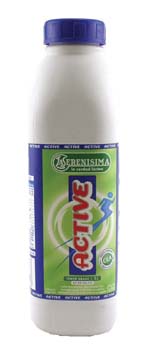
Although there are no approved health claims related to conjugated linoleic acid (CLA) yet, some dairy products abroad tout their CLA content. Here are some examples.La Serenisima Active Partially Skimmed Milk is sold in Argentina. The company claims that the product has extra calcium as well as CLA. The milk provides 0.20g CLA. Ingredients include partially skimmed milk, naturally concentrated calcium from milk, vitamin A, vitamin D and CLA.
Under the Zen Linea Salute brand, Yogurt Cremoso alla Fragola is sold in Italy. It is a creamy, strawberry-flavored yogurt that the manufacturer says is naturally rich in CLA and omega-3 fatty acids. Offered by Techno-Foods, the yogurt product provides 46mg CLA.
Looking for a reprint of this article?
From high-res PDFs to custom plaques, order your copy today!