Tools for Innovation: Take Note
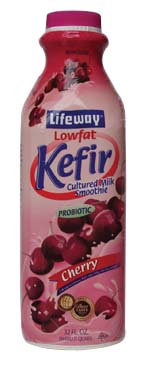
The country's two leading kefir manufacturers-Helios Nutrition Ltd., Sauk Centre, Minn., and Lifeway Foods Inc., Morton Grove, Ill.-both use the term probiotic on package labels. On Lifeway's package, label panels list the 10 live and active kefir cultures inside every bottle. The company has also licensed the use of the dairy calcium and weight loss claim, which it flags on front panels and describes on the side.
Labels of Helios Nutrition's Organic Kefir with FOS state that the drink supports a healthy intestinal ecosystem in children and adults. The beverage also includes fructooligosaccharide (FOS), which is described as "food for your own beneficial bifidobacteria."
Stonyfield Farm, Londonderry, N.H., the country's No. 3 yogurt manufacturer, is a leader when it comes to promoting probiotics. Stonyfield's yogurts contain six live and active cultures. In addition to Lactobacillus bulgaricus and Streptococcus thermophilus, Stonyfield adds four probiotics. Each culture provides its own unique health benefits, and all six help to enhance digestion as well as boost the immune system, according to the company. Stonyfield is the only U.S. yogurt to contain Lactobacillus reuteri, a probiotic that has been shown to inhibit the growth of harmful bacteria and to treat and prevent both viral and bacterial diarrhea.
To educate consumers about the benefits of Stonyfield's probiotics, the company provides information on its Web site, at events and, to a limited extent, on its yogurt cups. "This helps consumers begin to understand the benefits of probiotics," says Gary Hirshberg, pres. and CEO. "Often we find that a field marketing event is the best place, when we are out sampling the product, and we have the time to talk with consumers and hand out brochures. It is a complex topic, as you know, and we are limited in space on our cups, so often we talk about one benefit that will drive the consumer to our Web site to learn more. It's exciting, because it's a new topic for so many consumers." Hirshberg says the company has new probiotic dairy products in the works.
Probiotic cultures are not limited to kefir and yogurt. For example, Springfield Creamery, Eugene, Ore., the very first U.S. dairy processor to use live acidophilus and bifidum cultures in yogurt more than 30 years ago, includes probiotics in its other cultured dairy products such as cottage cheese, cream cheese and sour cream. Labels boast the fact that the naturally cultured products contain live cultures such as Lactobacillus acidophilus, Bifidobacterium bifidum and four other lactic acid bacteria.
Franklin Foods, Burlington, Vt., recently debuted Hahn's™ Yogurt & Cream Cheese Spread, which contains live and active acidophilus cultures.
Adding probiotics to dairy foods is an excellent way for processors to innovate and add value. And, at the same time, help consumers enhance their health and well being.
Looking for a reprint of this article?
From high-res PDFs to custom plaques, order your copy today!