Desert Cheese
CLOVIS, N.M.-Tom Gathright had never worked for a food company before Southwest Cheese hired him away from the paper and pulp industry. Gathright is the environmental mgr. at the massive new cheese plant that recently sprouted up from the irrigated earth in the middle of the nation’s fastest growing milkshed.
CLOVIS, N.M.-Tom Gathright had never worked for a food company before Southwest Cheese hired him away from the paper and pulp industry. Gathright is the environmental mgr. at the massive new cheese plant that recently sprouted up from the irrigated earth in the middle of the nation’s fastest growing milkshed.
He now runs a methane digester wastewater treatment facility that handles the river of water that results from the daily conversion of 7 million lbs of milk into cheese and whey products. About 44,000 lbs of cheese and 3,000 lbs of whey protein powder an hour, that is.
“I think this is one of the first cheese plants to use a combined system like this,” Gathright says as he looks over the system during a recent tour for Dairy Foods. “I told them, you know the paper industry’s been doing this for more than 20 years.”
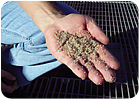 The system, a methane digester made up of covered and open lagoons, sand filters, and methane recapture subsystems makes the cheese plant a net producer of water. The water is treated to where it is nearly indistinguishable from tap water. A portion of the methane from the system is recaptured and used to run one of four boilers used for process steam. It’s a sub-plant that cost Southwest Cheese more than $25 million to build. But the most immediate return on that investment is that it will allow the company to focus on the efficient production of high volumes of cheese without having to worry about environmental issues. Down the road, it also provides opportunity for expansion.
Southwest’s Pres./CEO Maurice Keane, who comes to the job from the Glanbia Foods side of the Southwest Cheese partnership says getting the environmental equation solved upfront was crucial.
“Clearly from our world wide experience we recognized that environmental requirements are changing and we realized that it was important to get the environmental side right from day one, rather than chasing it on an ongoing basis,” Keane says. “Hence we worked closely with the environmental authorities to assure we came up with a sustainable and mutually acceptable solution that would meet our needs right now and while making room for future expansion.”
With no waterways or major municipal treatment plant nearby, the choices were limited to partial treatment and land application, or the development of a serious wastewater treatment facility on site.
“The key issue was sustainability,” Keane said. “There is an aquifer there that needed to be protected, so we saw land application of semi-treated effluent as not being the best long-term option.”
Indeed Southwest has gotten high marks on its first environmental report cards since the plant was opened last fall.
The plant is designed to produce such a high volume of cheese so efficiently and effectively that it can elbow into a competitive market with its 40 lb and 640 lb blocks. That’s not a terribly new proposition, but Glanbia and the other partners who came together to build this colossal facility seem to have taken all the lessons learned from the other giant cheese plants built in the last 10 to 15 years and utilized them in one place. And while these lessons have been applied in all points of the plant from the make room to the receiving bays, some of the most dramatic innovations have to do with the wastewater treatment system designed and implemented by Biothane Inc., Camden, N.J., and the land use plan developed by Southwest.
Walking along the high banks of the lagoons, Gathright guides attention to the farm fields hundreds of yards away.
“Those irrigation sprinklers in the fields across the road are all fed from the wastewater from our plant,” Gathright said.
The land surrounding the plant in all directions is owned by Southwest. It is rented to farmers who grow forage crops including hay and alfalfa, some of which finds its way back to the local dairy producers to help make milk that comes back to the receiving bays. Those bays are receiving milk at almost all hours, and in an average day about 140 tankers are unloaded.
The business structure of Southwest Cheese LLC is a 50/50 partnership between Glanbia plc and the Greater Southwest Agency, a group formed by dairy cooperatives, Dairy Farmers of America, Select Milk Producers, Zia Milk Producers and Lone Star Milk Producers. Glanbia is 100% responsible for the development and operation of the plant and for the sale of the cheese and whey products.
The main process engineer for the cheesemaking and whey systems was the Carlisle Process Systems (CPS) which has since merged with Tetra Pak. CPS provided systems from several of its brand lines and worked with other companies including Alfa Laval, Fristam, and Filtration Engineering to build out the systems. Sanitation is handled by Southwest Cheese, with support from Ecolab.
The project design began in 2003 and general contractor Dahlgren/Skanska Construction broke ground in early 2004. Commissioning began in the fall of 2005, and the plant was fully operational by September. The plant is expected to generate $340 million in annual sales.
Milk is pasteurized with APV plate heat exchangers, separation and clarification are done with Tetra Pak equipment, and the pasteurized milk is balanced before being sent to cold storage surge tanks.
On the process floor batches are called up on an Allen Bradley PLC control unit. There are 15 CPS horizontal cheese vats on the make deck, eight of them dedicated to 640 blocks and seven reserved for the 40 lb block batches.
The tanks are filled automatically, and rennet and starters are added automatically. Each batch takes about two hours to set, and once the curd is formed and cut it is blown over to one of two massive CPS Cheddaring units. Again one is dedicated to the 640 line and the other to the 40 lb line.
 The curd travels over a series of three belts where it is milled, drained and salted. Peppers are added near he end of the process for Pepper Jack varieties.
The curd is pneumatically conveyed to the blockforming towers. There are 14 Hi-Flow cheese towers, each about 40 feet tall. A vacuum is applied to the block towers, which helps to knit the curd, while extracting any remaining whey as the blocks are formed. Bags are fitted by hand at the base of each block former and the blocks are sent along two conveyers to a Sealed Air Betavac bagging system.
The 640 process is similar until the cheese leaves the dedicated Cheddaring machine. Ultimately, curd is conveyed to an automated filler.
The blocks are actually formed in wooden crates that arrive at the plant in refurbished sections- “walls”, tops and bottoms. Prior to production, the sections are assembled by hand before being placed on a large fitted dolly frame. As part of the assembly process a plastic liner is added. The curd is conveyed and weighed into the boxes automatically. An interior cover is placed on the bed of curds and large springs resembling bed springs are placed under the exterior lid to keep pressure on the cheese.
“This allows the curd to continue to knit and squeezes out any moisture that’s left,” Keane adds. “It’s one of the only places where you will see lumber in a modern cheese plant.”
The massive crated blocks are about the size of a mid-sized file cabinet or a mechanic’s tool chest and take about five days to cool. Meanwhile, the wrapped 40 pound blocks are cooled in a large Realcold tray cooler that rotates the blocks in a 39-degree environment for about 20 hours.
Southwest’s whey treatment begins with a Filtration Engineering UF filtration system.
A Stork dryer system from CPS is used to convert the liquid into powder.
The powder is conveyed and filled with a system from Nu-Con and Avopac, two New Zealand-based firms with offices in the U.S.
The whey permeate is also covered. Mesa Ingredients Corporation has built a $15 million facility adjacent to the cheese plant for the manufacture of animal feed.
Cheese is aged on site for about two weeks. Cheese blocks are sold directly to cut and wrap and foodservice customers.
Product is loaded onto trucks through one of seven loading bays or loaded onto a railroad car through three rail bays.
“We have a spur here, and one car holds about four truckloads. We fill several cars a week and it is picked up and taken to various customers in the Midwest and toward the East Coast,” Keane says. “We’d like to do more of our delivery by train if we can to keep some of those trucks off the road, but right now it’s about 10 to 20% by rail.”
The whey powders are sent directly to Glanbia customers worldwide.
Effluent from the whey process spends 14 days in the covered anaerobic lagoons, where seeded anaerobic bacteria consume the biological material and convert it to methane.
“That methane is recaptured and it fuels one of our four boilers,” Gathright says. “The other three run off natural gas that we purchase.” While the dedicated boiler is tied to the natural gas line for backup, thus far the methane recapture has supplied 99.1% of the energy needed since the system has been on line.
The steam from that boiler is used to keep the anaerobic lagoons at 95 degrees F, to maximize activity, and to provide process heat for the cheese and whey processes. During the summer months, when the lagoons pull less energy, some of the methane is flared off.
After the first stage, the semi-treated water moves to a series of open aerobic lagoons where it spends another two days. Air is blown into the system through diffusers powered by three 125 HP blowers.
Finally the water is moved to a deep pool sand filter system.
“The water flows up through the sand bed and the sand is continually pulled from the bed and scrubbed,” Gathright says.
Some of the finished water is used to irrigate the surrounding farmland. What is not used is sent through a dedicated line to the Clovis municipal treatment facility where is commingled with other fully treated water that is then piped to other farm operations for irrigation. With the system in place, the plant actually produces more water than it uses.
In October Southwest cheese held an open house to celebrate the opening of the plant.
“We had the Governor here, and he put his hand in it and he said that it looked just like tap water,” Keane noted.
Thirty years ago beef and cotton were the top crops in New Mexico, but now the top crop is milk. Today New Mexico is the seventh largest milk producing state, providing 4% of the 177 billion pounds of milk produced annually in the United States (National Agricultural Statistical Service, NASS).
The growth began just 20 years ago and continues to accelerate. The 33% growth rate in New Mexico’s milk production, during the last five years, ranks fourth in the nation, after Kansas, Idaho, and Oregon.
Keane says the growth has been somewhat simultaneous with the growth in Idaho, where Glanbia’s U.S. Division has its home base and operates several cheese and whey ingredients facilities. It’s part of a second wave of dairy industry migration wherein California farmers (in some cases, whose families previously had roots in the Midwest) are now pulling up stakes and looking for more room to farm at a larger scale in places like Idaho, New Mexico, Texas and even Kansas.
Frank Sheckarski, of New Mexico-based Zia Farms, says the Texas New Mexico Milk Marketing Agency was formed in November 1998 by four regional cooperatives: Dairy Farmers of America (SW Council), Select Milk Producers, Elite Milk Producers, and Zia Milk Producers. It was replaced by the Greater Southwest Agency in April 2002 when Lone Star Milk Producers joined (and Elite and Select merged) and the Agency production area expanded into Oklahoma and Kansas. In October 2006, production in Oklahoma and in the Wichita, Kas., zone left Greater Southwest.
Southwest Cheese LLC is located in Curry County, less than four miles from New Mexico’s border with the Texas panhandle. Curry County is one of the most active milk producers in the state, and tends to have the largest operations, with an average over 2,750 cows per farm.
Dairy farming is concentrated somewhat in eastern New Mexico, and has spread into west Texas. Just a couple hours from Clovis, in Dalhart, Texas, north of Amarillo, California-based Hilmar cheese is in the midst of building another large cheese plant.
DFA’s Southwest Area Council estimates that with every load of milk dropped off at Southwest Cheese, a local dairy farmer saves about $1,000 to $2,000 in hauling costs.

The group is organized into three operating divisions of Agribusiness, Consumer Foods and Food Ingredients, which includes the evolving Nutritionals business.
The company was formed in 1997 through the consolidation of the Avenmore and Waterford Cooperatives.
From its home base in Ireland, Glanbia has done well in selling dairy powders bulk cheese and ingredients into the export market. The need for more capacity and a desire for growth opportunities led companies in the European market to set up operations in other parts of the globe, and Glanbia’s predecessor Avonmore came to the United States in the early 1990s, with the purchase of the Idaho-based Ward’s Cheese, a company that had been founded some fifty years prior.
Throughout the 1990s Glanbia and its predecessor built and/or expanded upon four Idaho plants in three locations, Gooding, Twin Falls, and Richfield.
Worldwide, the company employs approximately 4,000 people and has an annual turnover of 1.8 billion euros ($2.3 billion).
In the United States, Glanbia is the No. 1 producer of both barrel cheese and whey protein isolate. With the addition of Southwest Cheese, it is now the top producer of natural American cheese, with a market share of more than 16%. It is also a top producer of lactose and Whey Protein Concentrates. In September 2006 Glanbia purchased the California-based nutritional business, Seltzer Companies, Inc., which provides customized formulations and specialty ingredients for the nutritional supplement, food and pharmaceutical markets.
340,000 sq ft
725,000 lbs of cheese a day
200-plus employees
60 miles of stainless steel piping above ground
742 miles of electrical cable above and below ground
500,000 gallons of water recovered from milk every day, treated and recycled for irrigation
Total cost $190 million
Avopac
APV
Bonelli
Biothane
Chr. Hansen
Tetra Pak Cheese and Powder (formerly CPS)
Tetra Pak Processing
Dahlgren/Skanska Contracting
Danisco
Ecolab
Filtration Engineering
Fristam
Nu-Con
Power Engineering
Toyota Forklifts
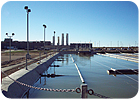
A key feature of the new facility is a sophisticated wastewater treatment system which turns effluent into clean water and methane gas.
CLOVIS, N.M.-Tom Gathright had never worked for a food company before Southwest Cheese hired him away from the paper and pulp industry. Gathright is the environmental mgr. at the massive new cheese plant that recently sprouted up from the irrigated earth in the middle of the nation’s fastest growing milkshed.
He now runs a methane digester wastewater treatment facility that handles the river of water that results from the daily conversion of 7 million lbs of milk into cheese and whey products. About 44,000 lbs of cheese and 3,000 lbs of whey protein powder an hour, that is.
“I think this is one of the first cheese plants to use a combined system like this,” Gathright says as he looks over the system during a recent tour for Dairy Foods. “I told them, you know the paper industry’s been doing this for more than 20 years.”
A key feature of the new facility is a sophisticated wastewater treatment system which turns effluent into clean water and methane gas. The final step involves a high tech sand filtration process.
Southwest’s Pres./CEO Maurice Keane, who comes to the job from the Glanbia Foods side of the Southwest Cheese partnership says getting the environmental equation solved upfront was crucial.
“Clearly from our world wide experience we recognized that environmental requirements are changing and we realized that it was important to get the environmental side right from day one, rather than chasing it on an ongoing basis,” Keane says. “Hence we worked closely with the environmental authorities to assure we came up with a sustainable and mutually acceptable solution that would meet our needs right now and while making room for future expansion.”
With no waterways or major municipal treatment plant nearby, the choices were limited to partial treatment and land application, or the development of a serious wastewater treatment facility on site.
“The key issue was sustainability,” Keane said. “There is an aquifer there that needed to be protected, so we saw land application of semi-treated effluent as not being the best long-term option.”
Indeed Southwest has gotten high marks on its first environmental report cards since the plant was opened last fall.
The plant is designed to produce such a high volume of cheese so efficiently and effectively that it can elbow into a competitive market with its 40 lb and 640 lb blocks. That’s not a terribly new proposition, but Glanbia and the other partners who came together to build this colossal facility seem to have taken all the lessons learned from the other giant cheese plants built in the last 10 to 15 years and utilized them in one place. And while these lessons have been applied in all points of the plant from the make room to the receiving bays, some of the most dramatic innovations have to do with the wastewater treatment system designed and implemented by Biothane Inc., Camden, N.J., and the land use plan developed by Southwest.
Walking along the high banks of the lagoons, Gathright guides attention to the farm fields hundreds of yards away.
“Those irrigation sprinklers in the fields across the road are all fed from the wastewater from our plant,” Gathright said.
The land surrounding the plant in all directions is owned by Southwest. It is rented to farmers who grow forage crops including hay and alfalfa, some of which finds its way back to the local dairy producers to help make milk that comes back to the receiving bays. Those bays are receiving milk at almost all hours, and in an average day about 140 tankers are unloaded.
The business structure of Southwest Cheese LLC is a 50/50 partnership between Glanbia plc and the Greater Southwest Agency, a group formed by dairy cooperatives, Dairy Farmers of America, Select Milk Producers, Zia Milk Producers and Lone Star Milk Producers. Glanbia is 100% responsible for the development and operation of the plant and for the sale of the cheese and whey products.
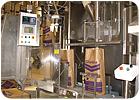
WPC 80 and whey protein isolate is packaged in 50 lb bags and 1,000 lb totes.
Milk into cheese
That milk is trucked into a 5-bay receiving area that is open 22 hours a day. The plant receives raw milk and cream, and after testing, tankers are pumped out and the milk travels into one of eight 70,000-gal raw milk silos. Tanks and silos were provided by Walker Stainless.The main process engineer for the cheesemaking and whey systems was the Carlisle Process Systems (CPS) which has since merged with Tetra Pak. CPS provided systems from several of its brand lines and worked with other companies including Alfa Laval, Fristam, and Filtration Engineering to build out the systems. Sanitation is handled by Southwest Cheese, with support from Ecolab.
The project design began in 2003 and general contractor Dahlgren/Skanska Construction broke ground in early 2004. Commissioning began in the fall of 2005, and the plant was fully operational by September. The plant is expected to generate $340 million in annual sales.
Milk is pasteurized with APV plate heat exchangers, separation and clarification are done with Tetra Pak equipment, and the pasteurized milk is balanced before being sent to cold storage surge tanks.
On the process floor batches are called up on an Allen Bradley PLC control unit. There are 15 CPS horizontal cheese vats on the make deck, eight of them dedicated to 640 blocks and seven reserved for the 40 lb block batches.
The tanks are filled automatically, and rennet and starters are added automatically. Each batch takes about two hours to set, and once the curd is formed and cut it is blown over to one of two massive CPS Cheddaring units. Again one is dedicated to the 640 line and the other to the 40 lb line.
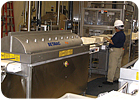
The make platform holds 15 enclosed horizontal cheese vats.
The curd is pneumatically conveyed to the blockforming towers. There are 14 Hi-Flow cheese towers, each about 40 feet tall. A vacuum is applied to the block towers, which helps to knit the curd, while extracting any remaining whey as the blocks are formed. Bags are fitted by hand at the base of each block former and the blocks are sent along two conveyers to a Sealed Air Betavac bagging system.
The 640 process is similar until the cheese leaves the dedicated Cheddaring machine. Ultimately, curd is conveyed to an automated filler.
The blocks are actually formed in wooden crates that arrive at the plant in refurbished sections- “walls”, tops and bottoms. Prior to production, the sections are assembled by hand before being placed on a large fitted dolly frame. As part of the assembly process a plastic liner is added. The curd is conveyed and weighed into the boxes automatically. An interior cover is placed on the bed of curds and large springs resembling bed springs are placed under the exterior lid to keep pressure on the cheese.
“This allows the curd to continue to knit and squeezes out any moisture that’s left,” Keane adds. “It’s one of the only places where you will see lumber in a modern cheese plant.”
The massive crated blocks are about the size of a mid-sized file cabinet or a mechanic’s tool chest and take about five days to cool. Meanwhile, the wrapped 40 pound blocks are cooled in a large Realcold tray cooler that rotates the blocks in a 39-degree environment for about 20 hours.
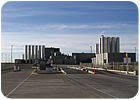
The plant’s exterior profile is visible from more than a mile away across the flat landscape just south of Clovis.
Whey processing
Like any large scale cheese plant, Southwest Cheese produces a parallel stream of whey products, in particular WPC 80 and whey protein isolate.Southwest’s whey treatment begins with a Filtration Engineering UF filtration system.
A Stork dryer system from CPS is used to convert the liquid into powder.
The powder is conveyed and filled with a system from Nu-Con and Avopac, two New Zealand-based firms with offices in the U.S.
The whey permeate is also covered. Mesa Ingredients Corporation has built a $15 million facility adjacent to the cheese plant for the manufacture of animal feed.
Cheese is aged on site for about two weeks. Cheese blocks are sold directly to cut and wrap and foodservice customers.
Product is loaded onto trucks through one of seven loading bays or loaded onto a railroad car through three rail bays.
“We have a spur here, and one car holds about four truckloads. We fill several cars a week and it is picked up and taken to various customers in the Midwest and toward the East Coast,” Keane says. “We’d like to do more of our delivery by train if we can to keep some of those trucks off the road, but right now it’s about 10 to 20% by rail.”
The whey powders are sent directly to Glanbia customers worldwide.
Roughly half of the plant’s cheese production is dedicated to 40 lb blocks, and the remaining half becomes 640 lb blocks.
Energy from waste
Southwest’s waste water system was engineered by Biothane Corp., Camden, N.J. It employs a tandem anaerobic/aerobic methane digester for the first stage of clarification.Effluent from the whey process spends 14 days in the covered anaerobic lagoons, where seeded anaerobic bacteria consume the biological material and convert it to methane.
“That methane is recaptured and it fuels one of our four boilers,” Gathright says. “The other three run off natural gas that we purchase.” While the dedicated boiler is tied to the natural gas line for backup, thus far the methane recapture has supplied 99.1% of the energy needed since the system has been on line.
The steam from that boiler is used to keep the anaerobic lagoons at 95 degrees F, to maximize activity, and to provide process heat for the cheese and whey processes. During the summer months, when the lagoons pull less energy, some of the methane is flared off.
After the first stage, the semi-treated water moves to a series of open aerobic lagoons where it spends another two days. Air is blown into the system through diffusers powered by three 125 HP blowers.
Finally the water is moved to a deep pool sand filter system.
“The water flows up through the sand bed and the sand is continually pulled from the bed and scrubbed,” Gathright says.
Some of the finished water is used to irrigate the surrounding farmland. What is not used is sent through a dedicated line to the Clovis municipal treatment facility where is commingled with other fully treated water that is then piped to other farm operations for irrigation. With the system in place, the plant actually produces more water than it uses.
In October Southwest cheese held an open house to celebrate the opening of the plant.
“We had the Governor here, and he put his hand in it and he said that it looked just like tap water,” Keane noted.
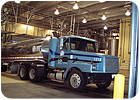
Milk and cream arrive through one of five bays. A standard tanker is unloaded in 20 minutes.
Ag benefits
The impetus for the development of the Southwest Cheese actually came from the dairy farmers in the area. Those farmers sought a capable dairy processor company to bring the processing to the milk so that they could ship less milk to neighboring states and across broad swaths of the country.Thirty years ago beef and cotton were the top crops in New Mexico, but now the top crop is milk. Today New Mexico is the seventh largest milk producing state, providing 4% of the 177 billion pounds of milk produced annually in the United States (National Agricultural Statistical Service, NASS).
The growth began just 20 years ago and continues to accelerate. The 33% growth rate in New Mexico’s milk production, during the last five years, ranks fourth in the nation, after Kansas, Idaho, and Oregon.
Keane says the growth has been somewhat simultaneous with the growth in Idaho, where Glanbia’s U.S. Division has its home base and operates several cheese and whey ingredients facilities. It’s part of a second wave of dairy industry migration wherein California farmers (in some cases, whose families previously had roots in the Midwest) are now pulling up stakes and looking for more room to farm at a larger scale in places like Idaho, New Mexico, Texas and even Kansas.
Frank Sheckarski, of New Mexico-based Zia Farms, says the Texas New Mexico Milk Marketing Agency was formed in November 1998 by four regional cooperatives: Dairy Farmers of America (SW Council), Select Milk Producers, Elite Milk Producers, and Zia Milk Producers. It was replaced by the Greater Southwest Agency in April 2002 when Lone Star Milk Producers joined (and Elite and Select merged) and the Agency production area expanded into Oklahoma and Kansas. In October 2006, production in Oklahoma and in the Wichita, Kas., zone left Greater Southwest.
Southwest Cheese LLC is located in Curry County, less than four miles from New Mexico’s border with the Texas panhandle. Curry County is one of the most active milk producers in the state, and tends to have the largest operations, with an average over 2,750 cows per farm.
Dairy farming is concentrated somewhat in eastern New Mexico, and has spread into west Texas. Just a couple hours from Clovis, in Dalhart, Texas, north of Amarillo, California-based Hilmar cheese is in the midst of building another large cheese plant.
DFA’s Southwest Area Council estimates that with every load of milk dropped off at Southwest Cheese, a local dairy farmer saves about $1,000 to $2,000 in hauling costs.
Sidebar: Glanbia USA Continues to Grow
Glanbia plc has operations in Ireland and the USA, with international joint ventures in the UK, USA and Nigeria.The group is organized into three operating divisions of Agribusiness, Consumer Foods and Food Ingredients, which includes the evolving Nutritionals business.
The company was formed in 1997 through the consolidation of the Avenmore and Waterford Cooperatives.
From its home base in Ireland, Glanbia has done well in selling dairy powders bulk cheese and ingredients into the export market. The need for more capacity and a desire for growth opportunities led companies in the European market to set up operations in other parts of the globe, and Glanbia’s predecessor Avonmore came to the United States in the early 1990s, with the purchase of the Idaho-based Ward’s Cheese, a company that had been founded some fifty years prior.
Throughout the 1990s Glanbia and its predecessor built and/or expanded upon four Idaho plants in three locations, Gooding, Twin Falls, and Richfield.
Worldwide, the company employs approximately 4,000 people and has an annual turnover of 1.8 billion euros ($2.3 billion).
In the United States, Glanbia is the No. 1 producer of both barrel cheese and whey protein isolate. With the addition of Southwest Cheese, it is now the top producer of natural American cheese, with a market share of more than 16%. It is also a top producer of lactose and Whey Protein Concentrates. In September 2006 Glanbia purchased the California-based nutritional business, Seltzer Companies, Inc., which provides customized formulations and specialty ingredients for the nutritional supplement, food and pharmaceutical markets.
Sidebar: Plant Facts
54-acre site340,000 sq ft
725,000 lbs of cheese a day
200-plus employees
60 miles of stainless steel piping above ground
742 miles of electrical cable above and below ground
500,000 gallons of water recovered from milk every day, treated and recycled for irrigation
Total cost $190 million
Sidebar: Southwest Cheese Vendors
Alfa LavalAvopac
APV
Bonelli
Biothane
Chr. Hansen
Tetra Pak Cheese and Powder (formerly CPS)
Tetra Pak Processing
Dahlgren/Skanska Contracting
Danisco
Ecolab
Filtration Engineering
Fristam
Nu-Con
Power Engineering
Toyota Forklifts
Looking for a reprint of this article?
From high-res PDFs to custom plaques, order your copy today!